7 ply · triple-wall route

7 Ply Cardboard Production Line

Heavy-duty 7ply corrugator for high-strength composite board — a corrugated production line built for industrial goods, sea-freight export and high-stacking warehouse conditions

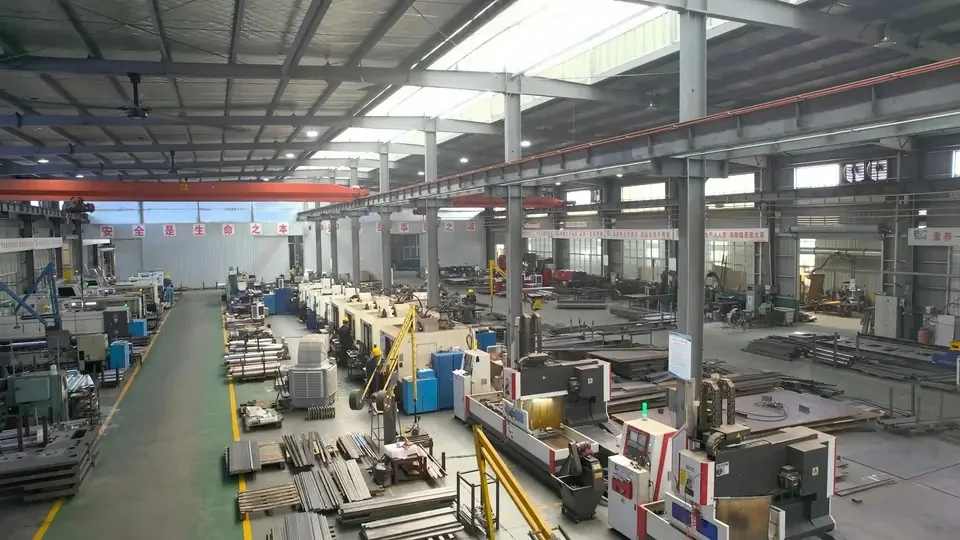
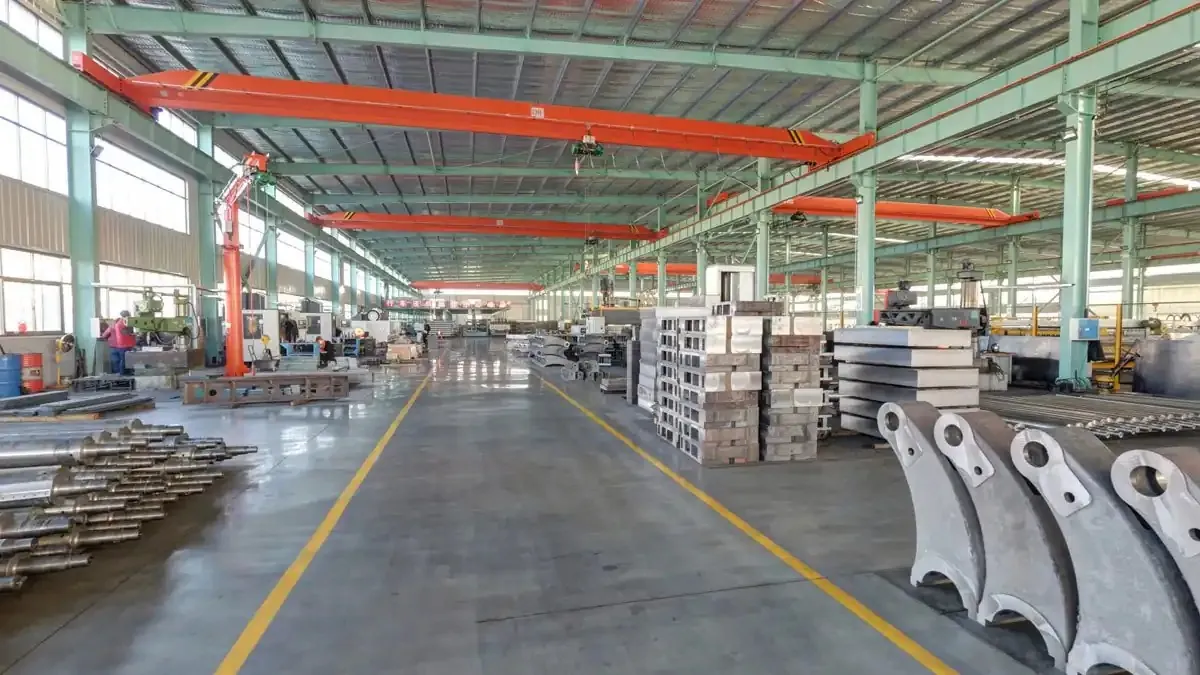
Machining bay at the AGICO carton machinery plant, with crane rails, shaft stock and machined frames
Machine shop · frames and rollers machined in-house
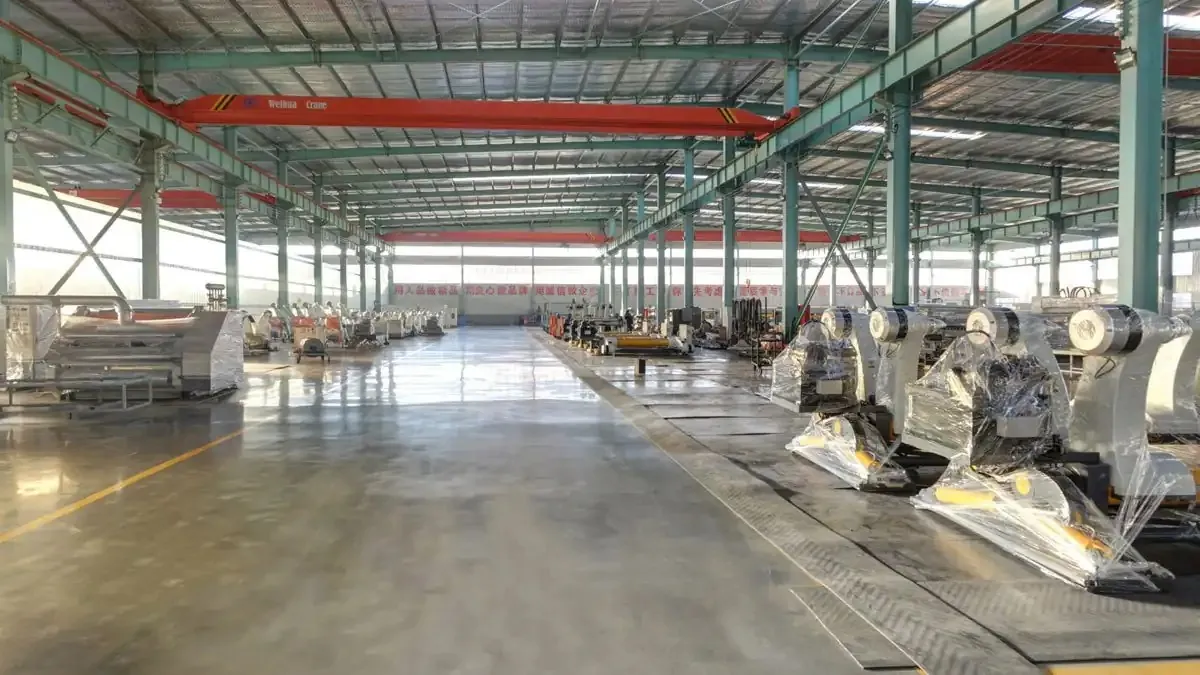
Finished corrugated production line units staged in the AGICO assembly bay before dispatch
Assembly bay · units staged before dispatch

7-ply build · 4 liners + 3 corrugated mediums · A, B and C flutes combined

02 · Why AGICO

Why Buyers Choose AGICO for a 7ply Line

We build the units, we run the line before it ships, and we stay on it after start-up.

A cardboard production line is bought once. Four things you can hold us to before you sign.

  1. 01

    We build the units ourselves

    Single facers, double facers, slitters and stackers come off our own drawings — down to the 52CrMo corrugating rollers and the SM-E heating plates.

  2. 02

    One engineering team, layout to start-up

    Machine scope, utility load, foundation and start-up sequence come from the engineers who designed the line.

  3. 03

    The line runs on our floor before it ships

    Every corrugated production line we ship gets a full running test against your board specification, on video if you cannot travel.

  4. 04

    We quote stable speed, not catalogue speed

    450 m/min is a design ceiling. We quote the stable figure for the grade you buy.

03 · Dedicated design

Five Things This Cardboard Production Line Does Differently

Document 07–03
Production engineering
7-ply system dossier

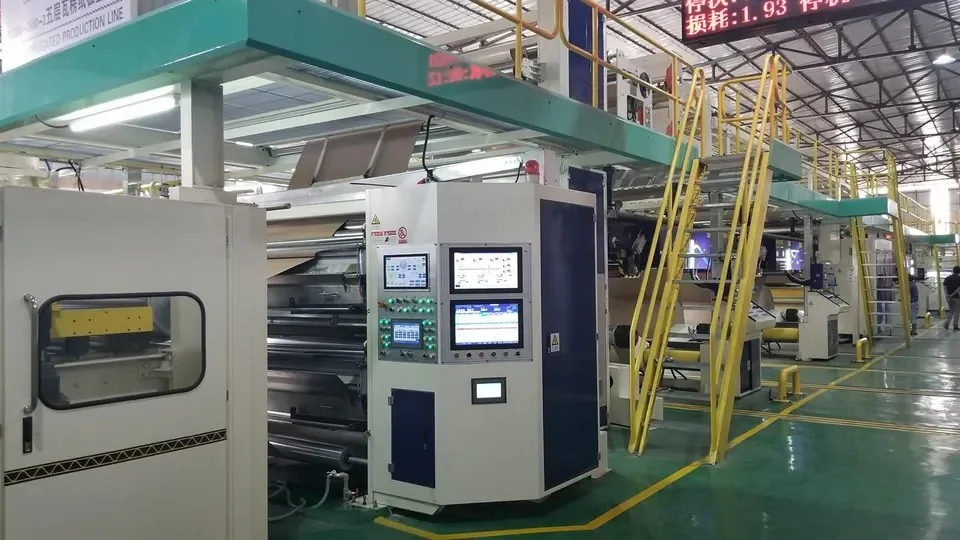
Wet-end machine row and control cabinet on a 7ply cardboard production line

System 03 / Core control

Multi-group independent precision gluing

Each glue line has its own servo-controlled channel, so starch dose is set per interface instead of averaged across the board. Uniform pickup at every interface is what holds a 7ply sheet together at speed; a channel that runs lean shows up later as edge delamination.

Servo glue channels · one per interface
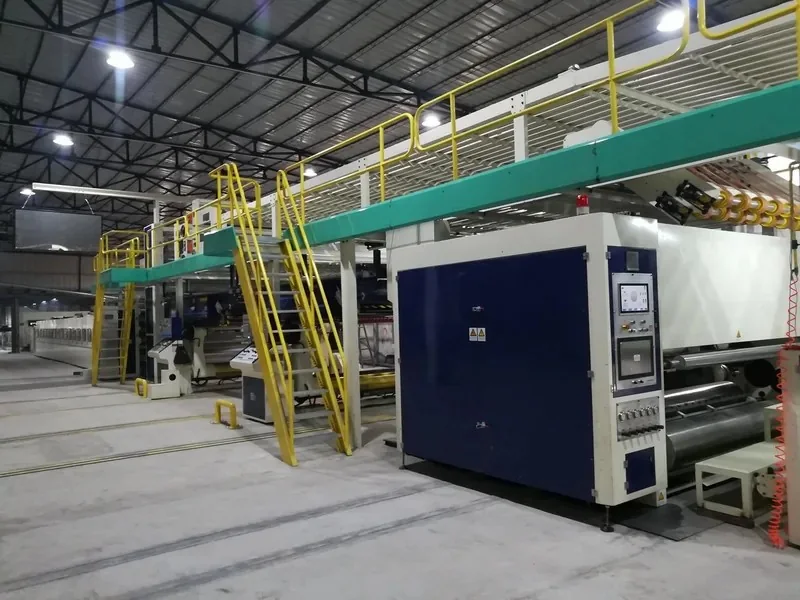
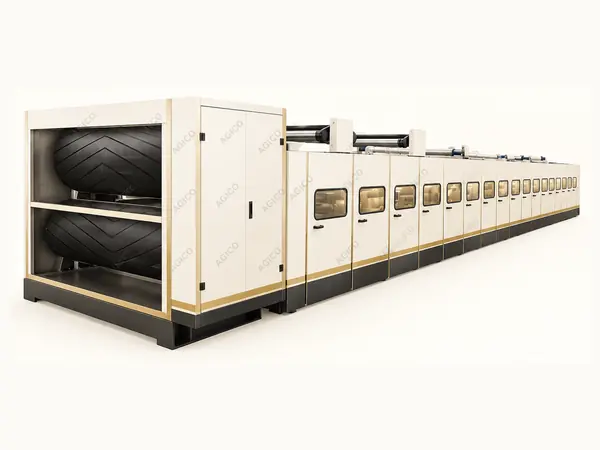
Bridge and double facer heating section of a 7ply cardboard production line
Thermal / 01
01

High-capacity thermal management

7ply board carries far more paper per metre than a single wall, so the drying load is the real limit on speed. A longer heating plate bank and an extended cooling-shaping section bring the glue through the full caliper and level moisture before the sheet is cut.

Heating plate bank + cooling section sized to caliper

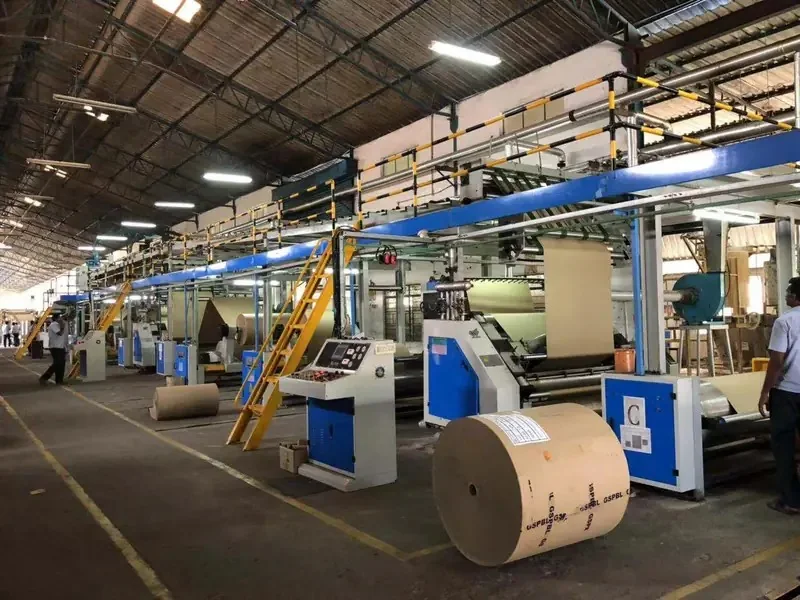
Kraft mill roll stands and single facer station with an operator feeding a web
Forming / 02
02

Three single facers on a double-deck bridge

Three matched vacuum single facers form the three medium layers, and the double-deck overhead bridge carries them with independent tension on each deck. The three webs sit at different heights and travel different distances, so one shared tension setting cannot register all of them.

3 × vacuum single facer · double-deck bridge

Machine row and overhead bridge structure along a 7ply corrugated production line
Web control / 04
04

Multi-channel tension and deviation correction

FTR-300 full-width infrared correction holds each single-face web on centre, while the multi-group preheaters bring every web to a matched moisture level. Web wander and moisture mismatch are the two usual causes of paper breaks on a heavy line.

FTR-300 correction + multi-group preheat

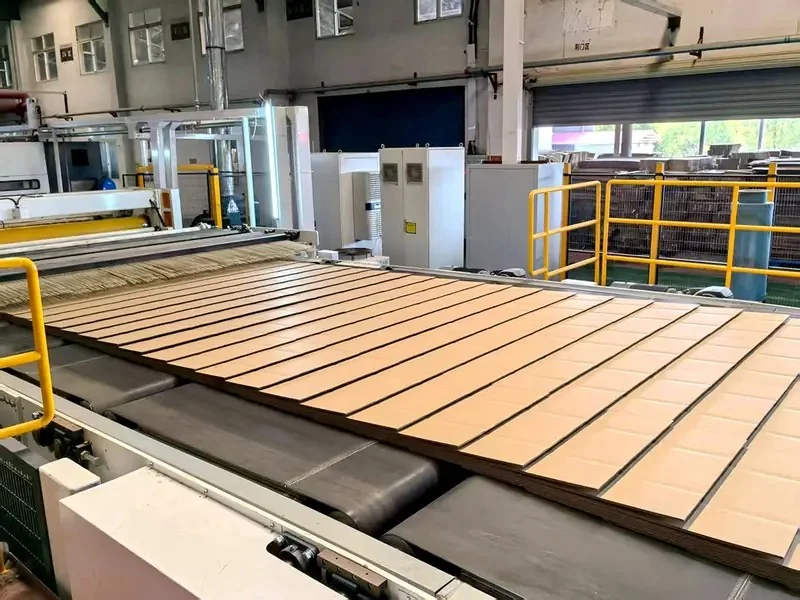
7ply board sheets with longitudinal score lines leaving the slitter-scorer
Dry end / 05
05

Reinforced transmission and heavy-duty post-processing

Thick board loads the dry end harder than thin board, so the drive train, the NC-250 duplex helical cross cutter and the basket or gantry stacker are all specified for the heavier sheet. Clean cutting and square stacking let the board run straight into a carton line without re-handling.

NC-250 cutter · basket / gantry stacker

04 · Problems we design against

Where a Corrugated Paperboard Production Line Breaks Down

Three failures, and the machine feature that answers each

These are the three complaints that come back from heavy-duty board plants. Each one has a mechanical cause, so each one has a mechanical answer.

Problem 01

Cartons deform and cargo arrives damaged after heavy-load transport or long stacking in a container.

→
What we change

Three corrugated mediums plus a controlled glue line at every interface. Compression and stacking performance come from the board structure, not from adding liner weight to a two-layer sandwich.

Problem 02

Paper breaks, warps or delaminates when the line runs high-grammage paper for a multi-layer board.

→
What we change

Full-width infrared deviation correction, multi-group preheating and a double-deck bridge with independent tension per deck. Tension and moisture are matched per web before the sheets meet.

Problem 03

Tension, glue dose, temperature and pressure all have to hold at once during multi-ply compounding, and one drifting value ruins the batch.

→
What we change

Servo glue channels set per interface, a multi-segment heating double facer with segmented pressure, and a central PLC-HMI that shows temperature, pressure, glue dose and speed on one screen.

Net effect

Consistent finished board on long runs, which is the only thing that makes a heavy-duty board programme profitable. We will not quote a 7ply line on a five-ply layout and hope the caliper behaves.

05 · Working flow

Fifteen Stations on a Corrugated Production Line

Raw reel in, stacked 7ply board out — six of these fifteen stations are check-points

On this corrugated paperboard production line the board is never laminated afterwards. What leaves the stacker is what goes to printing, slotting and die-cutting, which is why the six marked stations carry the quality risk on this line.

Layout drawing of a 7ply corrugated paperboard production line, from mill roll stands through the bridge and double facer to the stacker
Line arrangement15 stations · mill roll stands to stacker
  1. 01Raw paper reel
  2. 02Shaftless mill roll stand
  3. 03Automatic paper splicer
  4. 04Multi-group preheater & pre-conditionerQC
  5. 05Vacuum single facer 01QC
  6. 06Vacuum single facer 02
  7. 07Vacuum single facer 03
  8. 08Double-deck overhead bridge
  9. 09Multi-group gluing unitsQC
  10. 10Heavy-duty double facerQC
  11. 11Cooling & shaping sectionQC
  12. 12Traction unit
  13. 13Thin-blade slitter scorer
  14. 14NC helical cross cutterQC
  15. 15Automatic stacker
Quality control

Six values we check on every shift

01Paper humidity

Preheater wrap angle set against incoming reel moisture

02Flute forming

Corrugating roll pressure and vacuum on all three single facers

03Glue volume

Dose per interface checked on a peel sample at start of shift
04Heating & pressure

Plate temperature and segmented pressure on the double facer

05Cooling set

Board leaves the cooling section flat, without a set curl

06Cutting precision

Length and squareness off the NC-250 cutter, first and last sheet

06 · Core equipment

The Units That Decide Board Quality

Six assemblies, each with a job it cannot share

A 7ply corrugated production line has more places to lose a sheet than a single wall. These six are the ones we specify by name and test as separate systems before shipment.

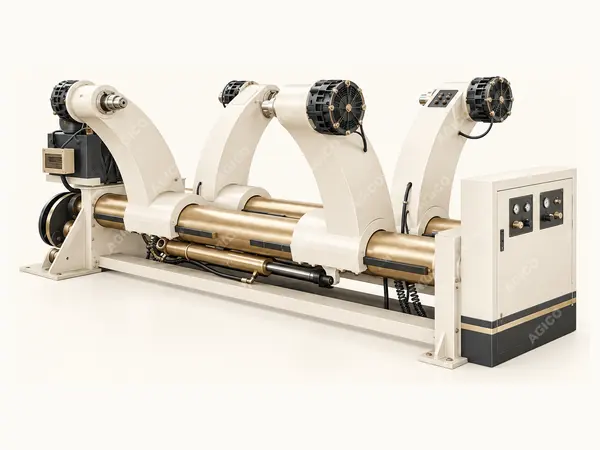
ZJ-V6

Heavy-duty hydraulic shaftless mill roll stand

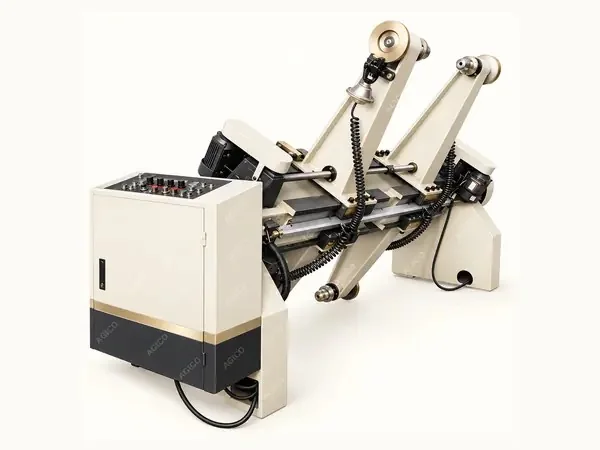
Built around the load of high-grammage reels: pneumatic expanding chuck, multi-point brake, hydraulic lifting and left-right traversing for centring. On a 7ply line the roll stand is loaded with four liner reels and three medium reels at once, so the stand has to hold position under a heavier total load.

FTR-300

Automatic paper splicer with full-web tension and deviation correction

Non-stop splicing keeps the line running through a reel change. Full-width infrared correction then keeps each web on centre, which is the difference between a straight sheet and one that runs out of trim by the end of the reel.

SF ×3

High-performance vacuum adsorption single facers

Cast-iron heavy frame and 52CrMo alloy corrugating rollers on all three units, with vacuum adsorption holding the formed flute in the valleys. Matched rollers across the set are what keeps flute height consistent between the three medium layers.

MGS

Multi-group gluing system for multi-ply compounding

Precision mesh-pattern glue roller with motorised gap adjustment on each group. Glue is applied interface by interface, so a lean channel is corrected where it happens instead of showing up as edge delamination three hours later.

SM-E

Multi-segment heating heavy-duty double facer

Multiple heating plates with segmented, adjustable pressure. Segmented pressure is the tool that lets us flatten a thick sheet without crushing the flute, and it is set per board grade at commissioning.

NC-250

High-precision post-processing group

Computerised thin-blade slitter scorer, NC-250 duplex helical cross cutter and a heavy-duty basket or gantry stacker. Specified for the heavier sheet so the cut stays clean and the stack stays square at the dry end of a corrugated carton production line.

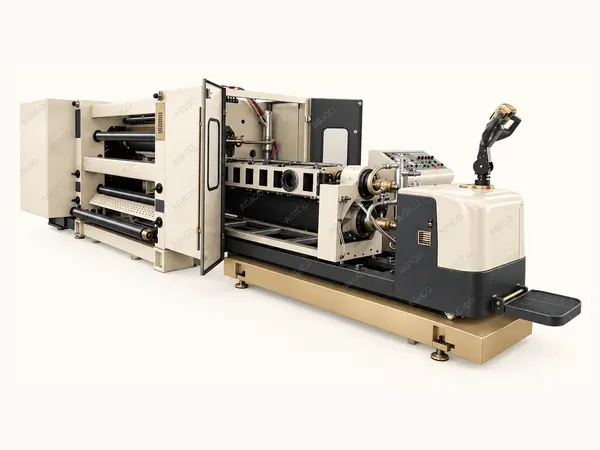
Heavy-duty hydraulic shaftless mill roll stand
ZJ-V6

Heavy-duty hydraulic shaftless mill roll stand

Pneumatic expanding chuck, multi-point brake, hydraulic lift and left-right traverse, rated for four liner reels plus three medium reels at once.

Electric shaftless mill roll stand
ZJ-V6

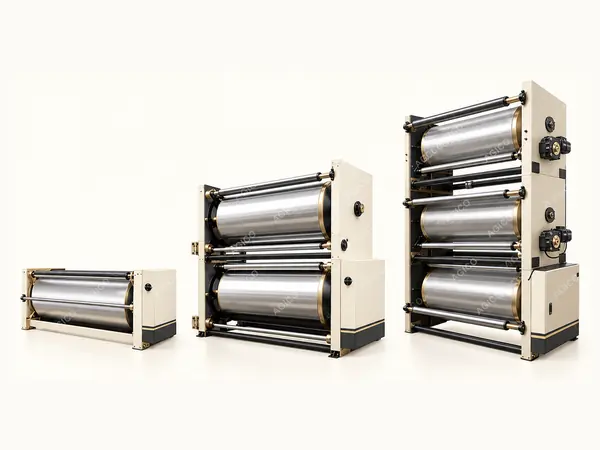
Electric shaftless mill roll stand

Motorised lift and traverse for the narrower decks, so a reel change is a command on the screen instead of a hydraulic hand pump.

Multi-group preheater and pre-conditioner
PRE

Multi-group preheater and pre-conditioner

Wrap angle is set against the incoming reel moisture, so the web reaches the single facer at the temperature the flute needs.

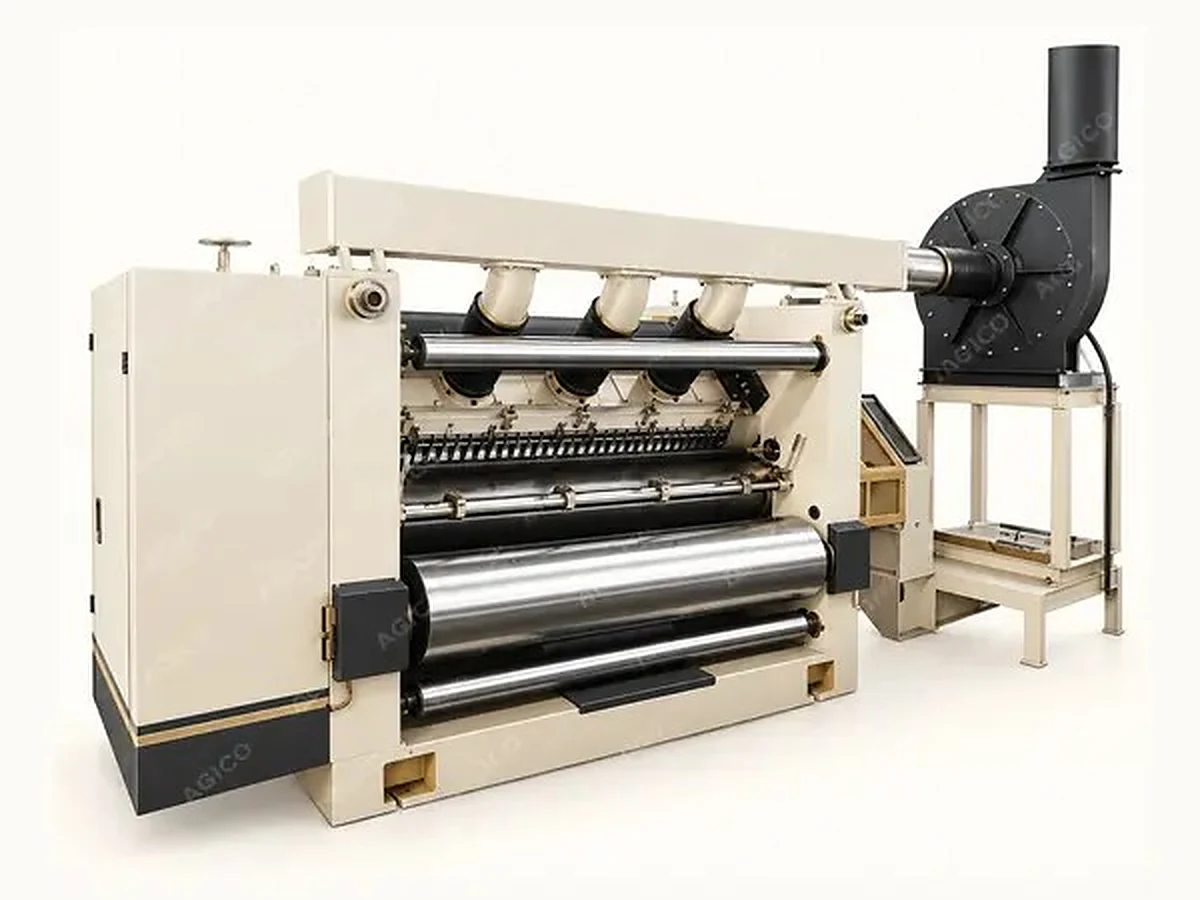
Fingerless-type single facer
SF ×3

Fingerless-type single facer

No finger guides in the flute: vacuum holds the formed flute in the valleys, which is what keeps a tall flute standing at speed.

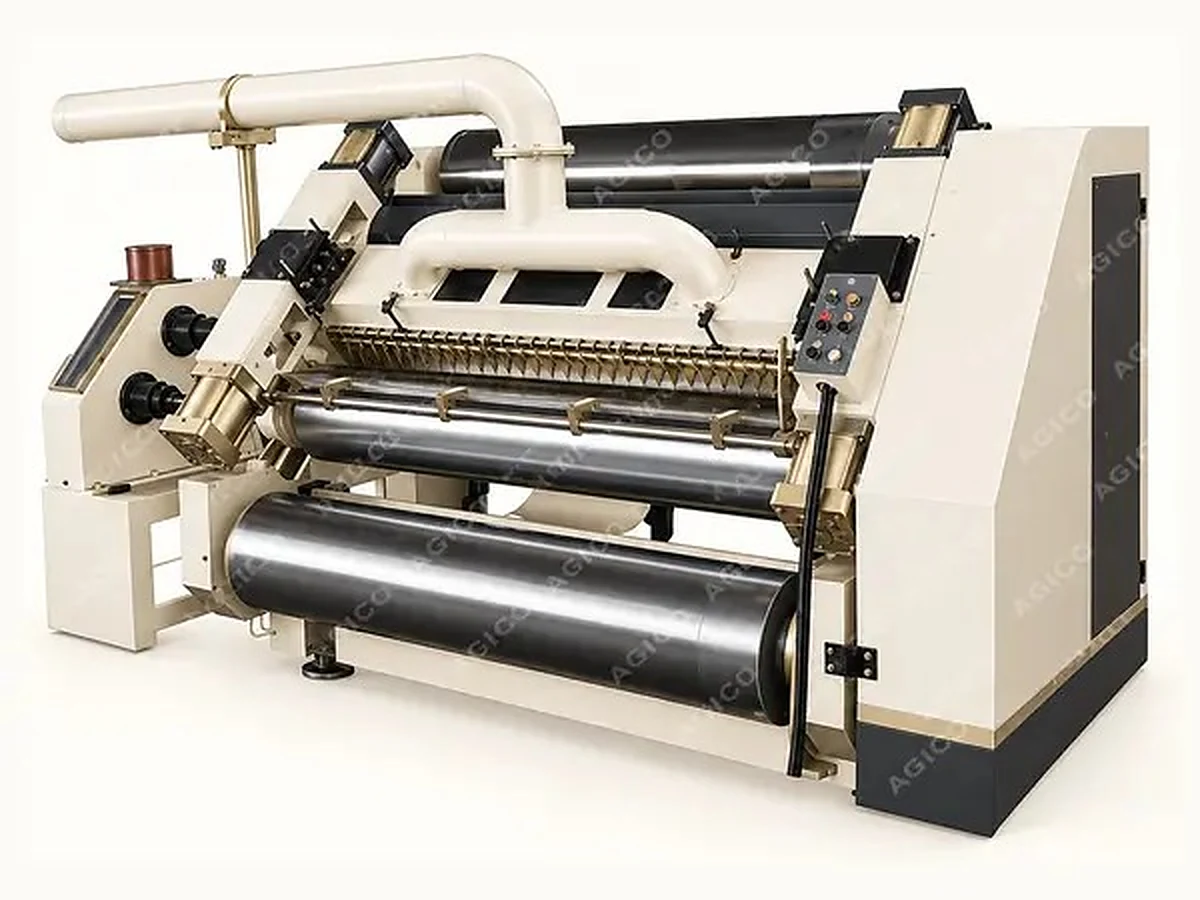
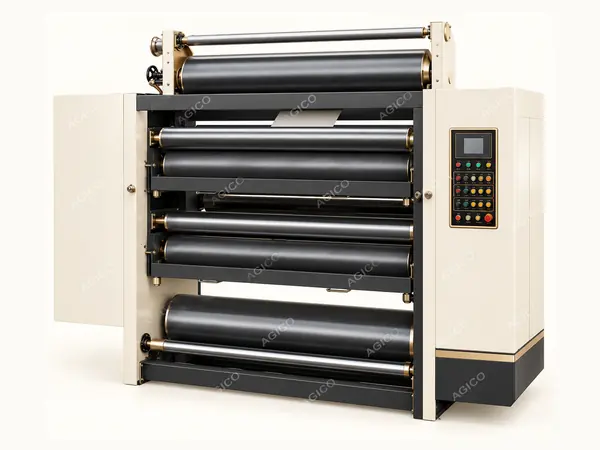
Vacuum adsorption single facer
SF ×3

Vacuum adsorption single facer

Cast-iron frame and 52CrMo corrugating rollers; the three units are supplied as a matched set so flute height stays consistent between medium layers.

Cassette-type single facer
SF ×3

Cassette-type single facer

Corrugating rolls sit in a cassette, so a roll change is a cassette swap instead of stripping the unit down on the line.

Multi-group double glue machine
MGS

Multi-group double glue machine

Mesh-pattern glue roller with motorised gap adjustment on each group; glue is applied interface by interface, not averaged across the board.

Multi-segment heating heavy-duty double facer
SM-E

Multi-segment heating heavy-duty double facer

Multiple heating plates with segmented, adjustable pressure — the tool that flattens 7ply board without crushing the flute.

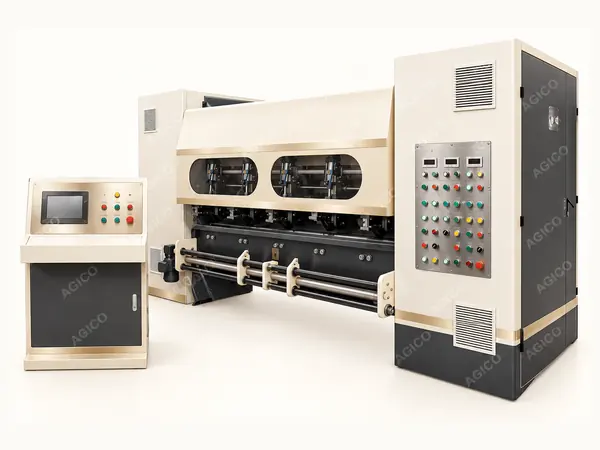
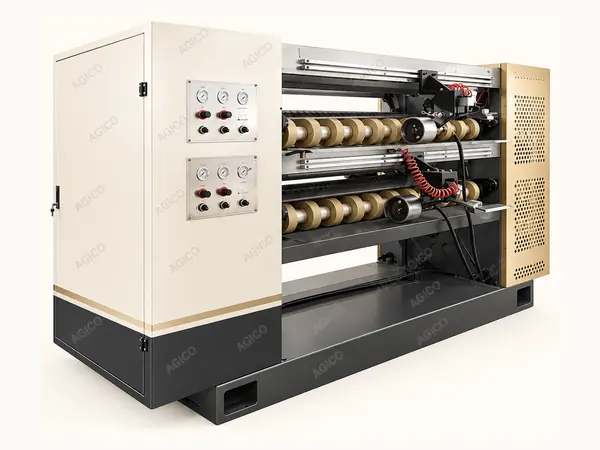
Thin-blade slitter scorer with electric scoring adjustment
NC-250

Thin-blade slitter scorer with electric scoring adjustment

Scoring distance is set electrically; thin blades give a cleaner trim edge on heavy board than conventional slitting knives.

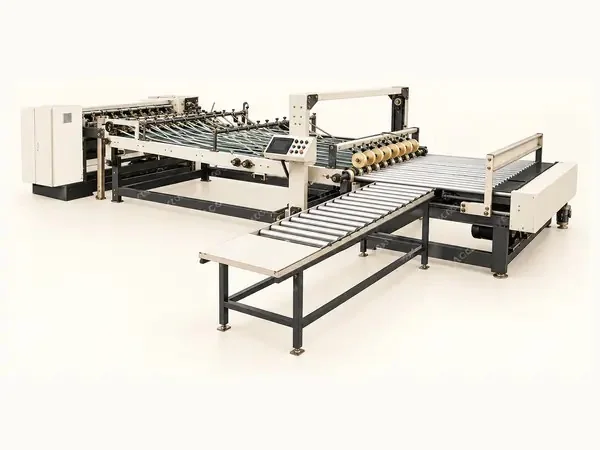
Duplex helical cross cutter
NC-250

Duplex helical cross cutter

Two cutting stations working in sequence hold cut length and squareness across the 100–450 m/min range.

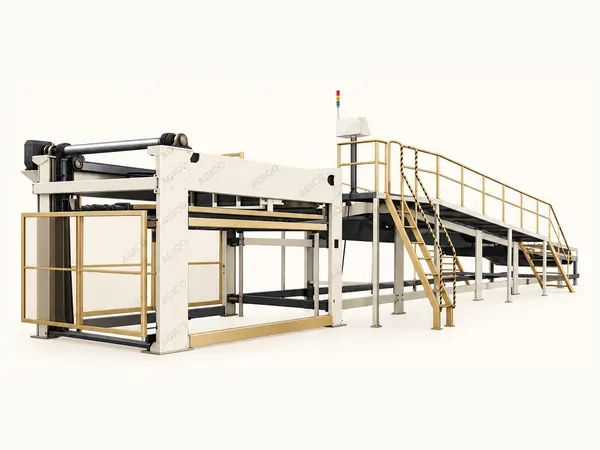
Gantry angle-type cut-off machine
NC-250

Gantry angle-type cut-off machine

Angled gantry travel gives a shear cut on thick board, with the cut-off following line speed.

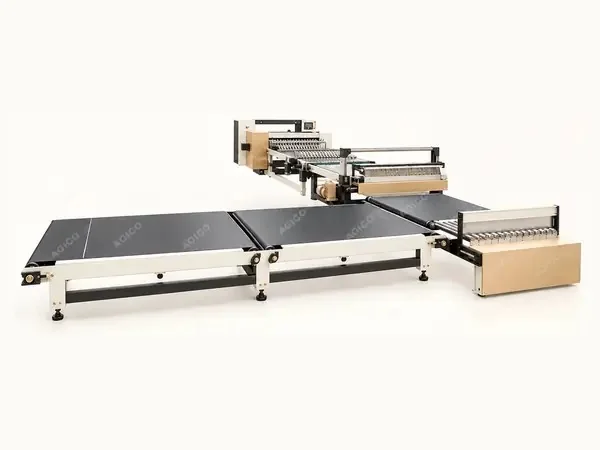
Basket-type automatic stacker
NC-250

Basket-type automatic stacker

Receives the heavy 7ply sheet at the dry end and builds a square stack without the board riding up at the edges.

Gantry-type delivery stacker
NC-250

Gantry-type delivery stacker

Overhead gantry delivery for long sheets and wide decks, keeping the stack aligned as it grows.

01 / 13

Intelligent control

One central PLC and a colour HMI show temperature, pressure, glue dose and running speed in real time. Operators tune from the screen instead of walking the line with a gauge.

Optional functions

  • Order management with stored recipes per board grade
  • Production data reporting per shift and per order
  • MES interface for plant-level scheduling
  • Remote fault-diagnosis module

07 · Applications

Heavy-Duty Packaging Served by This Line

Five industries, with the flute set we usually recommend

This corrugated production line makes blank board. What changes between these industries is the flute combination and the caliper, so the recommendation below is a starting point, not a fixed catalogue.

01
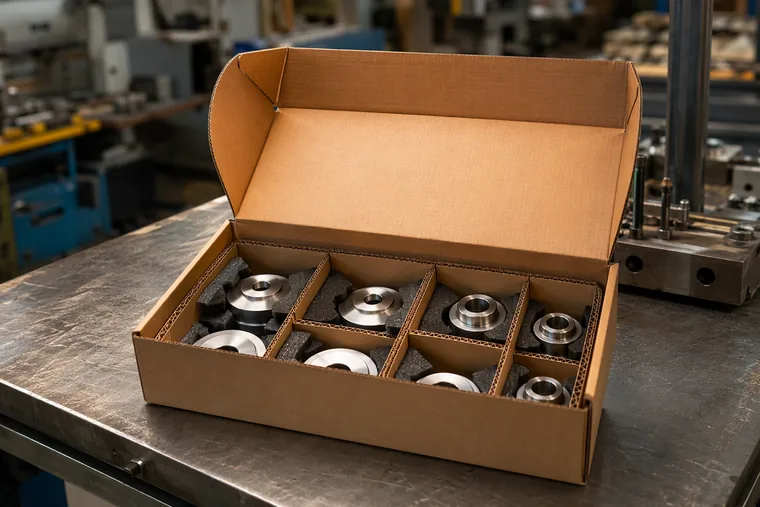
Heavy machined parts packed in a 7ply corrugated carton

Machinery, electromechanical equipment and industrial spare parts

Heavy machined parts with sharp edges, packed for sea freight

ABC · BCE
02
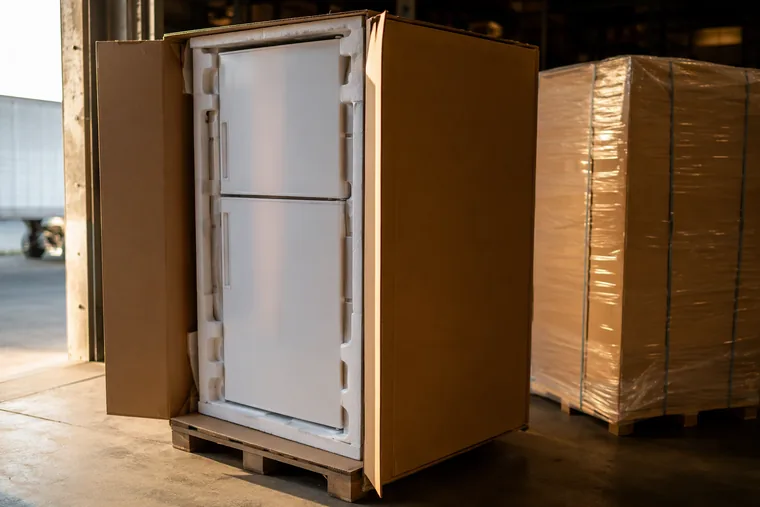
Home appliance packed in a heavy-duty corrugated carton

Home appliances, furniture, sanitary ware and panel-type goods

Large flat faces that must stay unbowed under stacking

BCE · ABE
03
Sea-export shipping cartons stacked for container loading

Automotive spare parts and sea-export shipping cartons

Dense loads, long transit, repeated handling at both ends

ABC · BCE
04
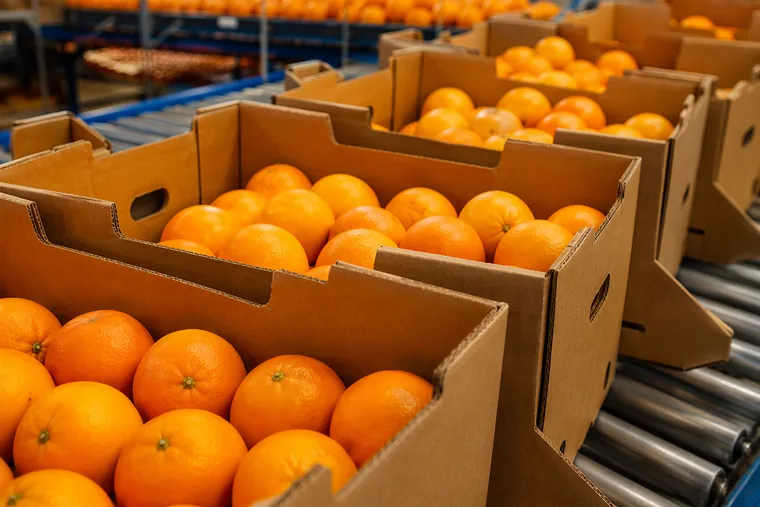
Agricultural produce packed in export corrugated cartons

Chemicals, building materials and agricultural goods

High-stacking logistics containers with a long warehouse dwell

BCE
05
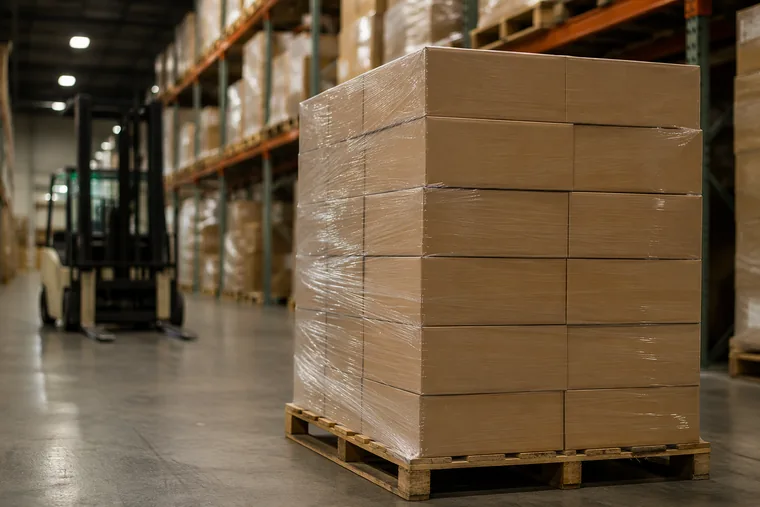
Heavy-weight corrugated cartons stacked on a pallet

Pallet collars, heavy-weight cartons and shock-absorbing liners

Combined structures where board stiffness replaces timber

ABE · ABC

08 · Technical data

Specification and Turn-Key Scope

Every figure below is a working value, not a theoretical peak

Width, grade and flute set are chosen together. A quotation for a corrugated paperboard production line of this class is built from your board specification, so the numbers below describe the family, not a fixed machine.

AMechanical and performance

Reference model
AG-300-2500 7ply corrugator
Effective working width
1400, 1600, 1800, 2000, 2200, 2500, 2800, 3100, 3300, 3600 mm
Design maximum speed
100–450 m/min, five grades
7ply stable speed
50–70 m/min economic · 240–340 m/min at the top grade
Combined flute sets
ABC / ABE / BCE, three corrugated mediums
Forming group
3 × vacuum single facer, 52CrMo alloy corrugating rollers
Gluing
Multi-group servo channels, mesh-pattern glue roller, motorised gap
Dry end
NC-250 duplex helical cross cutter, basket or gantry stacker
Cut length / precision
500–9999 mm, ±1 mm at stable running speed

BUtilities and workshop

Heating source
Steam 1.0–1.3 MPa at line inlet; thermal oil optional
Steam consumption
Quoted per width, grade and running speed
Compressed air
0.6–0.9 MPa; compressor supplied by buyer
Installed power
Quoted per width and speed grade
Workshop
Length and bay width fixed by the layout drawing
Civil works
Foundation, drainage and power-water supply by buyer

CTurn-key scope

  • Custom layout drawing against output target and site condition
  • Manufacturing, then a full-line running test before shipment
  • Shipping guidance, packing list and container loading plan
  • On-site installation, commissioning and trial-production support
  • Operator training, spare-parts supply and after-sales service

09 · Selection guide

How to Configure Your Cardboard Production Line, in Five Decisions

Work down the list; each answer narrows the next

Most wrong configurations come from choosing speed first. Start with output, and the grade, width and flute set follow in that order.

01

Target daily output

Pick the economic stable speed grade, not the design maximum

A grade that runs 300 m/min on paper is not a grade that holds 300 m/min on 7ply board.

02

Largest finished sheet

Set the effective working width

Take the biggest board you must produce and add the trimming allowance. Width is the one choice you cannot change later.

03

Strength and industry

Choose the combined flute set

ABC for stiffness, BCE for a flatter surface, ABE for fine print. The carton tells you which.

04

Site energy

Decide heating and energy-saving modules

Steam capacity at the inlet decides whether the top grades are available to you at all.

05

Building condition

New plant, expansion or replacement

A replacement line has to fit an existing bay; a new plant can be laid out around the machine.

Send your output target and board specification. AGICO returns a configuration sheet and a workshop layout drawing, not a price list.

Request the configuration sheet →

10 · Project references

Three 7ply Lines, Photographed Where They Run

The same four fields on every card, so two projects compare honestly

Region and industry first, then the problem that triggered the purchase, the configuration we supplied and what changed on the floor afterwards. Photographs are site photographs, not renderings.

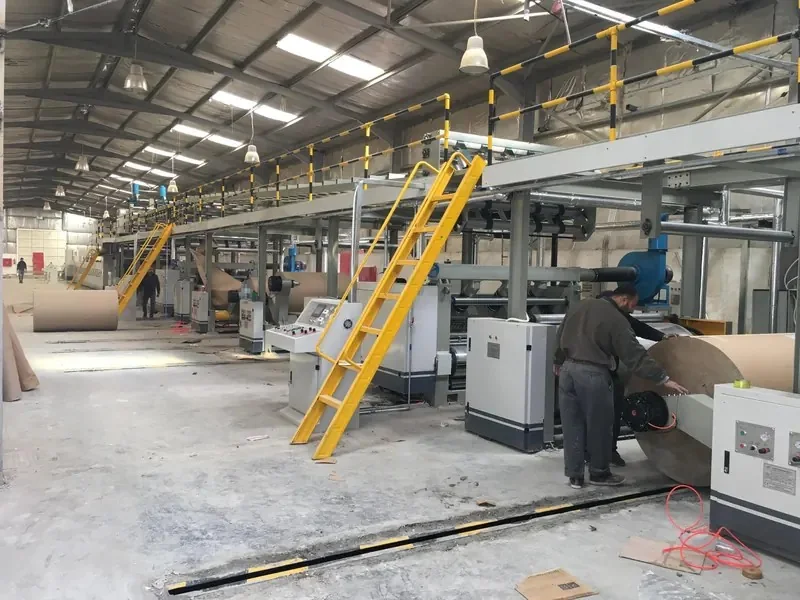
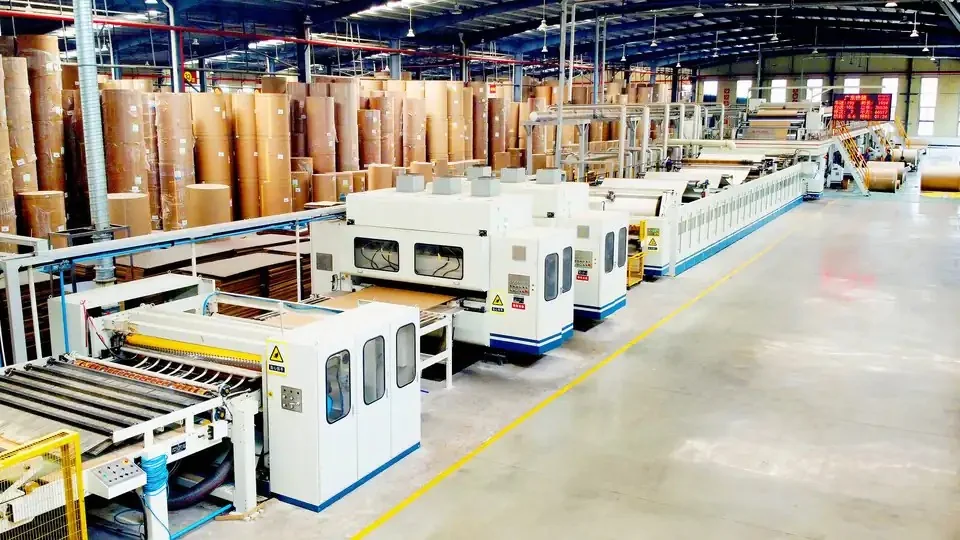
Corrugated paperboard production line running inside a customer plant, mill roll storage and machine row
Plant floor · mill roll storage to stacker

Southeast Asia · industrial equipment

Crates out, 7ply board in

Problem
Machined parts were shipping in timber crates. Fumigation paperwork and crate cost had become the largest line in the packing quote.
Configuration
2500 mm, high-speed grade, 3 × vacuum single facer, NC-250 cutter, gantry stacker
Result
Heavy-duty board is now made in-house for the same cartons, and the line also carries the plant's 5-ply work on the same width.
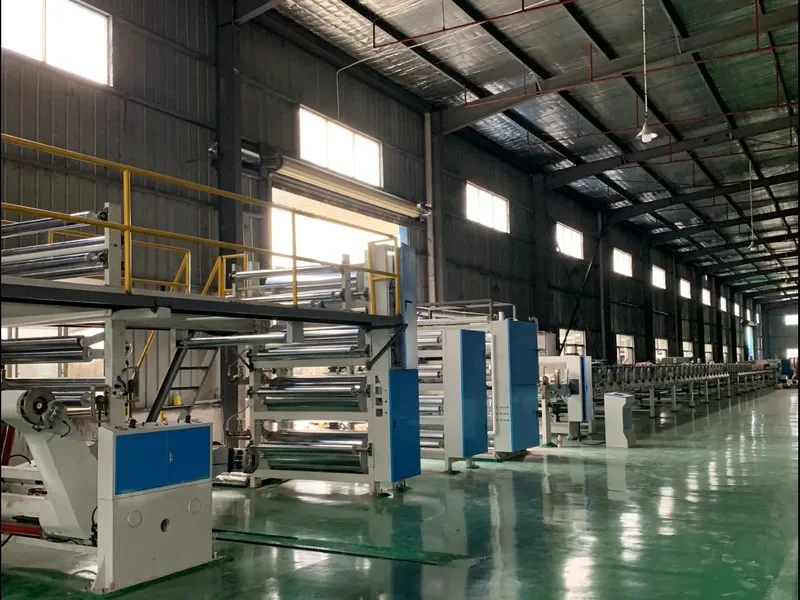
Corrugated production line control cabinets and operating catwalk on the plant floor
Line side · control cabinets and catwalk

West Africa · appliance export

Tall cartons that stopped bowing in the container

Problem
Refrigerator cartons lost compression at the bottom of a container stack; the existing single-wall board could not be pushed further without doubling liner weight.
Configuration
2200 mm, standard medium-speed grade, BCE flute set, double-deck bridge
Result
7ply replaced the reinforced single wall on the bottom two thirds of the stack, and the plant did not buy a second corrugator.
Machine hall with overhead crane, machining centres and line bay
Machine hall · bay layout under crane

Middle East · building materials

A wider line inside an existing bay

Problem
The plant needed heavier board but the bay was already built. A longer drying section would not fit between the columns.
Configuration
2800 mm, ultra-high-speed grade, thermal-oil heating, compact stacker layout
Result
Layout drew the dry end back into the available span; the building was kept and only the foundation was new.

Site photographs, running-machine footage and two named contacts in your region are provided at quotation stage. Customer names are withheld on this page at their request.

Ask for references in your region →

11 · Service

Six Commitments, From Enquiry to Long-Term Support

A 7ply corrugated paperboard production line is a project, not a shipment

Each stage below ends with something you can hold: a drawing, an acceptance record, a commissioned line, a trained crew, a spare-parts list.

01

Pre-sales

Technical consultation and a customised plant layout proposal, drawn against your building

02

Manufacturing

Stage inspection plus a full-line running test and acceptance record before shipment

03

On site

Installation, commissioning and process guidance while the first saleable board is made

04

Training

Operators, maintenance team and supervisors, each on their own part of the line

05

Spares

Spare-parts supply with a recommended first-year list agreed at handover

06

Long term

Maintenance service, performance upgrades and retrofitting as your board mix changes

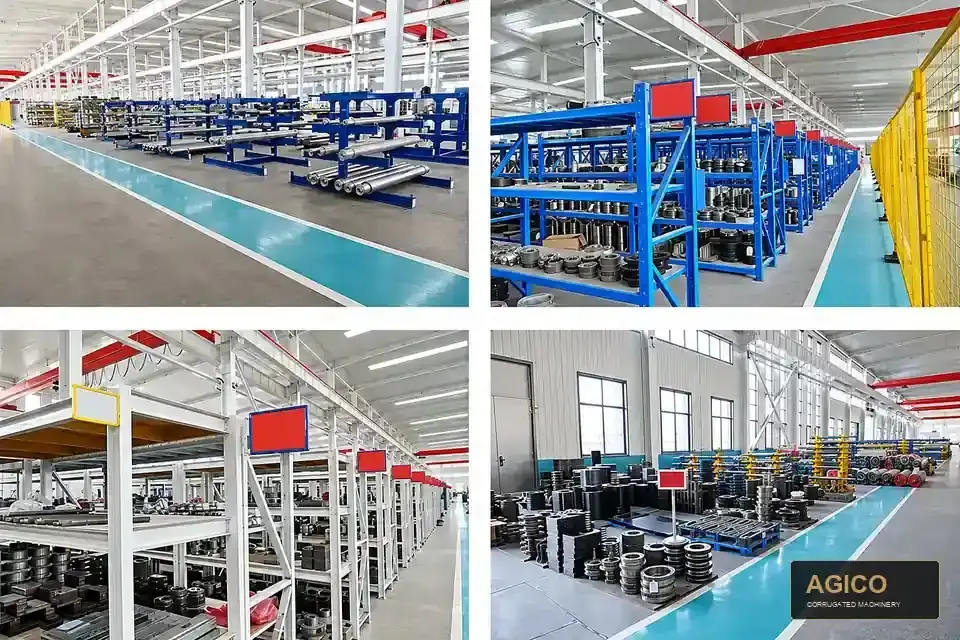
Four views of the AGICO spare parts store: racking carrying shafts, bearings and wearing parts for corrugated board lines
Spare parts storeBacks 05 · Spares
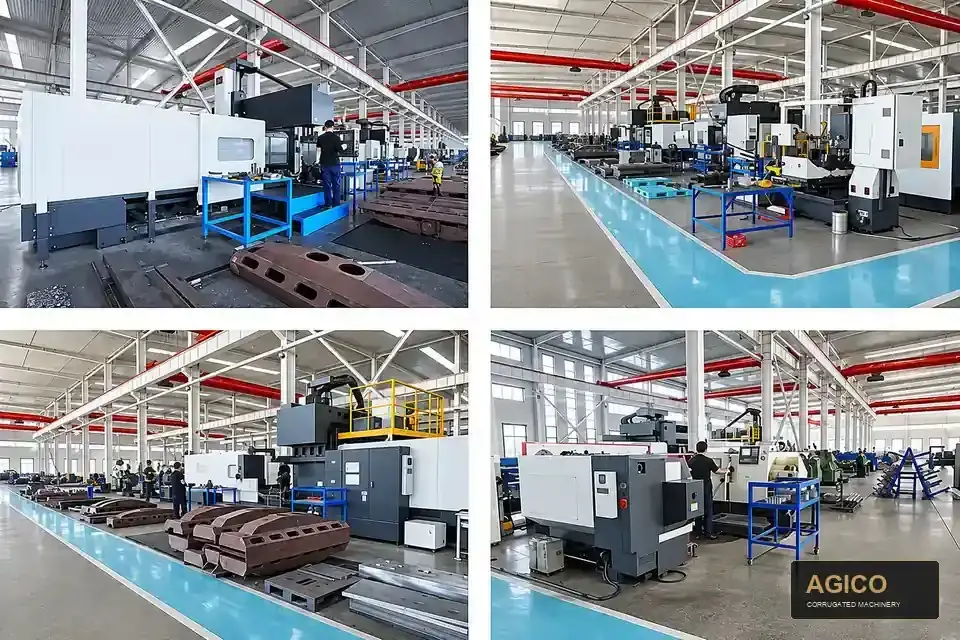
Four views of the AGICO machining area: CNC boring mills and machined frames for corrugator assemblies
In-house machiningBacks 02 · Manufacturing

12 · FAQ

Cardboard Production Line FAQ

Seven answers, written plainly for the technical review

Speed, width, single facers, utilities and who supplies what. If your question is not here, send the board specification and we will answer against it.

Send a board sample or carton drawing →

Five-ply board is three liners and two corrugated mediums. 7ply is four liners and three mediums, so the line carries a third single facer, a double-deck bridge and a longer drying section. The extra medium layer is what buys compression and puncture resistance; the extra liner is what lets the sheet take a heavier print and a harder knock.

Three vacuum-adsorption single facers are standard. Each one forms a medium layer, and the three single-face webs are married on a double-deck overhead bridge before the double facer bonds them under four liners.

Width first, from the largest finished sheet plus trimming allowance. Then speed: take the 7ply stable speed for the grade you are considering, not the design maximum. A line quoted at its design maximum will not hold that number on 7ply board, and a line sized on the wrong width cannot be fixed afterwards.

Yes. Mechanical width stays the same across three, five and 7ply running; only the usable net width drops by the trimming margin. Stable speed is lower on 7ply because the drying load is higher, so plan the output mix on the 7ply figure if that is your main product.

Steam at 1.0–1.3 MPa at the line inlet, compressed air at 0.6–0.9 MPa, power supply to the installed load, a levelled civil foundation and a bay long enough for the layout drawing. The buyer arranges the boiler, compressor, piping and civil works.

Build time is quoted with the drawing package, and a 7ply line sits at the long end of our standard window because of the third single facer and the longer double facer. We fix the ship date in the contract, update progress weekly during build, and schedule engineers so that commissioning starts once the building is powered, plumbed and level.

Yes. Our engineers travel for installation, commissioning and operator training, and the buyer covers flights, local accommodation and the engineer day rate. Spare parts and remote technical support continue after handover.