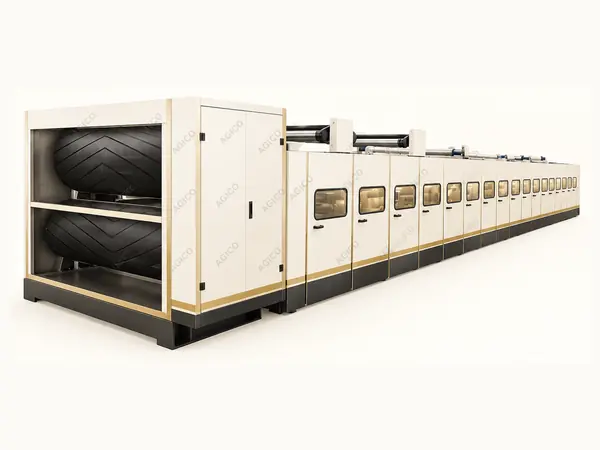
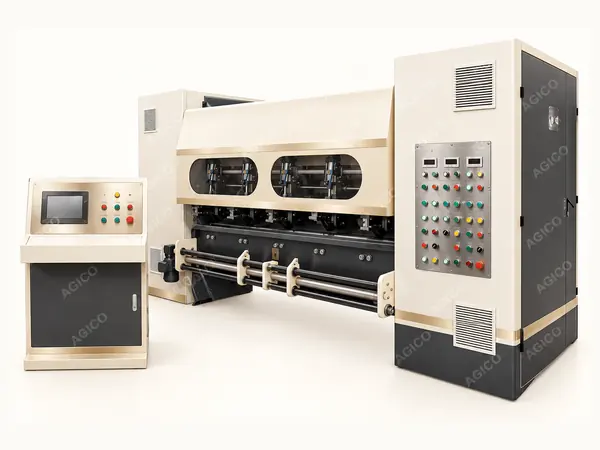
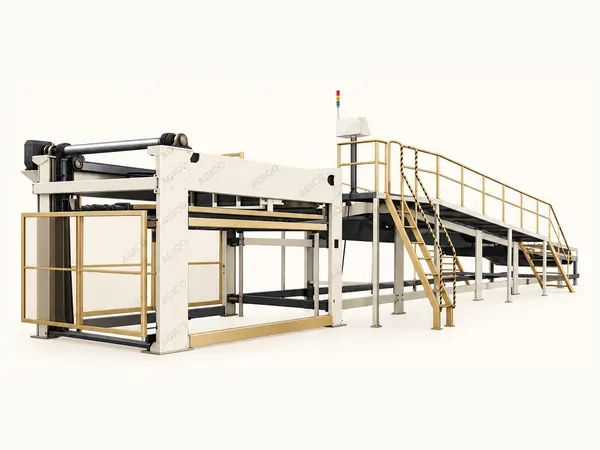
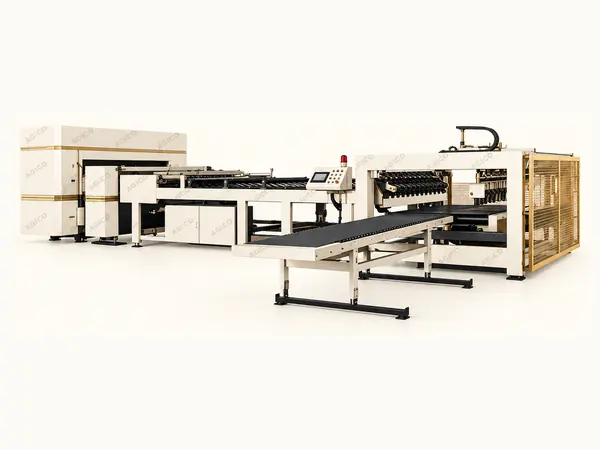
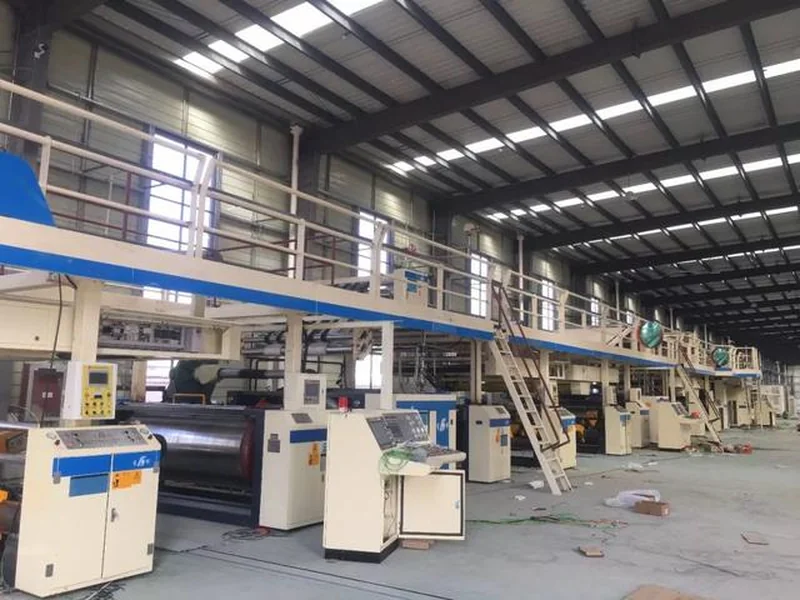
Corrugated Packaging Equipment

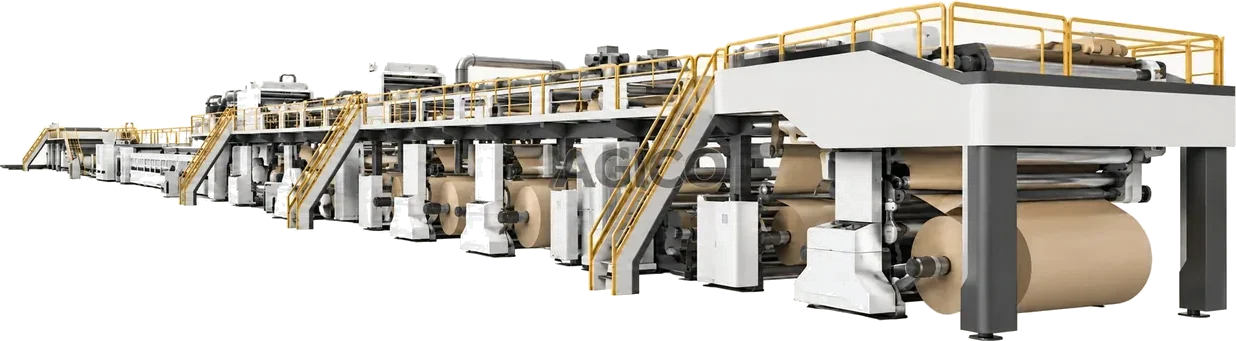
Corrugated Carton Production Line

AGICO builds corrugated board production lines for single face, single wall, double wall and heavy-duty board. Each line is configured around your board structure, output target, paper grades and converting requirements.

Wide-line capability 1400 / 1600 / 1800 / 2000 / 2200 / 2500 / 2800 / 3300 / 3600 mm
High-speed platforms 100 / 150–200 / 250–300 / 350–400 m/min
  • 2 / 3 / 5 / 7 PlyConfigurable board structures
  • Up to 3600 mmStandard and wide-line working widths
  • Engineering SupportPaper grades, flute profiles, production targets, plant layout
  • Custom AutomationControl, heat source and auxiliary equipment options

Line Configurations

Build the Right Corrugated Board Production Line for Your Product Mix

Four board structures, four line architectures. Compare the machine set, the board output and the packaging each one is built to serve.

Board Line Configurations

Flexible configurations. Scalable for your growth.

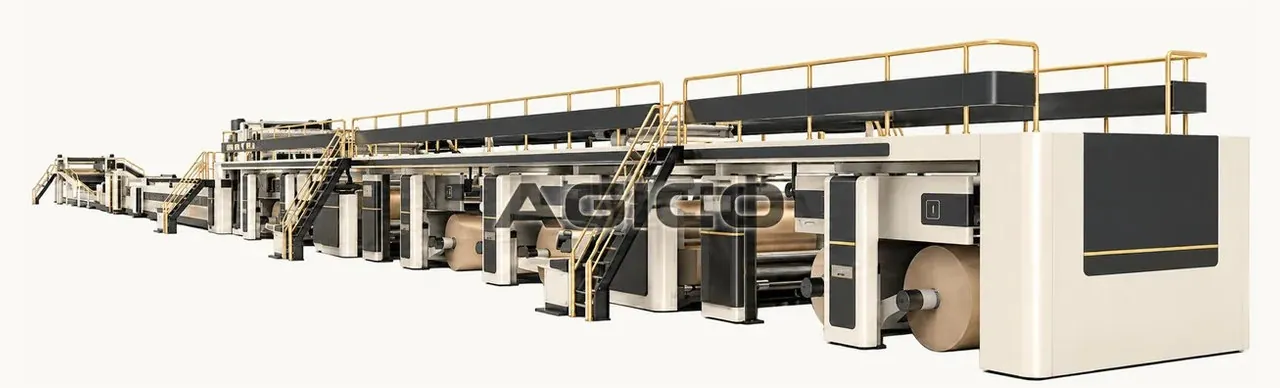
3-Ply Corrugated Production Line

A 3 ply line produces single wall corrugated board for mainstream carton production — general shipping cartons, retail transport packaging and everyday protective packaging. Short changeover and low running cost, with room to add stations as volume grows.

  • 1 single facer + single-deck glue machine
  • Double facer: yes
View Full Solution
3-ply corrugated paperboard production line: preheater, single facer, glue machine, double facer and stacker
Design Speed100–400 m/min
Working Width1400–3600 mm
  1. 1Preheater
  2. 2Single Facer
  3. 3Glue Machine
  4. 4Double Facer
  5. 5Slitter Scorer
  6. 6Stacker

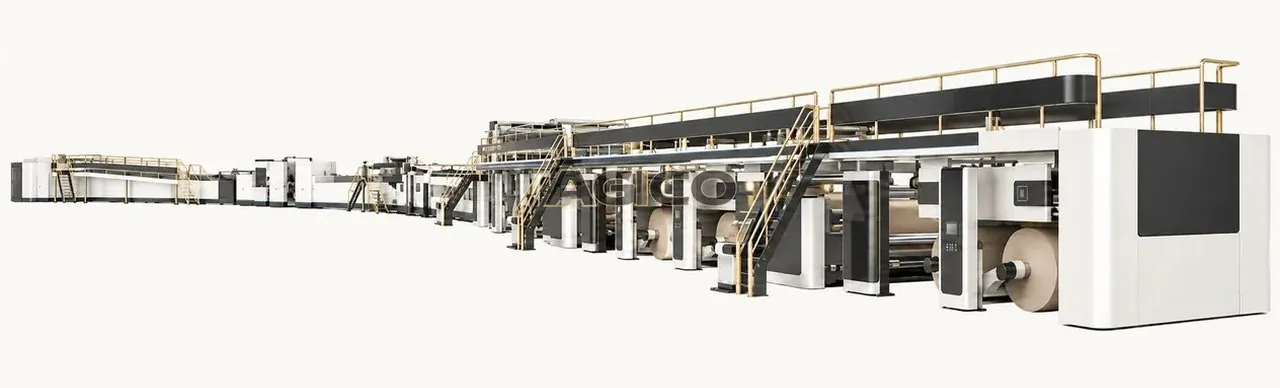
5-Ply Corrugated Production Line

A 5 ply line produces double wall corrugated board with increased strength and stiffness, for packaging that needs greater protection during storage, stacking and transport. The workhorse for export cartons that have to survive a container.

  • 2 single facers + double-deck glue machine
  • Double facer: yes
View Full Solution
5-ply corrugated production line: corrugator, preheater, double facer, slitter scorer, cut-off and stacker
Design Speed100–400 m/min
Working Width1400–3600 mm
  1. 1Corrugator
  2. 2Preheater
  3. 3Double Facer
  4. 4Slitter Scorer
  5. 5Cut-off
  6. 6Stacker

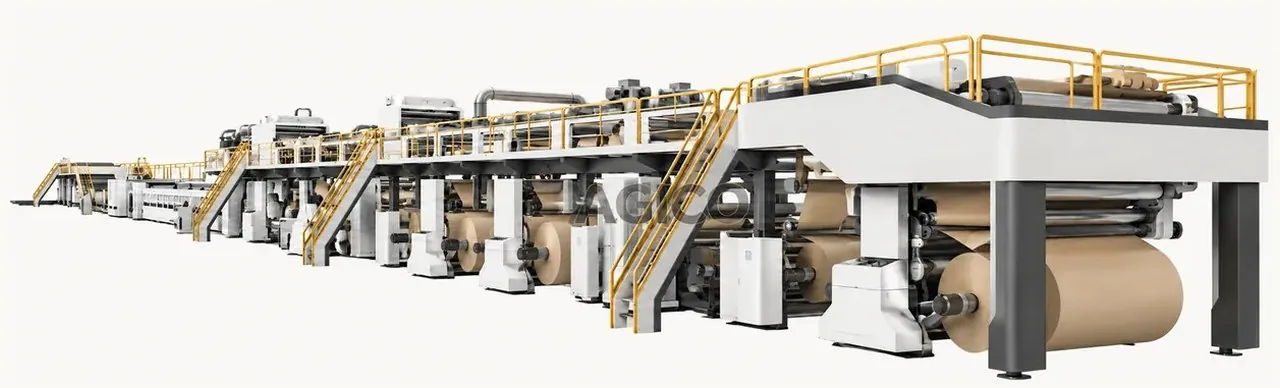
7-Ply Corrugated Production Line

A 7 ply line produces multi-wall corrugated board for demanding industrial packaging — heavy products, long-distance transport and high-load distribution, on a frame built to hold tolerance shift after shift.

  • 3 single facers + triple-deck glue machine
  • Double facer: yes
View Full Solution
7-ply heavy-duty corrugation line: mill roll stands, preheater, glue machine, double facer and stacker
Design Speed100–400 m/min
Working Width1400–3600 mm
  1. 1Mill Roll Stand
  2. 2Preheater
  3. 3Glue Machine
  4. 4Double Facer
  5. 5Slitter Scorer
  6. 6Stacker

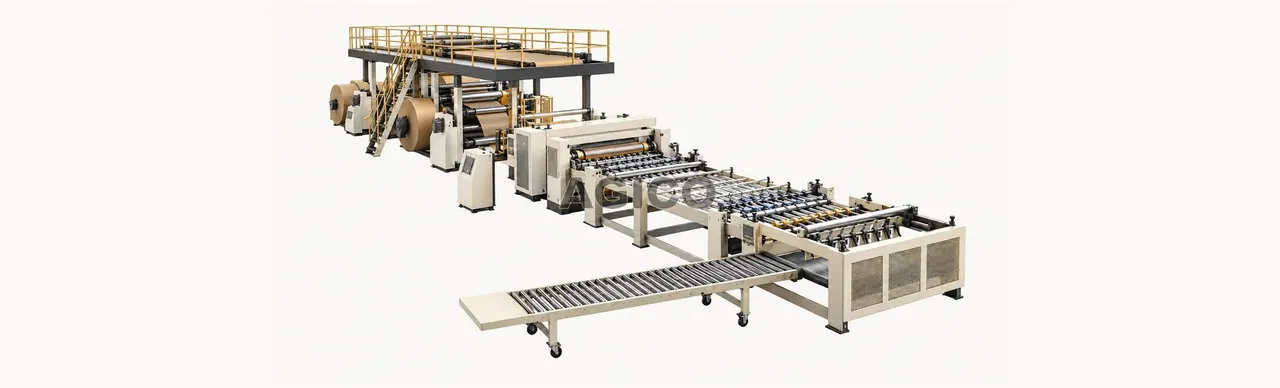
2-Ply Single-Face Line

A 2 ply line bonds one corrugated medium to one liner, producing single face board where flexibility, cushioning or later lamination is required. The shortest line we build: mill roll stand to stacker in one pass, no double backer.

  • 1 single facer; no separate glue machine
  • Double facer: no
View Full Solution
2-ply corrugated production line: mill roll stands, single facer, glue machine, slitter scorer and stacker
Design Speed150 m/min
Working Width1600–2200 mm
  1. 1Mill Roll Stand
  2. 2Preheater
  3. 3Single Facer
  4. 4Glue Machine
  5. 5Slitter Scorer
  6. 6Stacker

01Start With the Right Board Structure

Choose the Corrugated Board
Structure and Ply Count That
Fit Your Packaging Market

One Frame, Four Board Structures

Pick the board you actually sell. Liners, flute layers and the number of single facers follow from that choice, so the structure decides the machine before the machine decides your box.

3 · 5 · 7 PlyOne line frame, every board structure
A / B / C / E FluteFlute profile fixed when you order
Reel to SheetOne continuous production flow
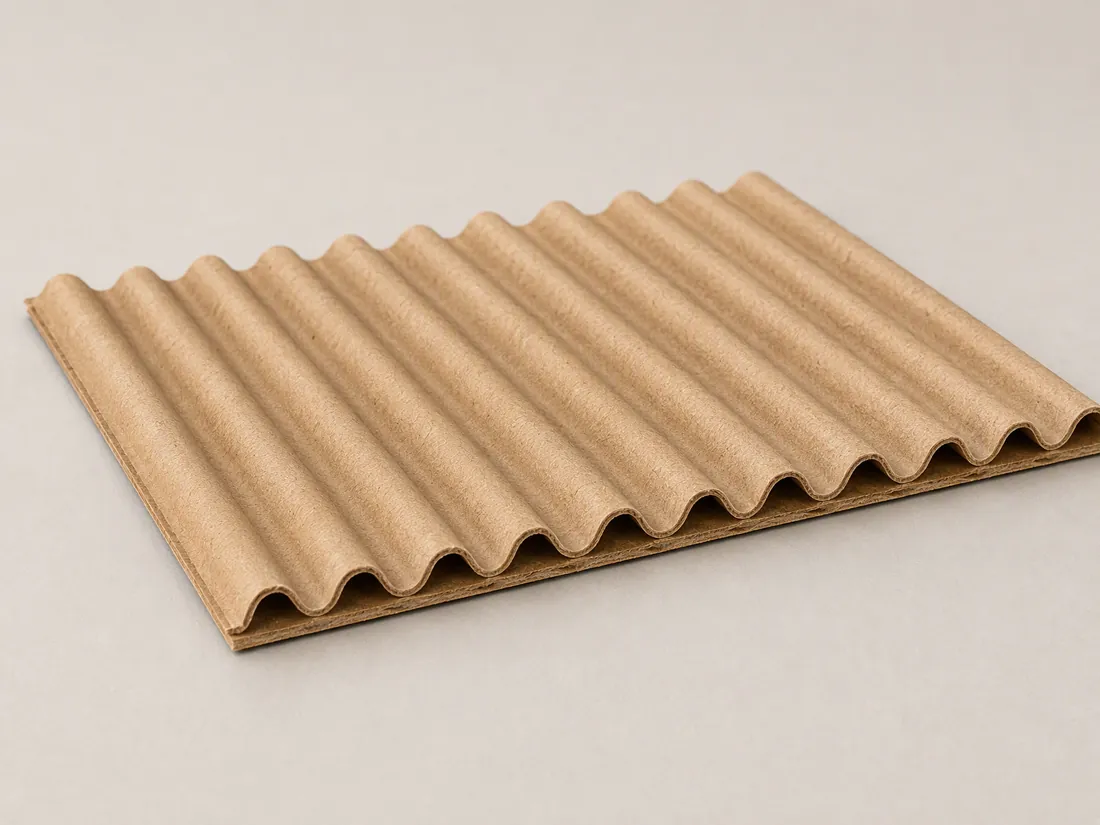
2 Ply corrugated board, single face structure 2 Ply · Single face

01

2 Ply Corrugated Board

One liner + one fluted medium

1Liner
1Flute layer
≈3 mmCaliper
CushioningBest for
Typical packaging need
Flexible corrugated material and lightweight protective applications
Recommended buyer focus
Simple structure and product-specific converting requirements
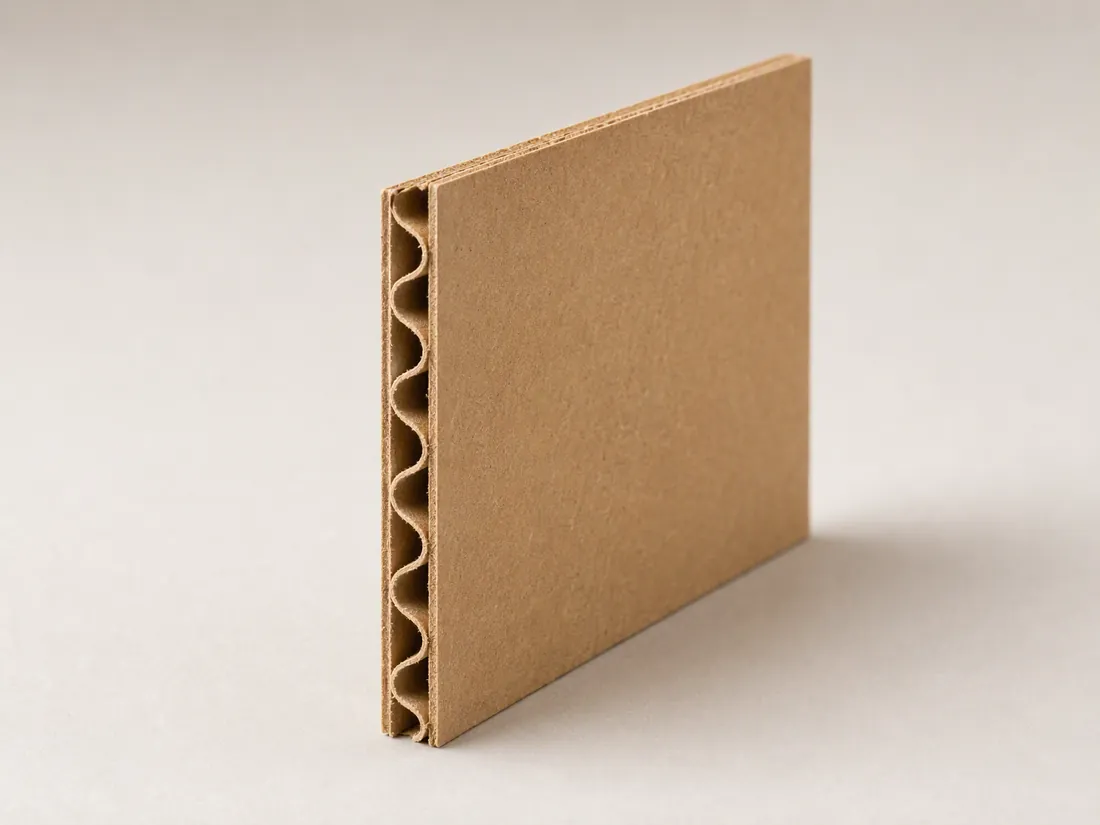
3 Ply corrugated board, single wall structure 3 Ply · Single wall

02

3 Ply Corrugated Board

Two liners + one fluted medium

2Liners
1Flute layer
≈3 mmCaliper
Inner boxesBest for
Typical packaging need
Standard shipping cartons and general-purpose packaging
Recommended buyer focus
Balanced cost, board performance and production versatility
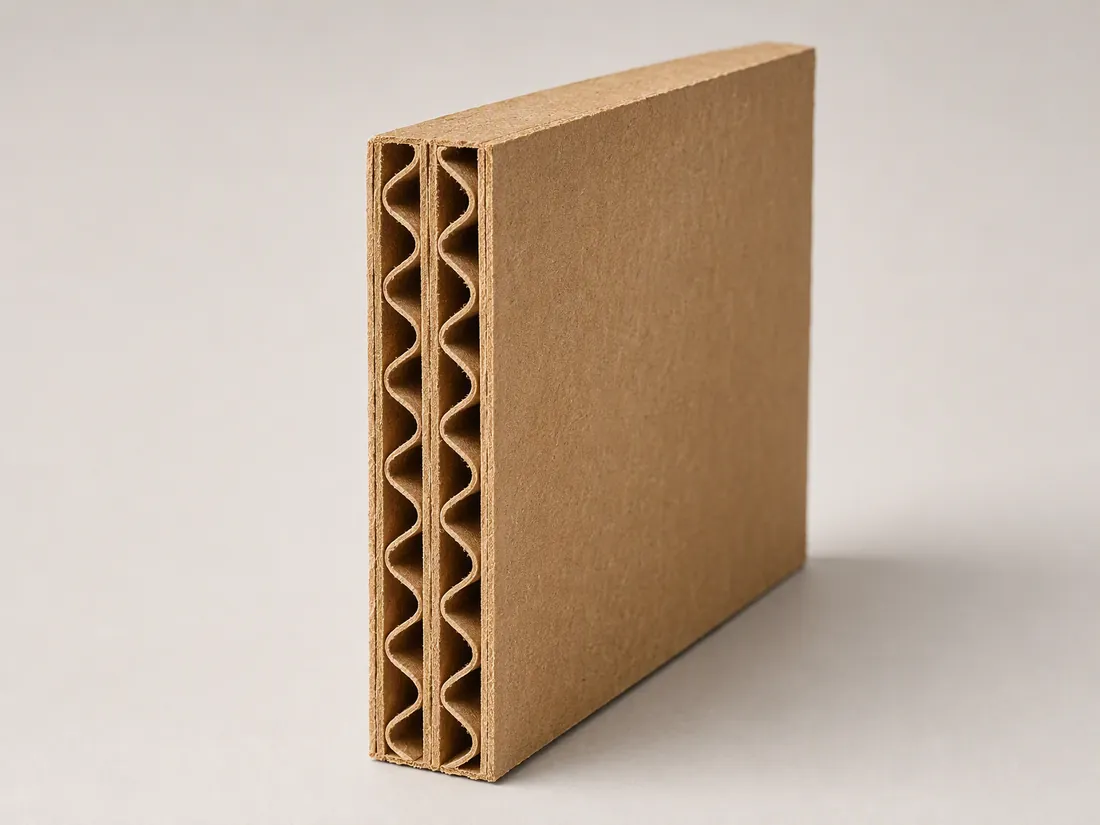
5 Ply corrugated board, double wall structure 5 Ply · Double wall

03

5 Ply Corrugated Board

Three liners + two fluted mediums

3Liners
2Flute layers
≈6 mmCaliper
Outer boxesBest for
Typical packaging need
Stronger cartons for larger, heavier or stackable goods
Recommended buyer focus
Strength, stiffness and broader product coverage
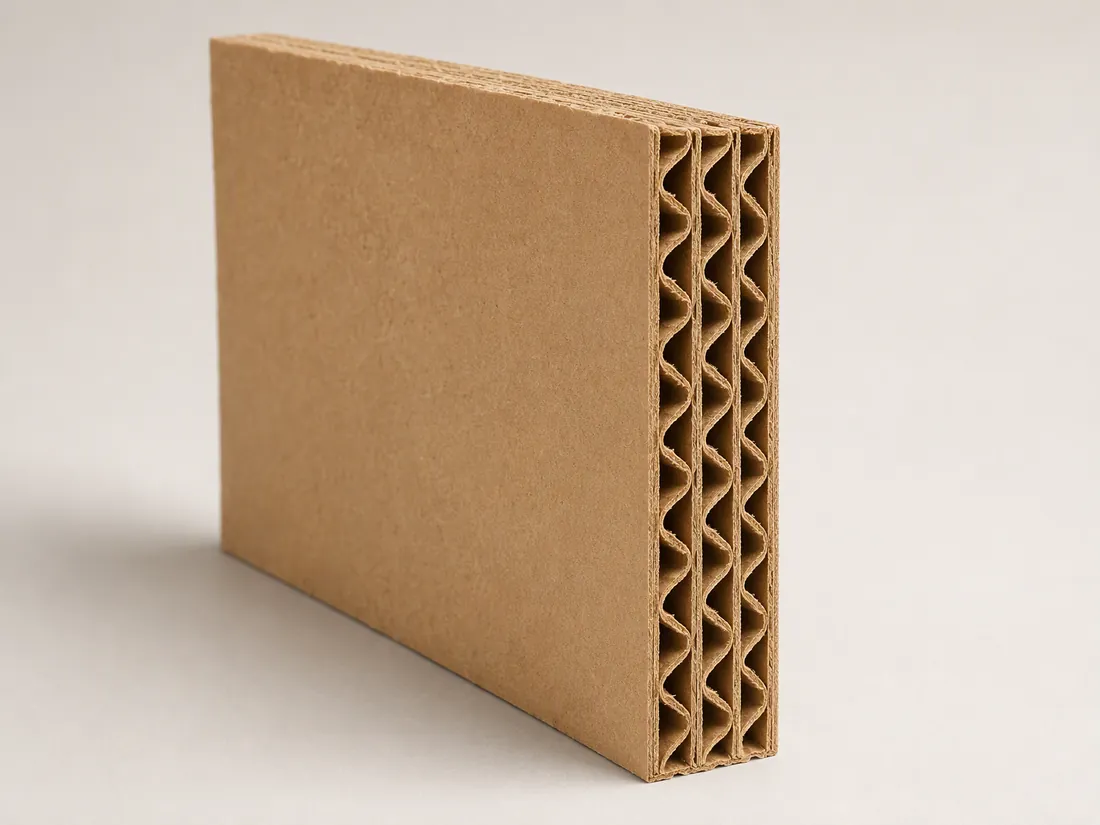
7 Ply corrugated board, triple wall structure 7 Ply · Triple wall

04

7 Ply Corrugated Board

Four liners + three fluted mediums

4Liners
3Flute layers
≈9 mmCaliper
Heavy-dutyBest for
Typical packaging need
Heavy-duty industrial transport and high-protection packaging
Recommended buyer focus
Load-bearing performance and multi-wall board engineering

The number of layers affects board strength, material consumption, machine configuration and the carton types your factory can supply. If your product mix covers several board grades, AGICO can review the right starting structure and the expansion path with you.

Line Anatomy

The 8 Main Systems in a Corrugated Board Production Line

We build all eight of these systems into an AGICO corrugator line. Which grade of each one you get is settled by the board you sell and the flow your plant can absorb — not by a catalogue page.

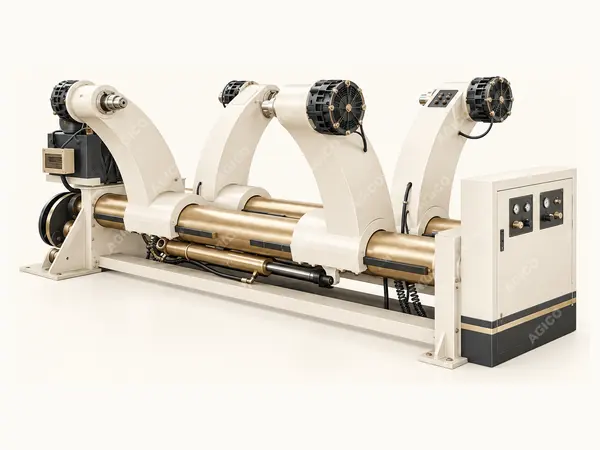
Heavy-duty shaftless mill roll stand for corrugated paper feeding and reel handling
01

Paper Feeding and Reel Handling System

Shaftless reel stand, so a roll loads without a shaft and changeover is quicker. Tension rollers hold the web steady at the line’s 150 m/min design speed.

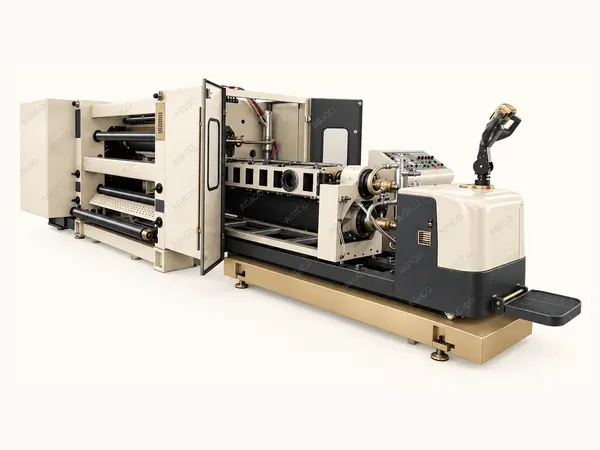
Cassette single facer for corrugated flute forming and liner bonding
02

Single Facer and Corrugating Unit

Liner 110–400 g/m², medium 110–200 g/m² — one unit covers light carton grades and heavy export board. Flute profile is decided here, so we specify this unit first.

Corrugated line preheater for paper conditioning before bonding
03

Bridge and Material Buffer Section

The bridge holds a loop of single face board so the wet end and the dry end stop fighting each other, and preheats the web before it reaches the hot plates.

Double glue machine for multi-ply corrugated board laminating
04

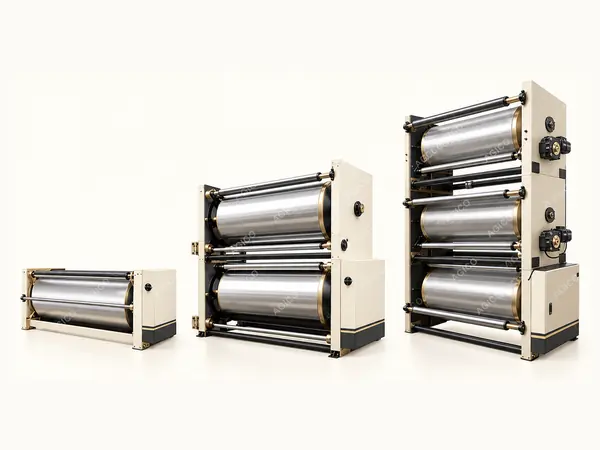
Multi-Ply Laminating Section

One glue machine deck per extra ply: single for 3 ply, double for 5, triple for 7. That is how 3, 5 and 7 ply come off one frame instead of two separate lines.

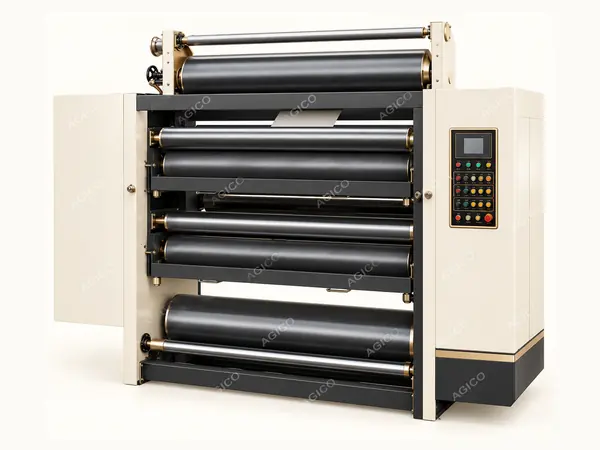
Double facer for heating drying and pressure bonding
05

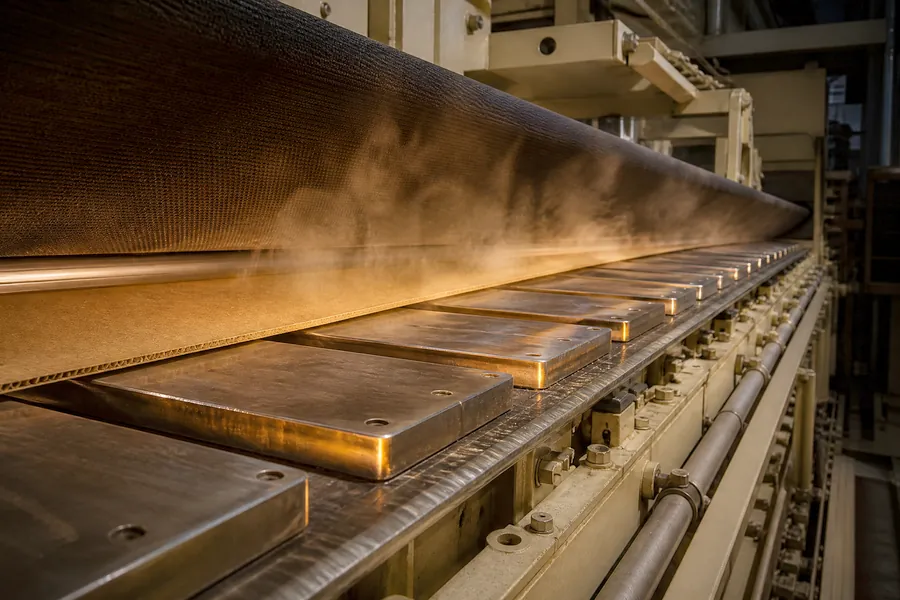
Heating, Drying and Pressure Section

Hot plates at 160–180 °C cure the starch; pressure rollers hold the sheet against them. Reel moisture must be 11% ± 1% — outside that band, the bond will not hold.

Thin blade slitter scorer for corrugated board finishing
06

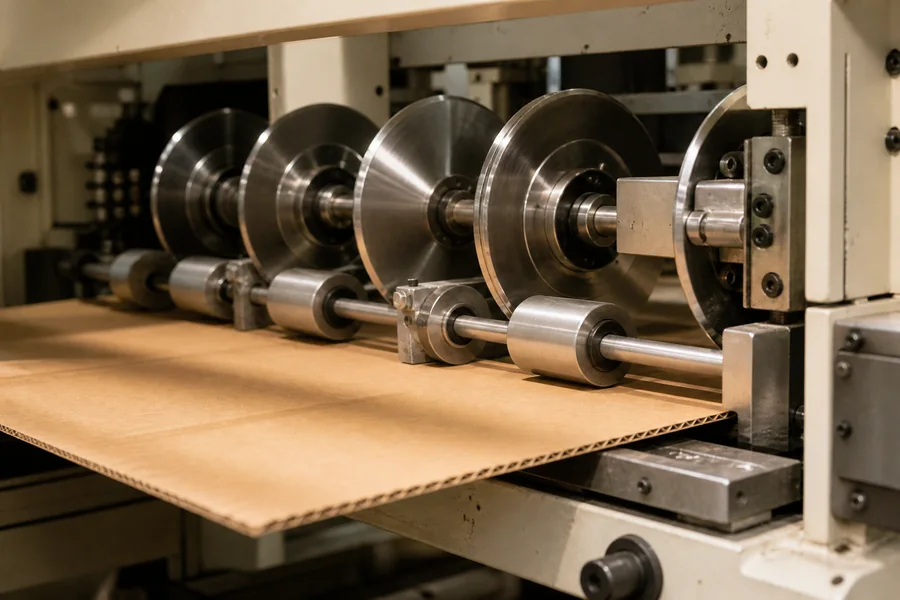
Slitter Scorer and Cut-Off System

Width, score and sheet length are set in a single pass. An order change takes 5–8 seconds, but it still scraps the first stretch of board — more SKUs means more loss.

Basket type automatic stacking machine for corrugated sheets
07

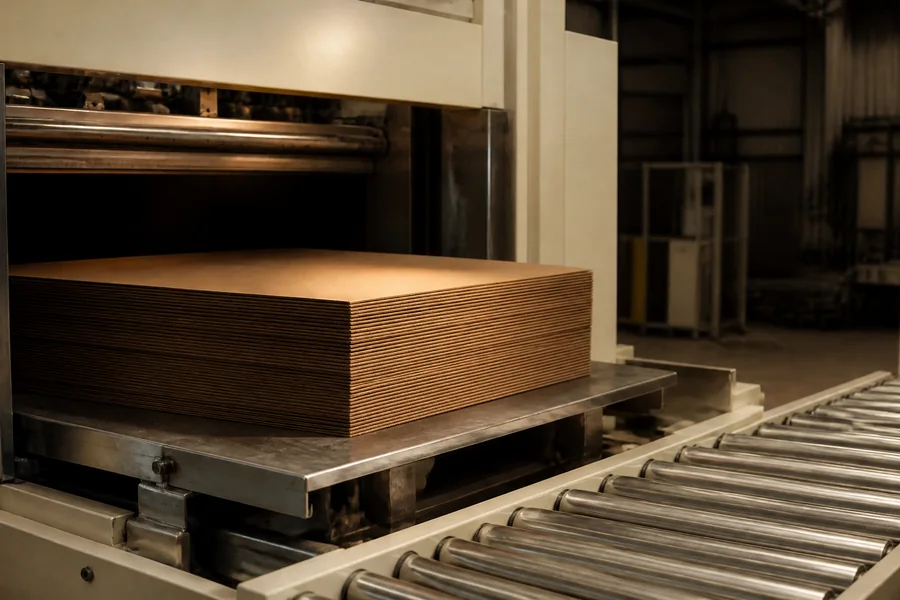
Stacking and Delivery System

The down stacker squares, counts and transfers the sheets — this is where our line hands over to your converting line. Alignment here caps your flexo folder-gluer speed.

Computerized cut-off machine with operator control for corrugated production
08

Control and Automation System

One operator panel coordinates speed, temperature, glue and order data. We scope the level with you: recipe control costs more, so you pay for what your order mix needs.

Next Step

Not sure which grade you need?

Send your board mix and target output. We will tell you which of these eight systems drives your line cost — before you commit to anything.

Ask an engineer →

The Complete Solution

What Is a Corrugated
Board Production Line?

A corrugated board production line, also known as a corrugator line, is a continuous system used to convert liner paper and corrugating medium into corrugated cardboard sheets. Depending on the required board structure, the system forms one or more fluted mediums, bonds them with liner paper, dries the board and delivers cut sheets for printing, die-cutting and carton converting.

AGICO helps packaging manufacturers define the right line configuration before procurement. The engineering process considers the intended carton products, board strength requirements, paper specifications, flute combinations, production rhythm and the relationship between the corrugator and downstream converting equipment.

Wet End

Paper roll handling
and single facer section

Bridge Buffer

Web transfer
and preheating

Dry End

Double facer, slitter scorer
and cut-off section

Corrugated board production line with corrugating, drying and cutting sections

Buyer Profile

Who Is This Line
Designed For?

The configuration is set by the board you intend to sell and the plant you intend to run it in — not by the size of the machine alone.

  1. 01New corrugated carton plants establishing a complete board-making operation
  2. 02Existing packaging factories upgrading board quality, automation or product range
  3. 03Manufacturers moving from standard transport cartons into higher-strength packaging
  4. 04Producers serving e-commerce, appliances, food, furniture, industrial goods or heavy-duty logistics markets
  5. 05Investors planning a phased corrugated packaging project with future expansion capability

Selection Framework

How to Select a Corrugated Cardboard Production Line

A reliable proposal starts with six project decisions. Choose a topic to see what changes the line architecture and what AGICO confirms before quotation.

01 / 06Project definition

What products will be packed?

Why it matters

Product weight, shape and transport conditions determine the required board structure.

What AGICO reviews

Packaging application, protection level and carton type

Engineering outputA configured line scope—not a catalogue default.
Discuss Your Board Configuration →

Side by Side

3 Ply vs 5 Ply vs 7 Ply: Corrugated Board Line Comparison

Four line architectures, side by side. The machine count is what you actually pay for, so compare single facers, glue decks and the double facer before you compare speeds.

3 ply

Single wall
Single facers
1
Glue machine
Single deck
Double facer
Yes
Working widths
1400 / 1600 / 1800 / 2000 / 2200 / 2500 / 2800 / 3300 / 3600 mm
Design-speed classes
100 / 150–200 / 250–300 / 350–400 m/min
Stable speed by class
70–90 / 120–180 / 200–250 / 280–350 m/min
Board produced
3 ply board
Typical use
Light cartons, liners

5 ply

Double wall
Single facers
2
Glue machine
Double deck
Double facer
Yes
Working widths
1400 / 1600 / 1800 / 2000 / 2200 / 2500 / 2800 / 3300 / 3600 mm
Design-speed classes
100 / 150–200 / 250–300 / 350–400 m/min
Stable speed by class
60–80 / 100–150 / 180–220 / 250–300 m/min
Board produced
5 ply board
Typical use
Export shipping cases

7 ply

Triple wall · heavy duty
Single facers
3
Glue machine
Triple deck
Double facer
Yes
Working widths
1400 / 1600 / 1800 / 2000 / 2200 / 2500 / 2800 / 3300 / 3600 mm
Design-speed classes
100 / 150–200 / 250–300 / 350–400 m/min
Stable speed by class
50–70 / 80–120 / 150–190 / 200–260 m/min
Board produced
7 ply board
Typical use
Heavy loads, wood replacement

2 ply

Single face
Single facers
1
Glue machine
None
Double facer
No
Working width
1600 / 2200 mm
Design speed
150 m/min
Economic speed
—
Board produced
Single face board
Typical use
Liner, cushioning

Standard effective working widths are 1400, 1600, 1800, 2000, 2200, 2500, 2800, 3300 and 3600 mm. A machine has one design maximum; stable production speed decreases as board structure becomes heavier. Actual speed also follows paper grades, flute combination, steam stability and dry-end capacity.

Capacity Maths

Design Speed vs Stable Production Speed

A corrugator has one design maximum, while the stable operating range changes with board structure. Three-ply board can run closest to the design ceiling; five-ply and seven-ply board require progressively more heat and bonding time.

Four corrugator platform classes

Specify the machine class first, then the stable speed by ply.

These are reference operating ranges. Paper grades, flute profile, moisture, steam stability, glue performance and dry-end capacity determine the final guaranteed conditions for a project.

100m/min

Economic entry line3 ply 70–90 · 5 ply 60–80 · 7 ply 50–70

150–200m/min

Standard medium-speed line3 ply 120–180 · 5 ply 100–150 · 7 ply 80–120

250–300m/min

High-speed line3 ply 200–250 · 5 ply 180–220 · 7 ply 150–190

350–400m/min

Ultra-high-speed plant line3 ply 280–350 · 5 ply 250–300 · 7 ply 200–260

Top class

The formula

Output area (m²/h)=Working width (m)×Stable speed (m/min)×60

Reference theoretical output at stable speed

PlyWorking widthStable speed usedRelative outputTheoretical output
3 ply1800 mm180 m/min19,440 m²/h
3 ply2800 mm350 m/min58,800 m²/h
5 ply2200 mm220 m/min29,040 m²/h
5 ply2800 mm300 m/min50,400 m²/h
7 ply2200 mm190 m/min25,080 m²/h
7 ply2800 mm260 m/min43,680 m²/h

Bars are scaled to 58,800 m²/h, the largest reference example shown above. These are area calculations, not guaranteed net plant output.

Actual sellable output is lower after order changes, web breaks, paper and steam variation, glue adjustment and downstream handling losses are deducted.

Ply count changes the stable operating range

The same corrugator has one design maximum. Stable output is lower for five-ply and seven-ply structures because additional paper layers require more controlled heating, bonding and drying time.

What drags real output below the theory

Size the line around stable output, not catalogue speed.Share your ply mix, working width and daily output target so our engineers can match the practical speed class.

Confirm Your Stable Production Speed

Production Flow

Corrugated Board Manufacturing Process: Wet End to Dry End

A complete corrugator line coordinates material preparation, corrugating, bonding, drying and sheet delivery in one continuous production flow.

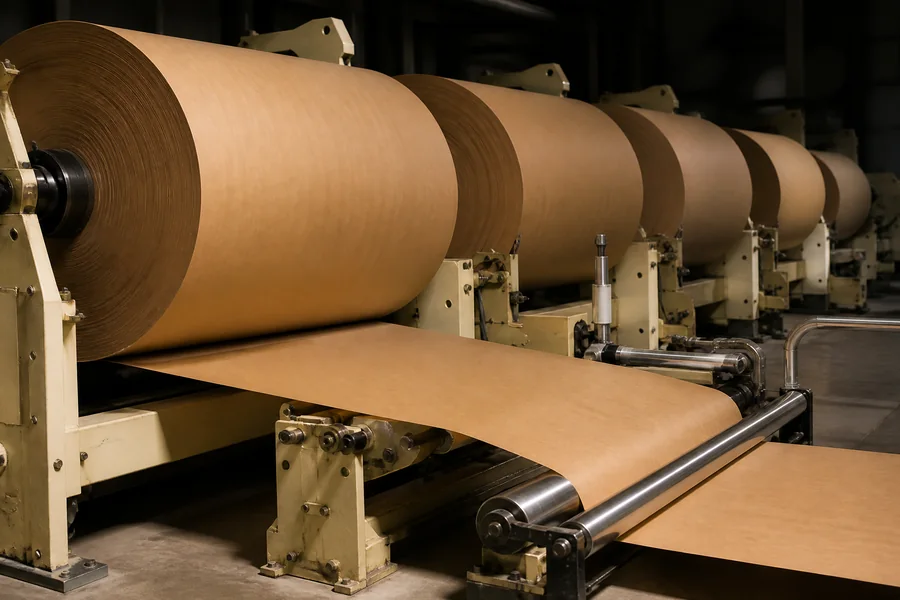
  1. Kraft liner paper rolls on a shaftless mill roll stand feeding paper into a corrugated board production line01

    Paper Roll Preparation

    Liner paper and corrugating medium are supplied to the line from the reel stand and prepared for stable feeding.

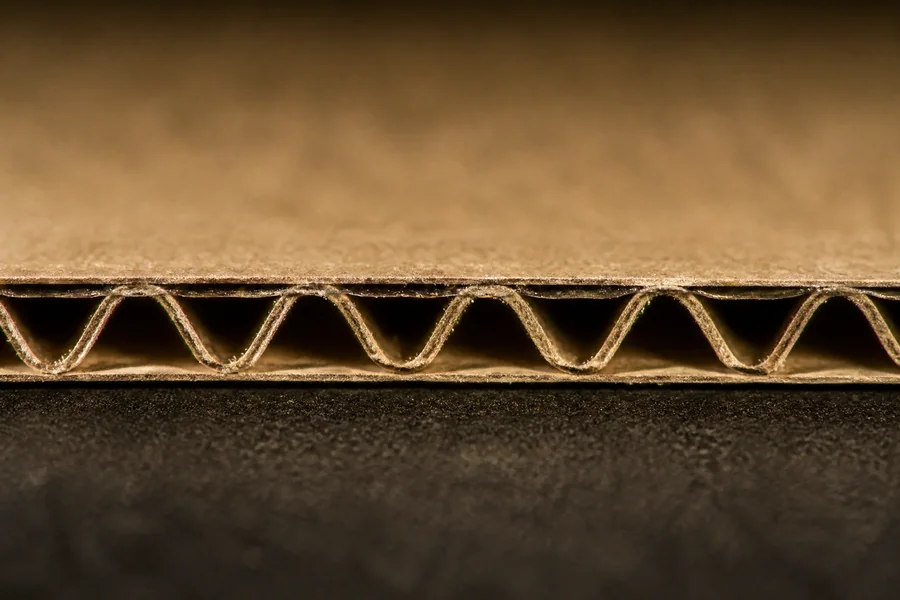
  2. Cross-section of single wall corrugated board with the fluted medium bonded between two kraft liners02

    Corrugating

    The medium paper is formed into flutes through the corrugating section, creating the cushioning structure of the board.

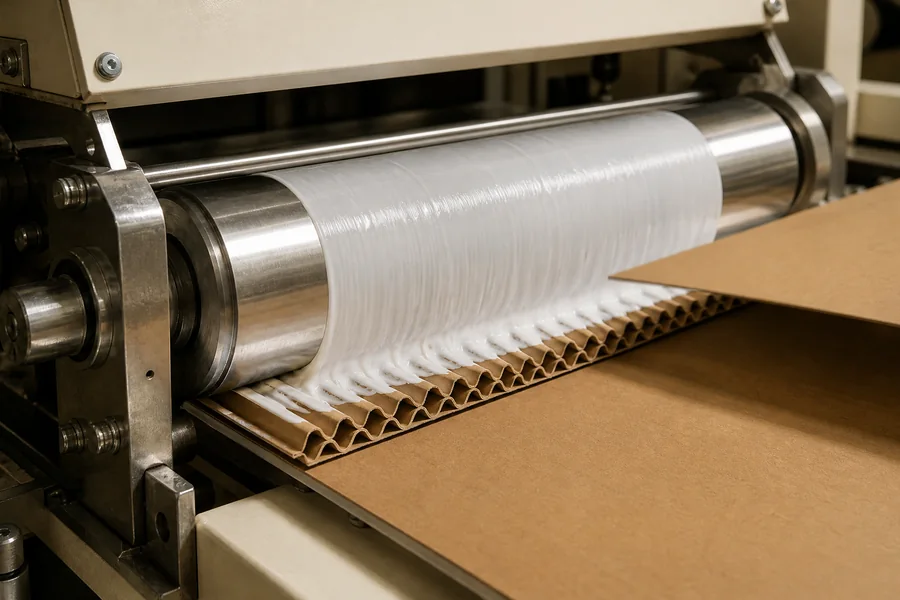
  3. Glue applicator roller transferring starch adhesive onto the flute tips of corrugating medium03

    Gluing and Laminating

    Adhesive is applied and liner paper is bonded to the fluted medium. Additional corrugating and laminating units are used for multi-wall board structures.

  4. Corrugated board running over the steam-heated plates of the double facer drying section04

    Drying and Board Stabilization

    The combined board passes through the heating and drying section to stabilize the bond and prepare the sheet for downstream processing.

  5. Slitter scorer blades and score wheels cutting corrugated board to width and sheet length05

    Slitting, Scoring and Cutting

    The board is slit, scored and cut into the required sheet dimensions for carton converting operations.

  6. Stack of finished corrugated board sheets leaving the stacker of a corrugator line06

    Stacking and Transfer

    Finished sheets are stacked and transferred for printing, die-cutting, folding, gluing or other downstream processes.

From paper rolls to finished corrugated cardboard sheets: an integrated production flow for packaging manufacturers.

Connect every wet-end and dry-end station as one system.Tell us the board grades you plan to produce and we will map the equipment sequence and interfaces.

Plan Your Complete Corrugator Line

Applications

Corrugated Board Grades and Applications by Packaging Requirement

Corrugated shipping cartons stacked ready for e-commerce dispatch01

E-Commerce and Retail Distribution

Board solutions for shipping cartons, retail-ready packaging and products requiring reliable protection through multiple handling stages.

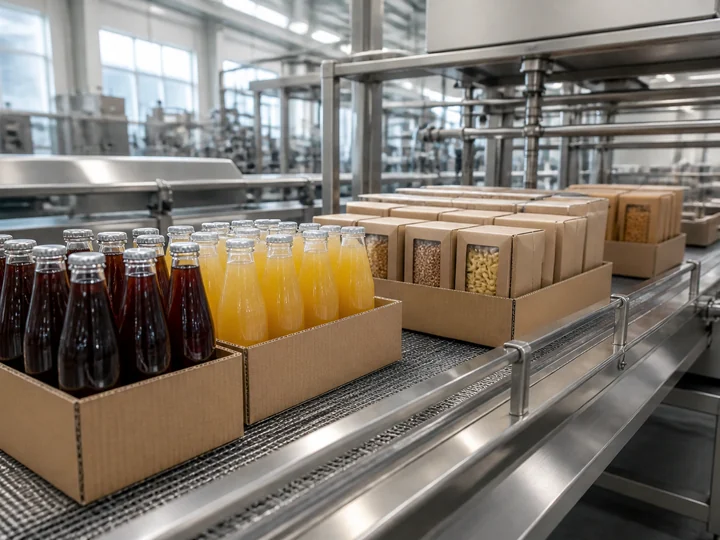
Corrugated trays carrying beverage bottles and boxed food on a packing conveyor02

Food and Beverage Packaging

Corrugated packaging for dry goods, beverage transport, fresh-produce distribution and other application-specific carton requirements.

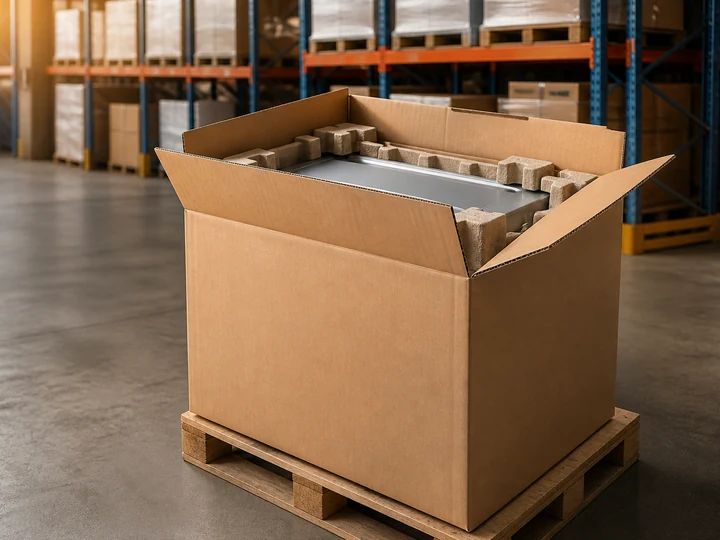
Double-wall corrugated carton with protective inserts for a home appliance03

Home Appliances and Electronics

Stronger board structures for products that need impact resistance, corner protection and controlled stacking performance.

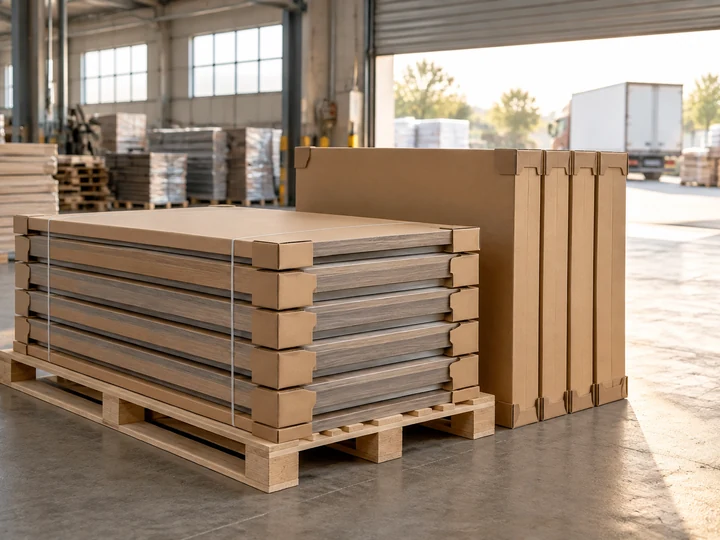
Flat corrugated cartons and edge protectors packing furniture panels on a pallet04

Furniture and Building Materials

Packaging solutions for bulky products where board stiffness, carton design and transport conditions must be considered together.

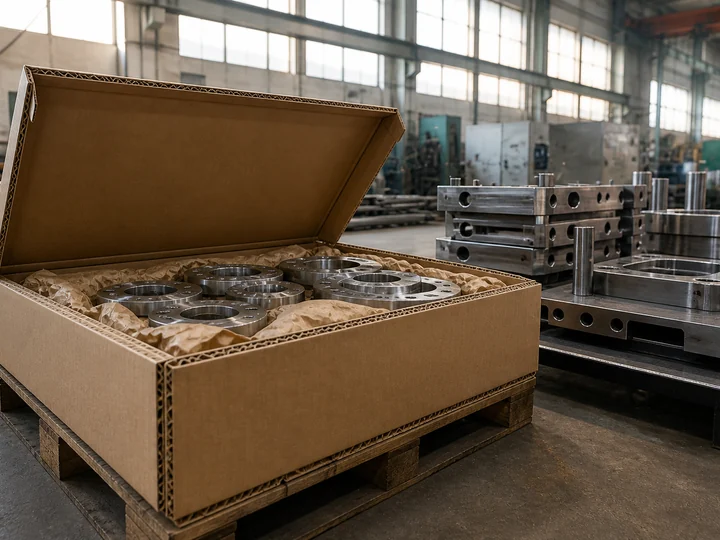
Heavy-duty corrugated carton holding machined steel parts in a machine shop05

Industrial Parts and Equipment

Heavy-duty corrugated board options for machinery parts, tools, components and industrial supply-chain packaging.

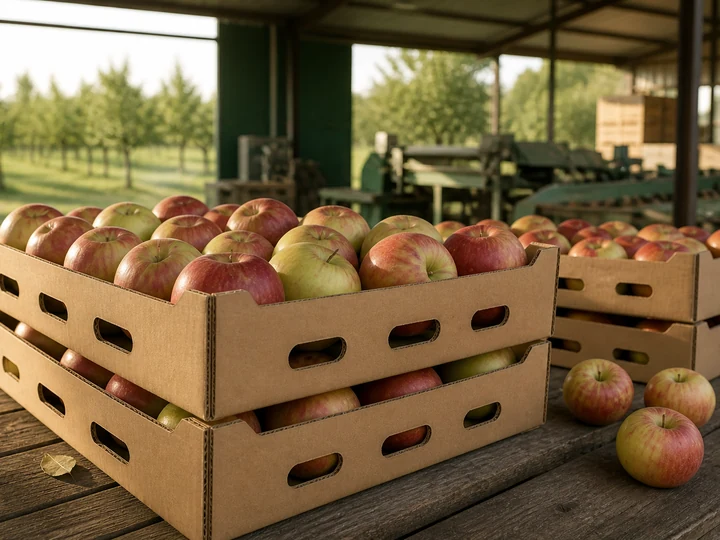
Ventilated corrugated trays filled with fresh apples in a packing shed06

Agricultural and Fresh Produce Packaging

Board configurations developed around ventilation, handling conditions, transport distance and the characteristics of the packed product.

Why AGICO

Why Choose AGICO as Your
Corrugated Board Line Manufacturer

Buyers shortlist five corrugator machine manufacturers and visit three. What separates them is not the catalogue — it is who owns the drawings, who signs the QC record, and who is still named on your contract in year five. This is our answer, in numbers.

01

We build the line, we do not resell it

Corrugator wall plates, rolls and gear trains are built and assembled at our own base. We own the drawings, the QC process and the warranty — not a third party.

02

HT250 castings, aged before machining

Casting stress is released before the bores are cut, so the corrugator frame does not distort as the line heats up.

03

40Cr slotting blades at HRC 46–52

Hardness is the difference between a blade that lasts a season and one that lasts a month.

04

Five QC checkpoints, signed in sequence

Incoming material, in-process, pre-assembly electrical, no-load run and a pre-shipment video. Each one is signed off before the next starts.

05

Every machine quoted with its interface spec

Roller diameters, drive positions, steam and air requirements and the PLC protocol it speaks — integration is designed before the machines are built, not improvised on your floor.

06

One named engineer, drawing to spare parts

One AGICO engineer on site for about 25 days of installation and operator training, and the same person stays on your order afterwards.

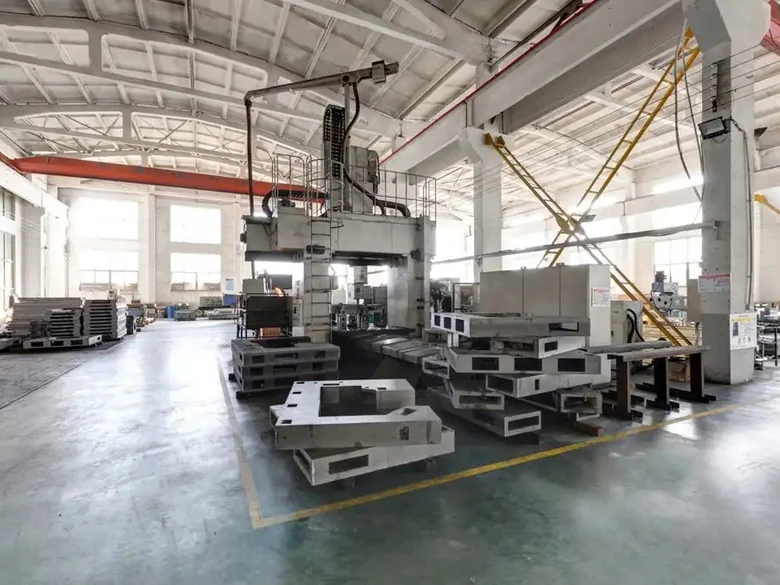
CNC machining centre cutting a corrugator component at the AGICO factory
Machining centre — key parts cut in house
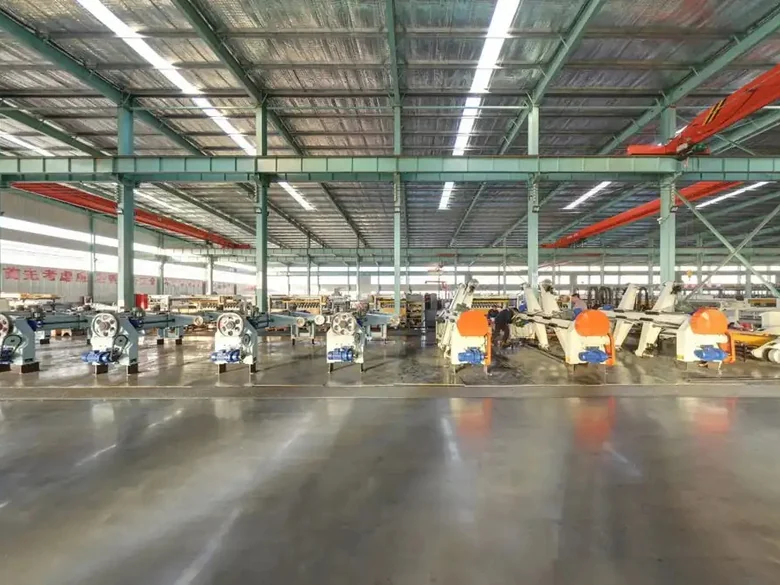
Corrugated board line modules assembled in the AGICO assembly workshop
Assembly workshop — modules built and tested
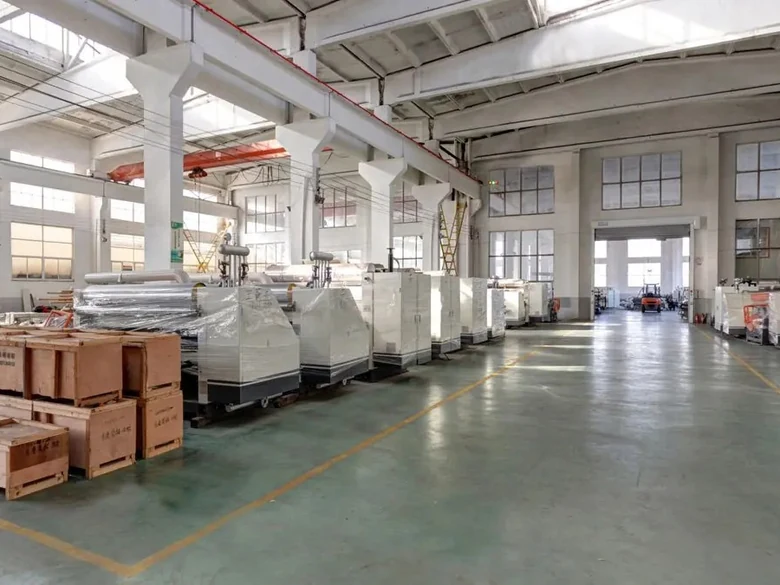
Finished corrugator modules crated for export at the AGICO factory
Packing — crated for container loading
  • ISO 9001:2015Certificate copy in your offer pack
  • CEScope confirmed on the order
  • Factory acceptanceYou sign it off before it ships
Request a Line Proposal →

Project Support

AGICO Support for Your Corrugated Box Making Project

Selecting a corrugated board production line involves more than choosing equipment. The final solution must connect packaging demand, board design, paper supply, plant layout, utilities, operating procedures and downstream converting processes. AGICO supports customers through the equipment-selection stage with practical engineering communication. Before issuing an itemized proposal, we clarify the information that affects line configuration so the solution can be reviewed against your actual factory plan.

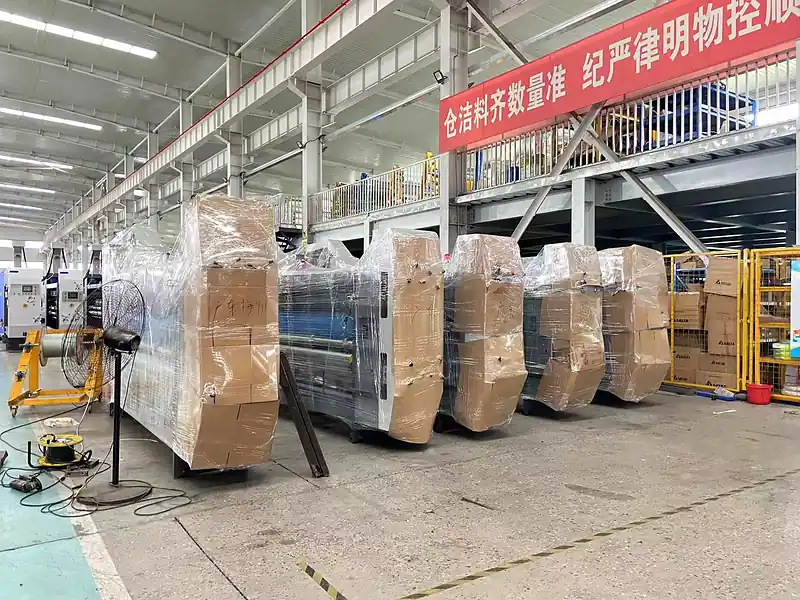
Cardboard box manufacturing equipment prepared for shipment
01

Project-Oriented Engineering

Configuration discussions are built around your intended packaging products, production flow and plant conditions.

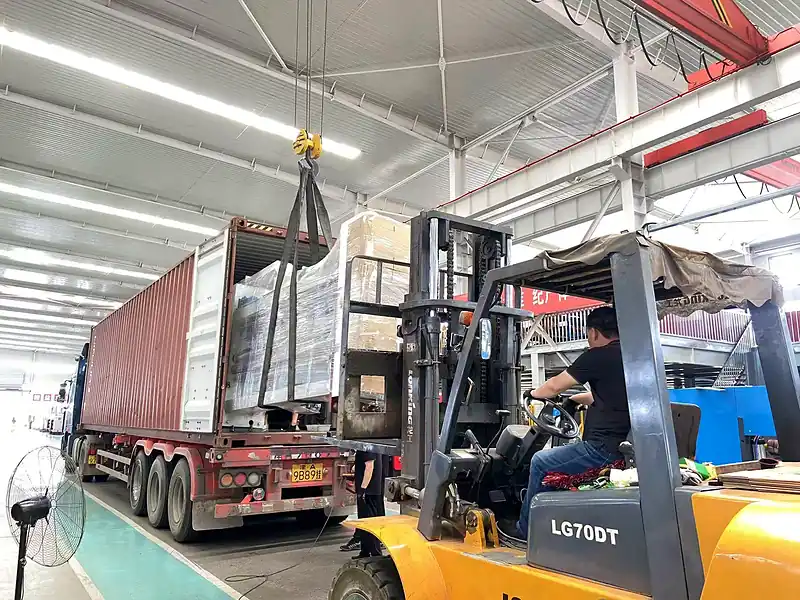
Corrugated board production line packed and loaded for export
02

Integrated Equipment Scope

The line can be planned as a coordinated system covering board forming, processing and selected supporting equipment.

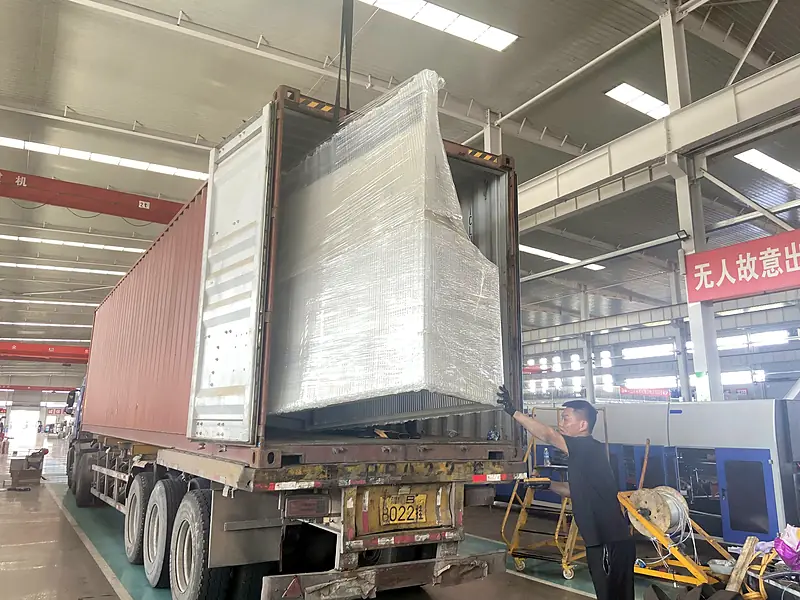
Cardboard box packaging machine being loaded into a container
03

Long-Term Production Perspective

The recommended structure considers current production needs together with reasonable product and market development plans.

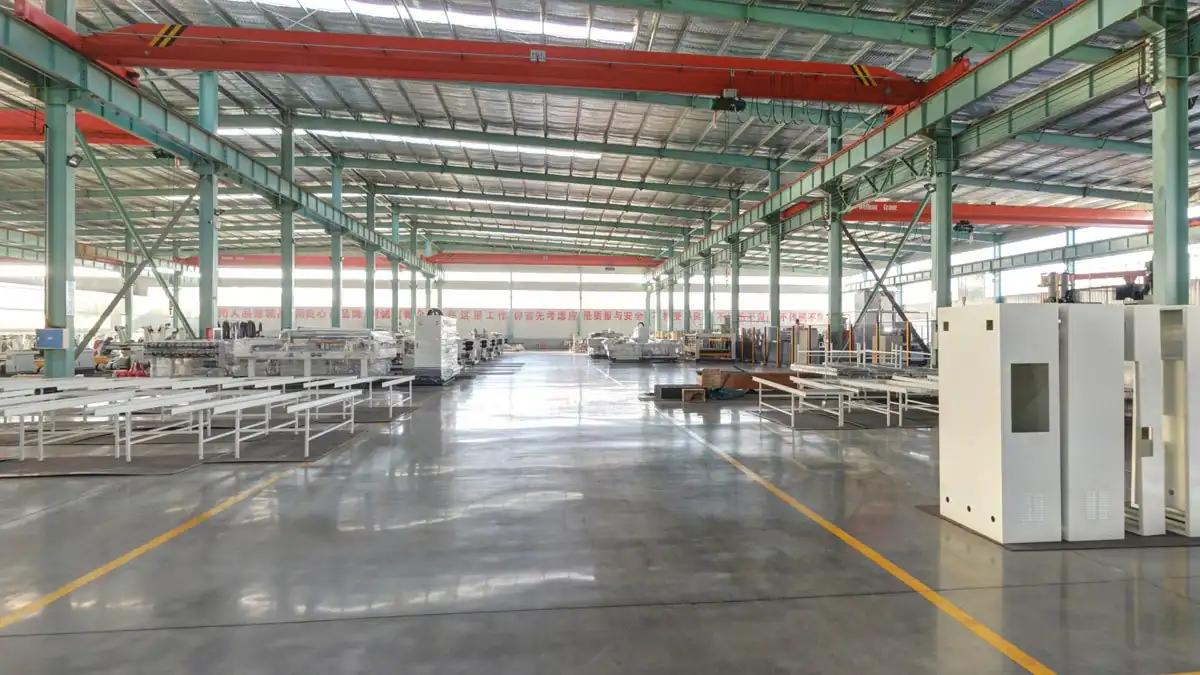
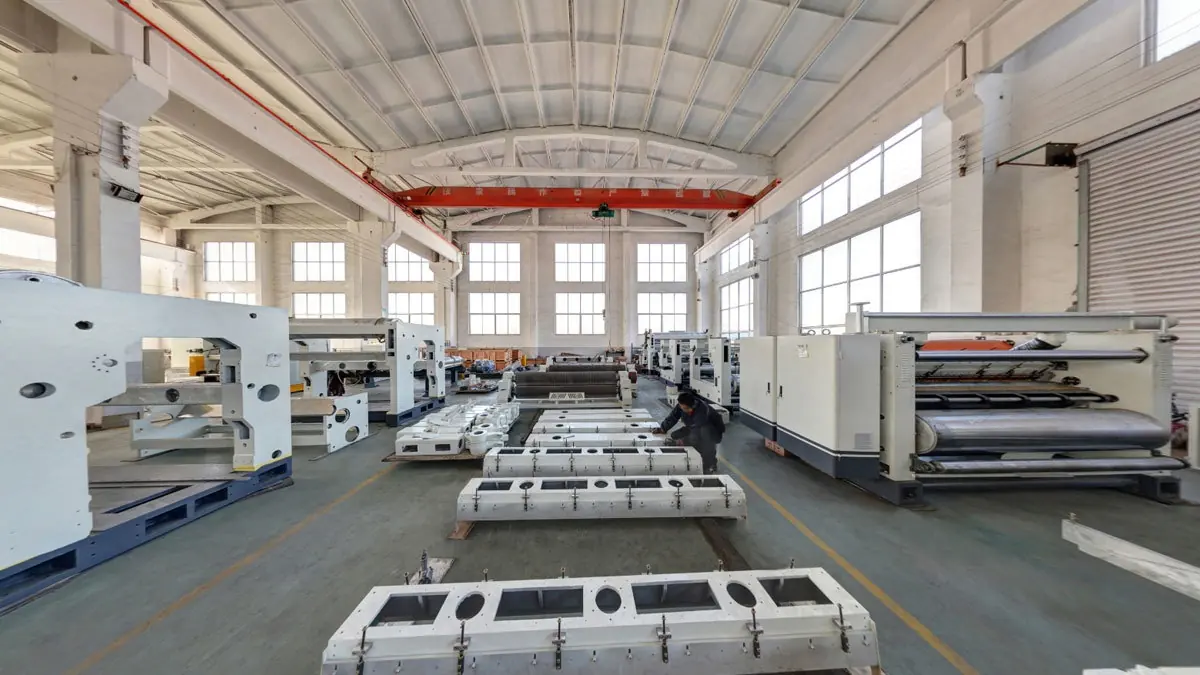
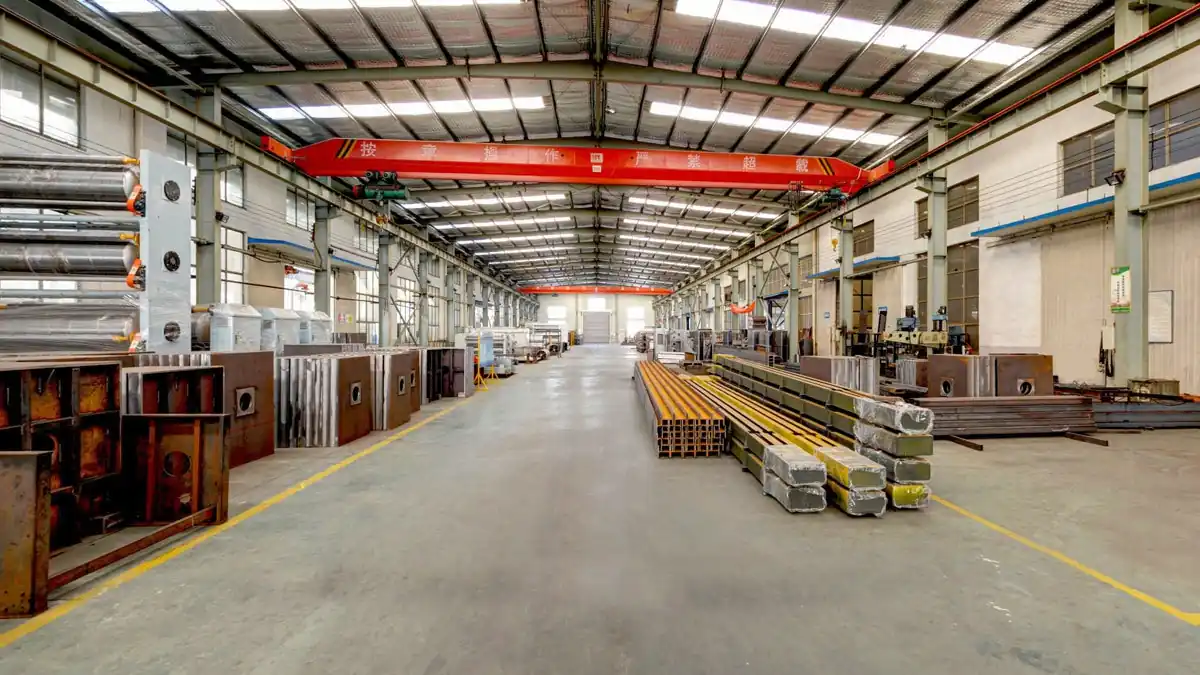
Carton making machine manufacturer production plant
Carton making machine supplier assembly factory
Corrugated carton machine manufacturing workshop

Turn your production requirement into an engineering scope.Send your plant dimensions, paper supply and product plan for a configuration review before quotation.

Discuss Your Factory Project

Projects

Corrugated Board Production Line Project References

Sites from lines we have delivered recently: assembly, shipment and start-up.

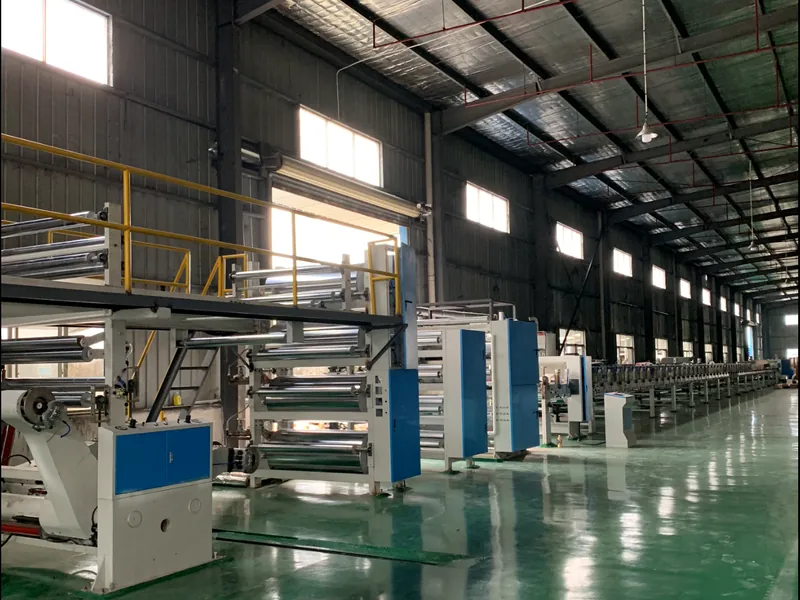
7-ply corrugated board production line project
7-Ply line projectMulti-wall corrugated board line installed in the customer workshop
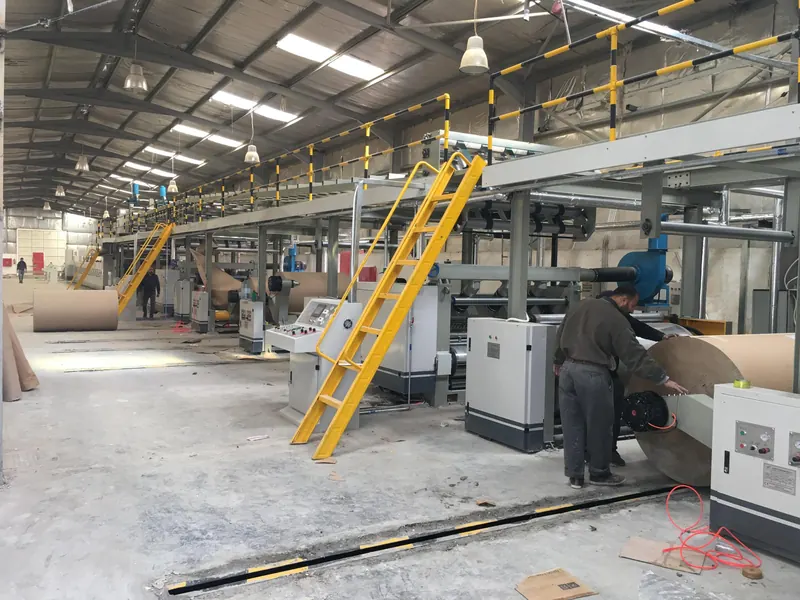
Corrugated board production line operating at a customer site
Corrugator projectOperating line with roll stands, elevated bridge and forming sections
Corrugated board production line project reference
Production line caseCustomer corrugated board line running after installation and commissioning

Before You Ask for a Price

Information Needed for a Corrugated Board Line Quotation

The more clearly the production requirement is defined, the more accurately the proposed line scope can be matched to your project.

Request an Itemized Quotation →

Site Preparation

What You Need Ready Before Your Corrugated Board Line Arrives

Whether a line starts on schedule is half decided by site preparation. This is the checklist we hand every customer before kick-off: get it done early and installation runs to plan.

01

Heating

Steam boiler (reference package 4000 kg/h, 1.3 MPa). Where steam is not available, electric or gas heating can be quoted against the actual energy supply on site.

02

Piping

Compressed air lines, glue lines, steam lines, condensate return lines, plus valves and fittings.

03

Civil works, power, water

Foundation and civil works, power supply connection, water supply and drainage.

04

Consumables and trial materials

Machine grease and oil, trial reels, corn starch, industrial caustic soda, borax.

Foundation and building
  • Concrete foundation depth ≥ 500 mm — 250 mm at the stacker, 200 mm at the bridge
  • Floor level tolerance ≤ 0.4 mm/m
  • Line footprint reference: approx. 70 m × 5.0 m × 4.5 m (5 ply at 1600 mm)

Delivery

Corrugated Board Line Delivery Process: From Order to First Board

Eight stages, in the order they actually happen. Nothing is ordered until the configuration is signed off, and the clock on installation starts when the line lands on your floor.

  1. 01

    Requirement confirmation

    Ply, width, speed, steam conditions and output target confirmed item by item.

  2. 02

    Layout design

    Full line layout drawing produced against your actual building dimensions.

  3. 03

    Manufacturing

    Scheduled and built to the confirmed configuration.

  4. 04

    Factory acceptance

    You inspect at our works, or we run a trial to the agreed procedure.

  5. 05

    Shipping and export

    Line broken down into containers, customs documentation complete.

  6. 06

    On-site installation

    One of our engineers on site, about 25 days (subject to site conditions).

  7. 07

    Operator training

    Shift-level training on site until your team can run the line unaided.

  8. 08

    After-sales and spares

    Long-term technical support and spare parts supply.

Coordinate production, shipping and site readiness early.Confirm your required delivery window and installation conditions so the project schedule starts from real milestones.

Plan Your Delivery Schedule

Buyer Questions

Corrugated Board Production Line FAQ

What is the difference between a corrugated board production line and a box making machine?

A corrugated line produces board. Flexo folder-gluers, case gluers and stitchers turn that board into boxes. When you build a plant you install the corrugator first and add the converting equipment after. The outputs are different products, so one does not replace the other.

How many ply options are there, and which should I choose?

3 ply, 5 ply and 7 ply, plus a single face line that only makes 2 ply board. Ply is set by carton weight and stacking height, not by budget: up to 15–20 kg per box → 3 ply; 15–50 kg export shipping cases → 5 ply; above 50 kg or wood-replacement duty → 7 ply.

What working widths are available?

Standard effective widths are 1400 / 1600 / 1800 / 2000 / 2200 / 2500 / 2800 / 3300 / 3600 mm. Width is selected from the largest flat board size, number of outs, paper supply and target output.

How much slower is 7 ply than 5 ply?

Stable speed depends on the machine class. As a reference, a 350–400 m/min design platform runs about 250–300 m/min for 5 ply and 200–260 m/min for 7 ply. The extra flute and liner require more controlled heating and bonding time.

Do I need a steam boiler, and how big?

The standard configuration needs steam heating. Reference package is 4000 kg/h at 1.3 MPa; line steam consumption is 3000–4000 kg/h at 1.0–1.3 MPa working pressure. Where no steam is available, electric or gas heating can be quoted, confirmed against your local energy supply.

How much floor space does a 5 ply line need?

For 5 ply at 1600 mm, the line footprint is about 70 m × 5.0 m × 4.5 m, plus reel storage and finished-board handling area. Concrete foundation depth ≥ 500 mm (stacker 250 mm, bridge 200 mm), floor level tolerance ≤ 0.4 mm/m.

What is the difference between a single face line and a 3 ply line?

A single face line produces only single face board (1 liner + 1 fluted medium) and has no glue machine or double facer. Buyers are usually sheet plants or factories consuming large volumes of liner and cushioning. A 3 ply line has both the glue machine and the double facer and produces finished 3 ply board. Different output, different buyer, different use.

What paper grammages can the line run?

Line basis: liner 150–200 g/m², medium 150–200 g/m², fluting 105–180 g/m². The single facer will take liner from 110–400 g/m² and medium 110–200 g/m². Reel moisture must be held at 11% ± 1%; drift shows up directly in flute forming and bond.

How much glue does it use?

8–12 g/m² per ply. It is not a fixed number — it moves with paper grammage, flute type and line speed: heavier paper, taller flutes and higher speed all generally push glue application up.

What does a corrugated board production line cost?

A corrugator is not quoted as one lump price. Five variables set it: ply (3/5/7), working width, speed class, automation level (the grade of slitter and cut-off), and whether boiler and on-site installation are included. Give us those five and we can return a matching configuration and quotation.

Can one corrugated line produce different board grades?

A line can be configured to support an approved range of board structures and product specifications. The practical range depends on the selected equipment configuration, paper grades, flute requirements and production plan.

Can AGICO help with factory layout planning?

AGICO can review available workshop information and discuss a line arrangement that considers equipment sequence, paper-roll movement, operating access, finished-board transfer and downstream carton-converting workflow.

How long does installation and commissioning take?

Usually one engineer from our side, about 25 days to install and commission (depending on site configuration), followed by on-site operator training until the shift team can start the line unaided.

What are the payment terms?

Standard terms are 30% T/T deposit, 70% before shipment. Final terms as agreed in the contract.