
Stable continuous operation
Heavy cast-iron frames and dense pressure rollers hold flatness through long shifts, which keeps the reject rate down. Stable speed falls with layer count: 7-ply runs slower than 5-ply because the drying load is higher.
5 ply · double-wall route
Raw paper in, finished five-ply board out — without a second laminating step.
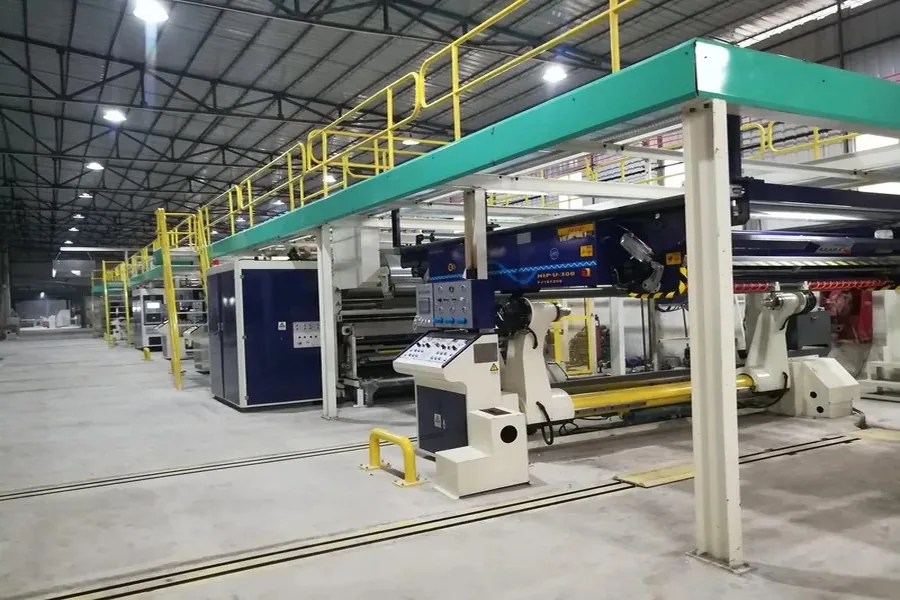
This 5 ply corrugated cardboard production line, also sold as a 5 ply corrugated box making machine, converts raw paper rolls into finished five-ply board in one continuous route. Nothing is laminated afterwards: the sheet that leaves the stacker is the sheet that goes to printing, slotting and die-cutting.
The standard build is outer liner, medium, corrugated medium, medium and inner liner. Single A, B, C or E flutes are available, and combined AB, BC and BE flutes cover the strength range between light retail cartons and heavy appliance packaging.
01 · Overview
Double-wall board needs two flutes formed and one bond closed
Five-ply board is not two single-wall sheets glued together on this line. Both flutes are formed in sequence, bonded wet into one sandwich and cooled flat before cutting — which is why the operating promises below are measurable on the shop floor.
Discuss your board programme →Heavy cast-iron frames, dense pressure rollers and an oil-immersed drive hold the sheet flat over long shifts. Stable speed falls as layers rise: a 7-ply run is slower than 5-ply because the drying load is higher, and the line is quoted at the speed it can hold.
A non-stop splicer removes the stop-and-restart at every reel change. Tungsten thin-knife slitting leaves a clean edge without burrs, so the sheet does not need secondary trimming before printing.
Ten widths from 1400 to 3600 mm and five performance grades, from economic entry-level to super ultra-high-speed. The grade is chosen against your daily output and order mix, not against the headline maximum.
02 · Line systems
See the core single facer and double facer specifications behind this line.
Five systems, one continuous paper path
Every assembly below is heavy-duty industrial grade. Read them in the order the board meets them: paper feed, forming, bonding, cutting, stacking.
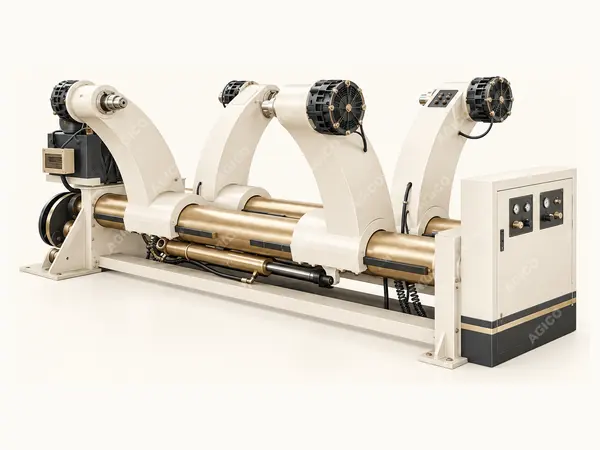
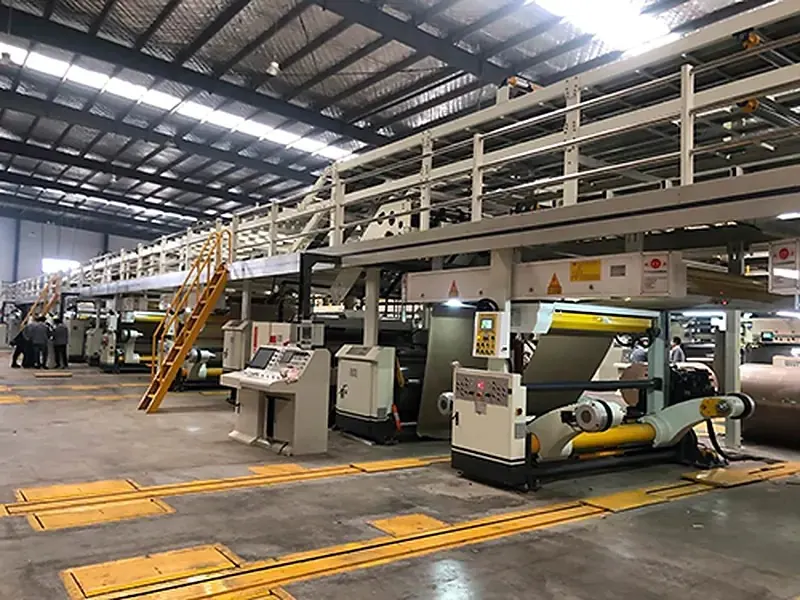
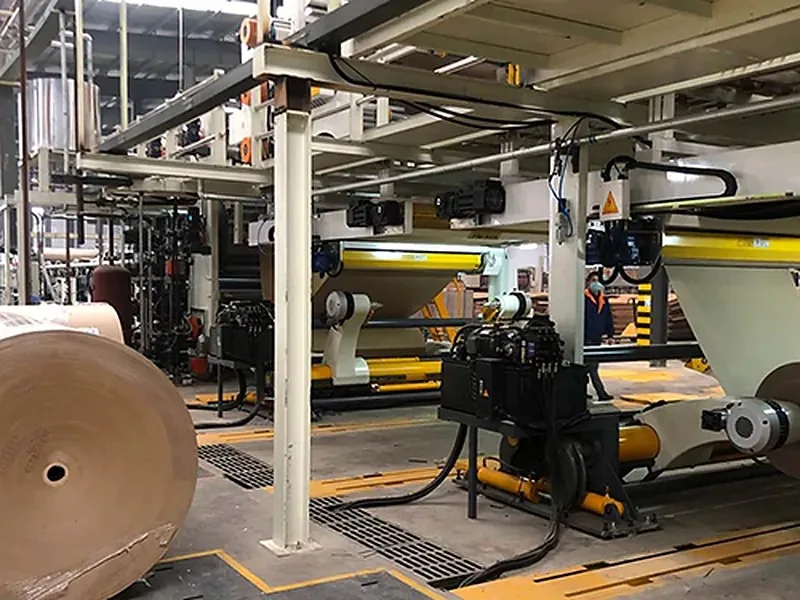
Hydraulic shaftless mill roll stands carry the liner and medium reels. Pneumatic expanding chucks, multi-point pneumatic brakes and left-right traversing keep the web centred, while a 6000 mm rail paper-loading trolley moves reels in and out of position.
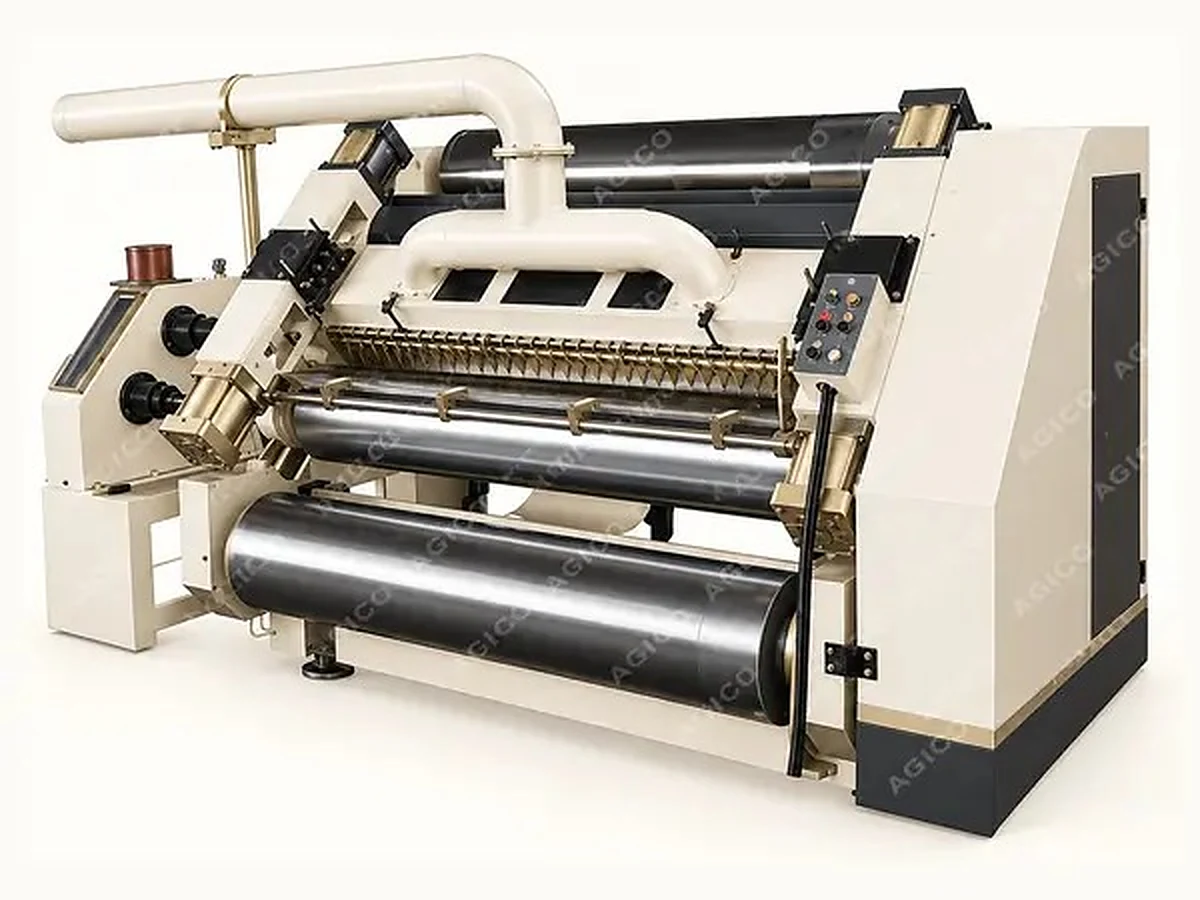
Two vacuum-adsorption single facers form the two flutes. Cast-iron frames with 130 mm wall plates carry Φ280 mm 52CrMo corrugated rollers, each on an independent gearbox and universal-joint drive, with glue volume set from a digital display. A heavy overhead bridge, a triple preheater and a mesh-pattern gluing unit feed the double facer.
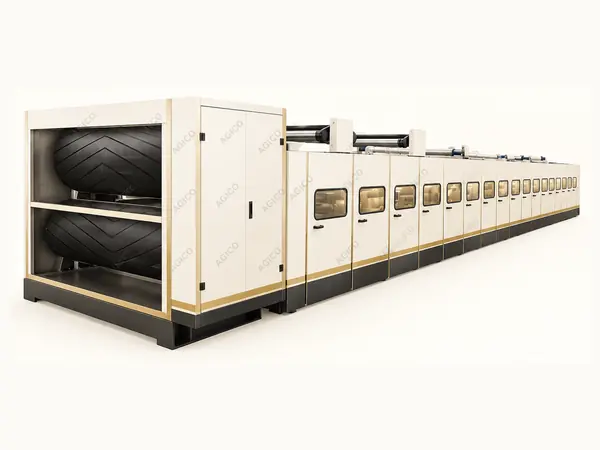
Fourteen heating plates dry the bond and a five-metre cooling zone sets the sheet flat. Pneumatic and motor-lift pressure rollers with a dense roller group hold the web across the full width, and an oil-immersed gear transmission carries long high-speed runs without thermal drift.
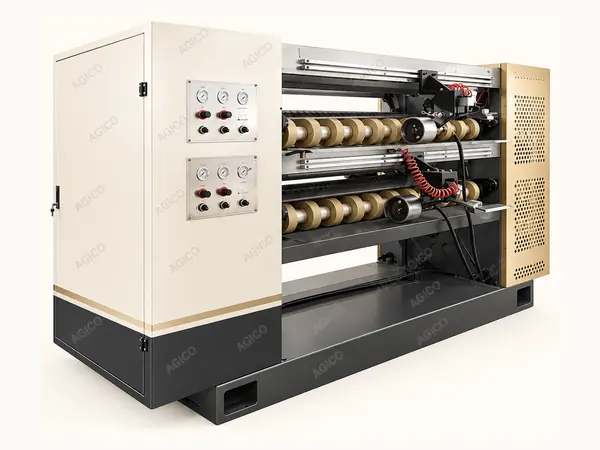
A thin-knife slitter-scorer with electric deviation correction and pneumatic sharpening cuts five knives on eight lines. The NC spiral cross-cutter runs a full-servo double-layer drive on a cast-iron base: ±1 mm at stable speed, 500–9000 mm lengths, 200 stored orders and non-stop order switching.
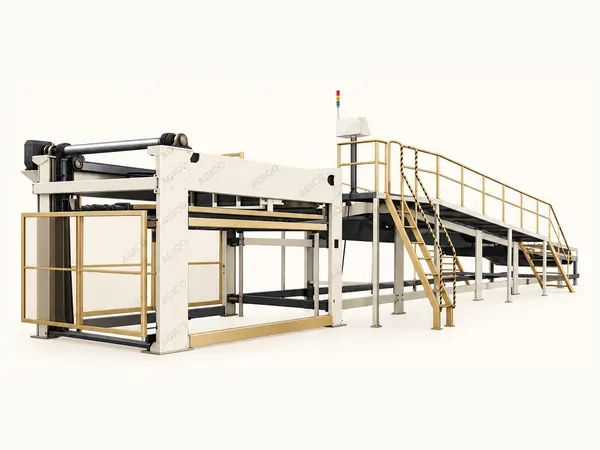
A right-angle automatic stacker adjusts size by motor and discharges horizontally; its double-layer structure accepts two board formats at once. The starch glue-mixing station, central PLC cabinet, waste-edge collector and dust-removal set complete the line.
03 · Working flow
Thirteen stations, no secondary composite step
Raw reels enter at one end and finished five-ply board leaves at the other, inside one continuous workflow. The control points below are the ones buyers argue about in a technical review.
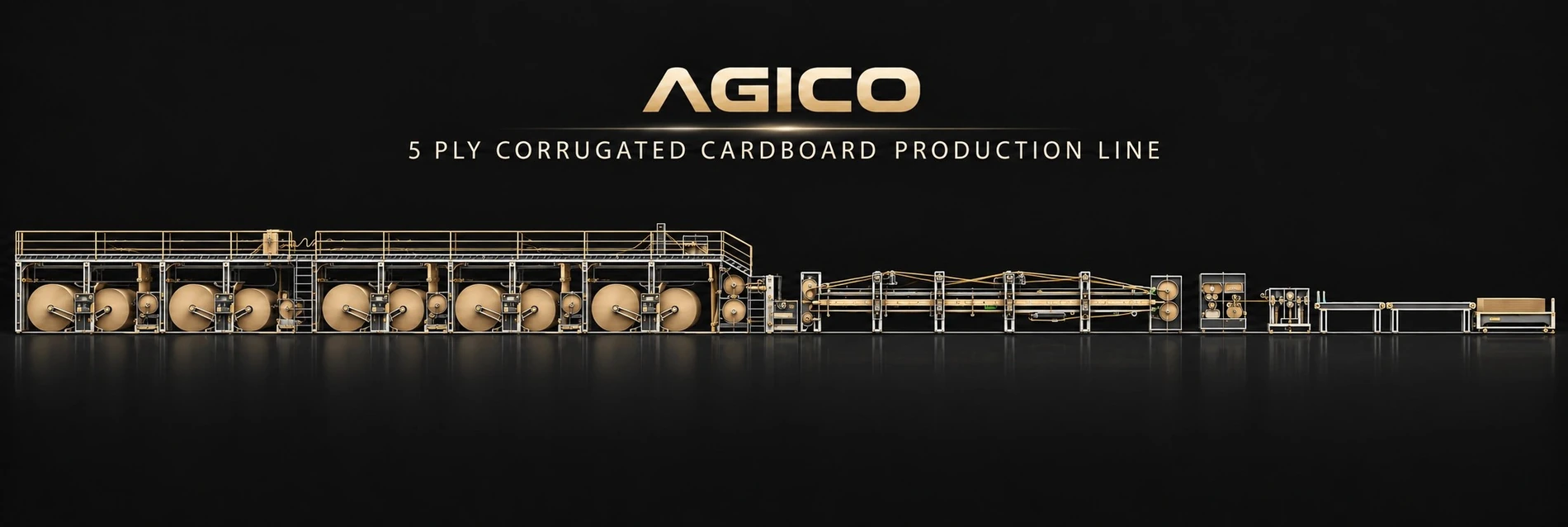
Liner and medium reels enter the line from the warehouse.
Hydraulic lifting, clamping and lateral centring hold the reel.
Non-stop reel change without stopping the corrugator.
Paper is brought to a workable temperature before forming.
First flute formed, glued and bonded to its liner.
Second flute formed for the double-wall sandwich.
Single-face webs are buffered and tensioned independently.
Starch is applied to the flute peaks of both webs.
Heat and pressure close the bond into five-ply board.
Internal stress releases and the sheet sets flat.
Edges trimmed, sheets slit and scored burr-free.
Sheets cut to length at ±1 mm without stopping.
Finished board is squared, counted and stacked for conversion.
04 · Advantages
Seven places the difference shows up in daily production.
None of these are catalogue adjectives. Each one is a setting, an assembly or a service decision you can inspect at factory acceptance.
Heavy cast-iron frames and dense pressure rollers hold flatness through long shifts, which keeps the reject rate down. Stable speed falls with layer count: 7-ply runs slower than 5-ply because the drying load is higher.
The automatic non-stop splicer removes the stop at every reel change, and tungsten thin-knife cutting gives a clean edge without burrs — two places where paper cost quietly leaks on a corrugator.
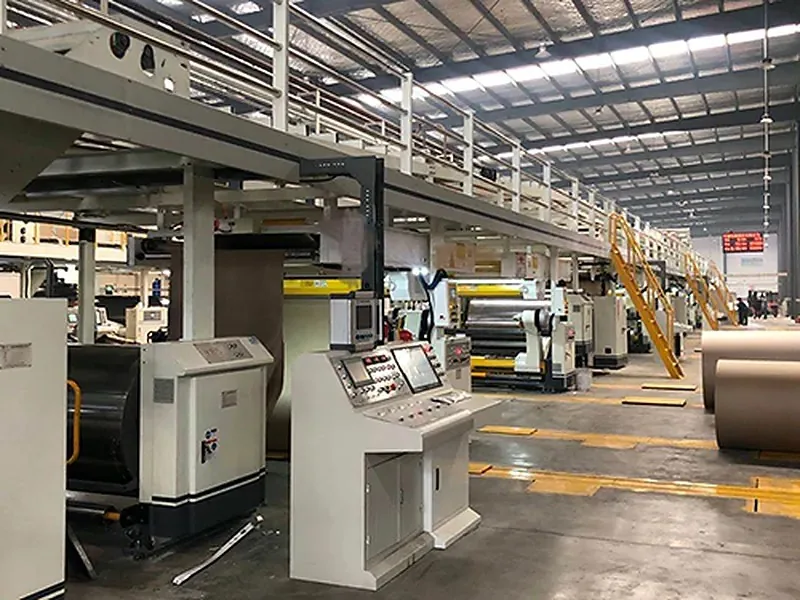
AB, BC and BE combined flutes change over quickly. The mechanical width of the line stays the same whether you run 3-ply, 5-ply or 7-ply; only the usable net width drops by the trimming margin.
The whole line runs from a centralised PLC-HMI touch screen. New operators reach daily production after short training, which lowers the skill level a shift has to carry.
A mesh-pattern gluing roller with motor-driven gap adjustment puts an even film on the flute peaks. Uniform pickup is what keeps the delamination rate low at speed.
Multi-stage preheating tunes paper temperature and moisture before forming, so the line runs reliably across a wide range of liner and medium grammages.
Ten working widths and five performance grades, from economic entry-level to super ultra-high-speed. The grade is configured against your output target rather than a catalogue ceiling.
05 · Reference model
Economic-grade five-ply line, quoted at the speed it holds
Every figure below is an operating value from the reference build: 1600 mm working width, 100 m/min design speed, 60–70 m/min practical five-ply running speed. Widths up to 3600 mm and thermal-oil heating are quoted per project.
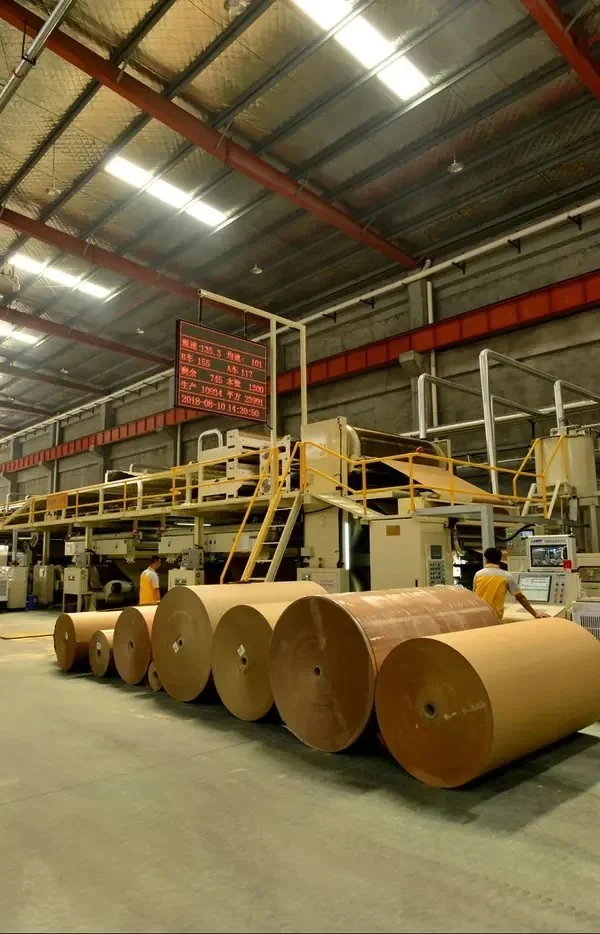
Standard configuration shown. AGICO separates economic-grade and high-end builds; figures reflect real operating performance, not inflated theoretical maximums.
Get the technical datasheet →06 · Speed grades
One line, one design maximum — and a slower stable speed as layers rise
More layers mean a higher drying load, which pulls real running speed below the design figure. Use the five-ply column when you size a five-layer line, not the headline maximum.
| Machine grade | Design max speed | 3-ply stable | 5-ply stable | 7-ply stable |
|---|---|---|---|---|
| Economic entry-level | 100 m/min | 70–90 | 60–80 | 50–70 |
| Standard medium-speed top export seller | 150–200 m/min | 120–180 | 100–150 | 80–120 |
| High-speed corrugator | 250–300 m/min | 200–250 | 180–220 | 150–190 |
| Ultra-high-speed large-plant line | 350–400 m/min | 280–350 | 250–300 | 200–260 |
| Super ultra-high-speed giant line | 450 m/min | 320–420 | 280–380 | 240–340 |
Swipe sideways for the 3-, 5- and 7-ply columns
Practical operating ranges, confirmed against your order mix and paper supply. Standard working widths: 1400, 1600, 1800, 2000, 2200, 2500, 2800, 3100, 3300 and 3600 mm.
07 · Applications
For lighter or heavier board markets, compare the 3 ply line, 7 ply line and the complete ply-count guide.
Who buys five-ply blank board, and what decides the build
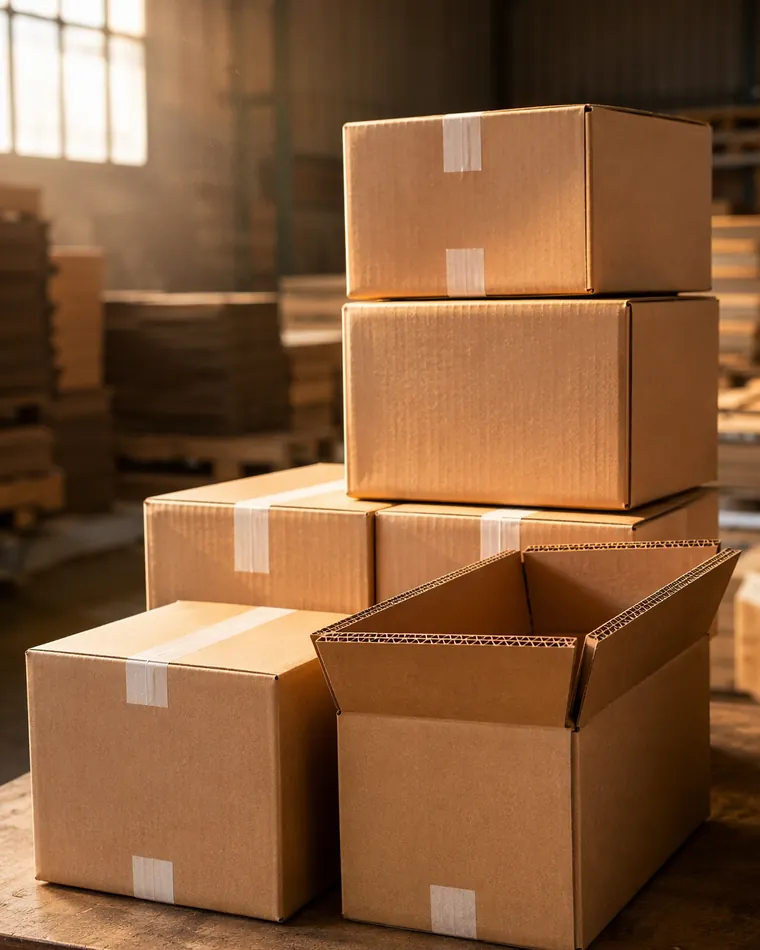
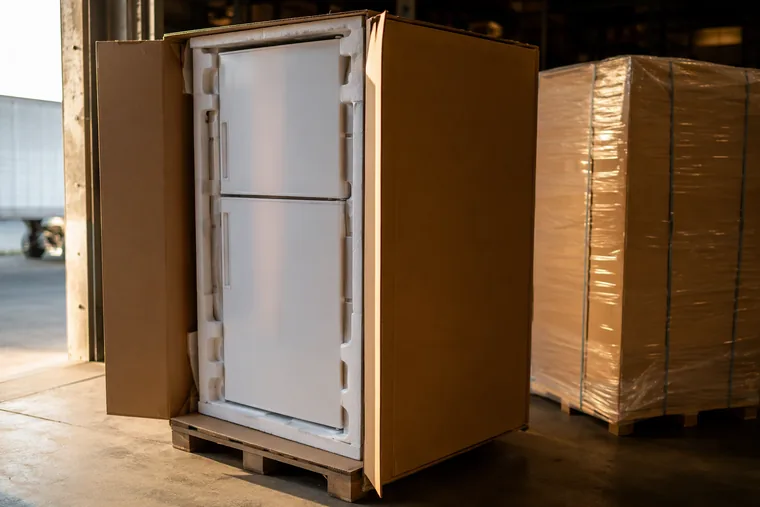
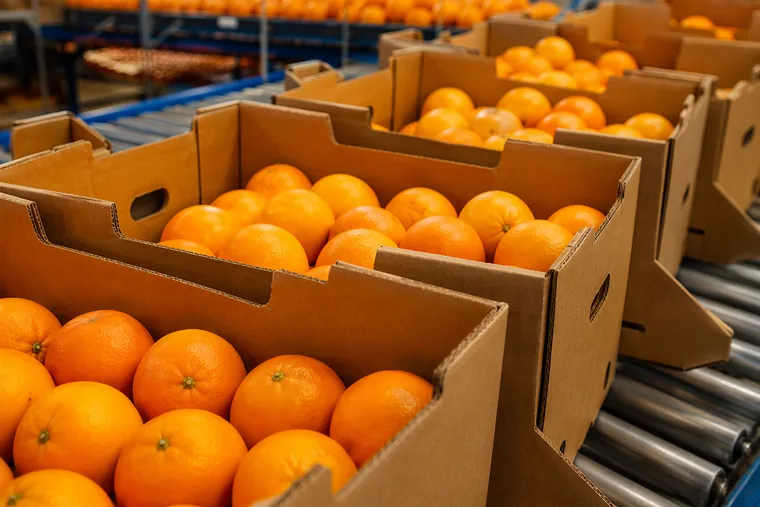
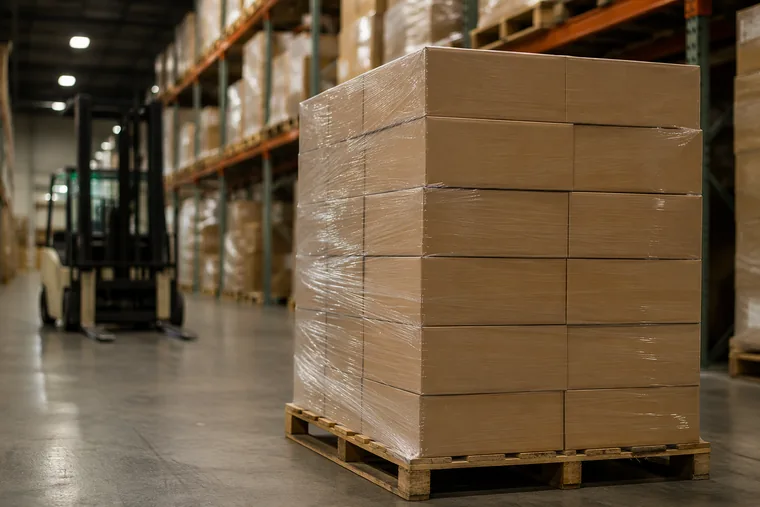
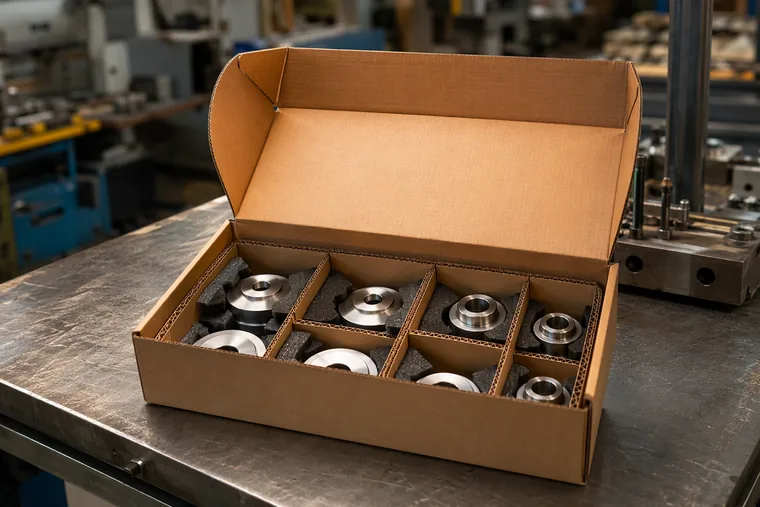
Five-ply board is specified where a single wall is not enough and a triple wall is more than the product needs. The build changes with the carton, not with the catalogue.
08 · Optional upgrades
Six add-on modules, each answering a specific complaint
None of these are needed to run five-ply board. They are the modules buyers add after a year of production, when they know where their waste and downtime actually come from.
09 · Project service
From the first layout to the first shift of saleable board
A corrugated line is a project, not a shipment. Each phase below has a defined output you can hold AGICO to, and each one ends with a document rather than a promise.
Free workshop-layout drawing, output calculation against your daily target, and a width-and-grade recommendation. The output is a technical proposal document you can compare against other quotations.
Manufacturing progress updates, a full-line running test before shipment and video inspection on request. Single facers, double facer and cutting assemblies are quality-checked as separate systems.
Overseas engineer installation, commissioning and operator training — typically about 25 working days for a full line. Long-term spare-parts supply and 24-hour online troubleshooting follow.
Width and grade chosen against daily output, layout adjusted to workshop dimensions, flute and paper range tuned to your carton orders, and automation or energy upgrades added as required.
Customer-supplied items: steam boiler, air compressor, all steam / glue / air piping, civil foundation, power and water utilities, lubricants, test raw paper and starch chemicals.
10 · FAQ
Fifteen answers, no catalogue asterisks.
Speed, flutes, width, utilities and who supplies what. Short answers, written the way the technical review runs.
Send a board sample or carton drawing →A full line that turns raw paper rolls into finished five-ply blank board in one continuous route. The output goes straight to printing, slotting and die-cutting — no secondary laminating step.
Single A, B, C and E flutes, plus combined AB, BC and BE flutes. The combination sets the strength level: single flutes for light retail cartons, combined flutes for heavy packaging.
Yes. The mechanical working width stays fixed across all three; only the usable net width drops by the trimming margin. A 7-ply run is slower because the drying load is higher.
Each line has one design maximum. Economic grade holds 60–80 m/min on five-ply, the medium-speed export unit 100–150 m/min, and the super ultra-high-speed build 280–380 m/min. AGICO quotes practical stable speed, not the peak figure.
Standard widths run 1400, 1600, 1800, 2000, 2200, 2500, 2800, 3100, 3300 and 3600 mm. Overseas buyers most often order 1800, 2200, 2500, 2800 or 3300 mm.
Steam is standard, at 1.0–1.3 MPa working pressure. Thermal-oil heating is available as an upgrade for sites without a suitable boiler.
Yes — carrier tank, main mixing tank, storage tank, feed pump and return pump are included. The buyer supplies the connecting piping.
Yes. Multi-stage preheating controls paper temperature and moisture. On the reference model, liner runs 150–200 g/m² and medium 105–180 g/m².
Two vacuum-adsorption single facers. Five-ply double-wall board needs two flutes formed in sequence, so two forming units are part of the standard build.
Standard. Non-stop splicing is what keeps the corrugator running through reel changes and is one of the main sources of paper saving.
Steam boiler, air compressor, all piping, civil foundation, power and water utilities, lubricants, and test raw paper and starch chemicals.
No. Tungsten-alloy blades with pneumatic auto-sharpening give a clean edge, so sheets do not need secondary trimming before printing.
±1 mm at stable running speed, with a 500–9999 mm length range. The HMI stores 200 production orders and switches between them without stopping.
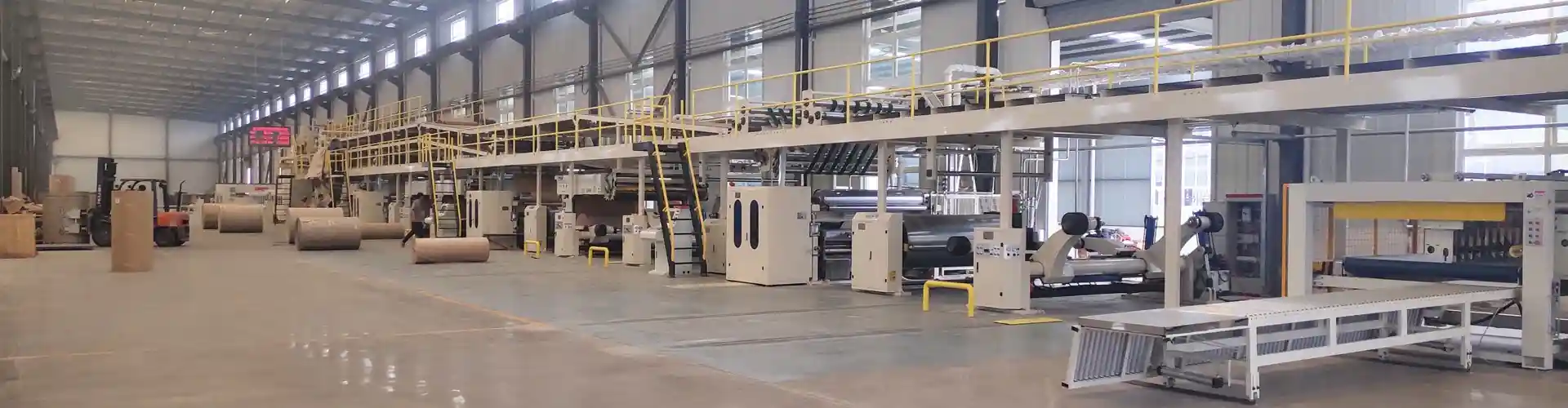
Yes. Layout drawings are produced against your factory dimensions. The reference AG-1600-100-5 line occupies roughly 70 m × 5 m of floor space.
Yes — installation, commissioning and operator training, normally about 25 days for a full line. The buyer covers flights, local accommodation and the engineer's daily rate.
11 · Supplier
Factory capability, backed by installations you can call
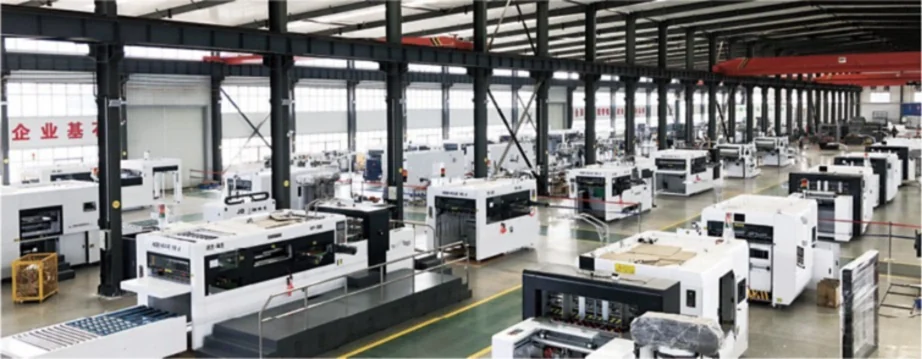
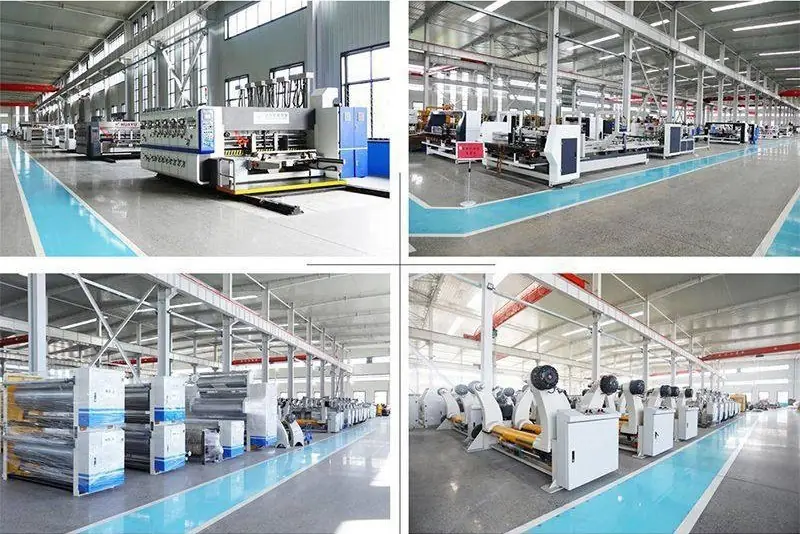
AGICO manufactures corrugated cardboard machinery: single facers, double facers and complete dry-end lines. One technical team keeps machine scope, layout, utilities and start-up requirements aligned through the project.
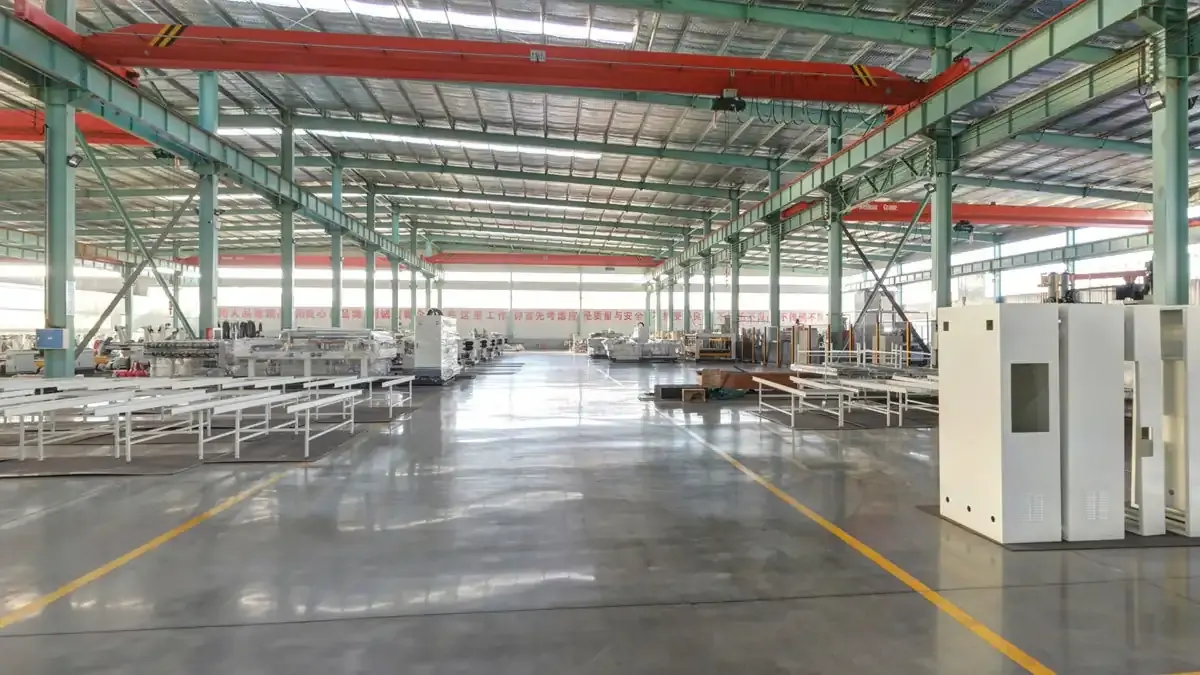
The same machine grade is not right for every plant. These two projects show the spread: a mid-width line running appliance board at 110–120 m/min, and an economic-grade build holding 65–70 m/min on e-commerce cartons.
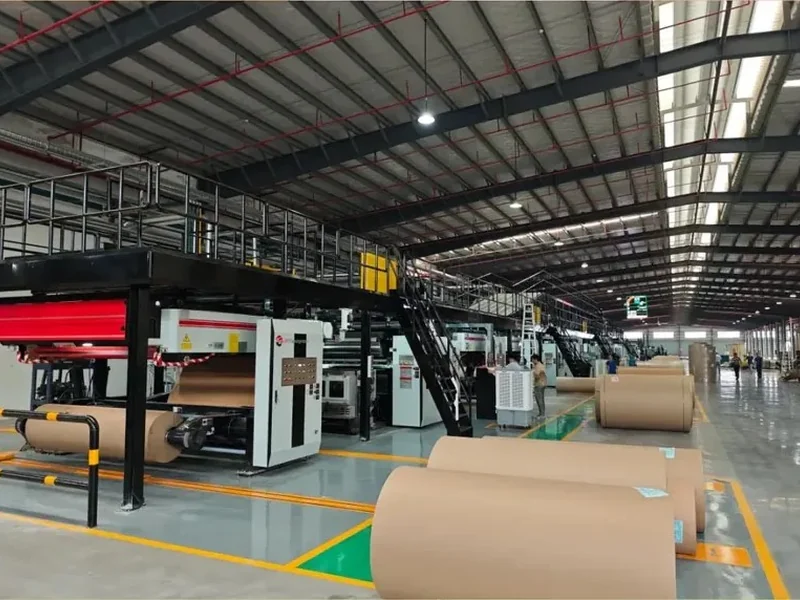
Stable five-ply running speed of 110–120 m/min, producing BC-flute board for household-appliance cartons. The width was chosen against a fixed carton range rather than a planned expansion.
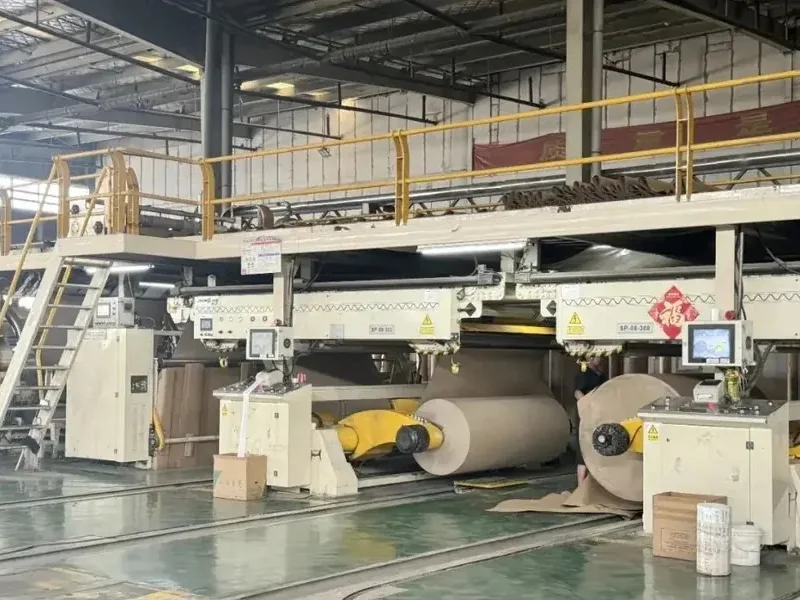
Steady 65–70 m/min on five-ply board for an e-commerce carton producer. Capacity was sized to the existing converting department, with room left for a second shift.
Wooden cases for key components, anti-rust bare packing for large parts, and a full inspection report with the factory test-run video in the crate.