
Heat
Prepared liner and single-face web enter the segmented hot-plate zone so the adhesive can gelatinise consistently.
Dry end · AG-C / AG-E
for 3, 5 and 7-ply board
The AGICO double facer corrugated machine is the core bonding unit of the corrugator, built to stop delamination, blister and warping. Buy it as equipment for a brand-new line, or as a retrofit and upgrade on the double facer you already run.
CE and ISO certified. Shipped to Africa, Southeast Asia, the Middle East and Latin America.
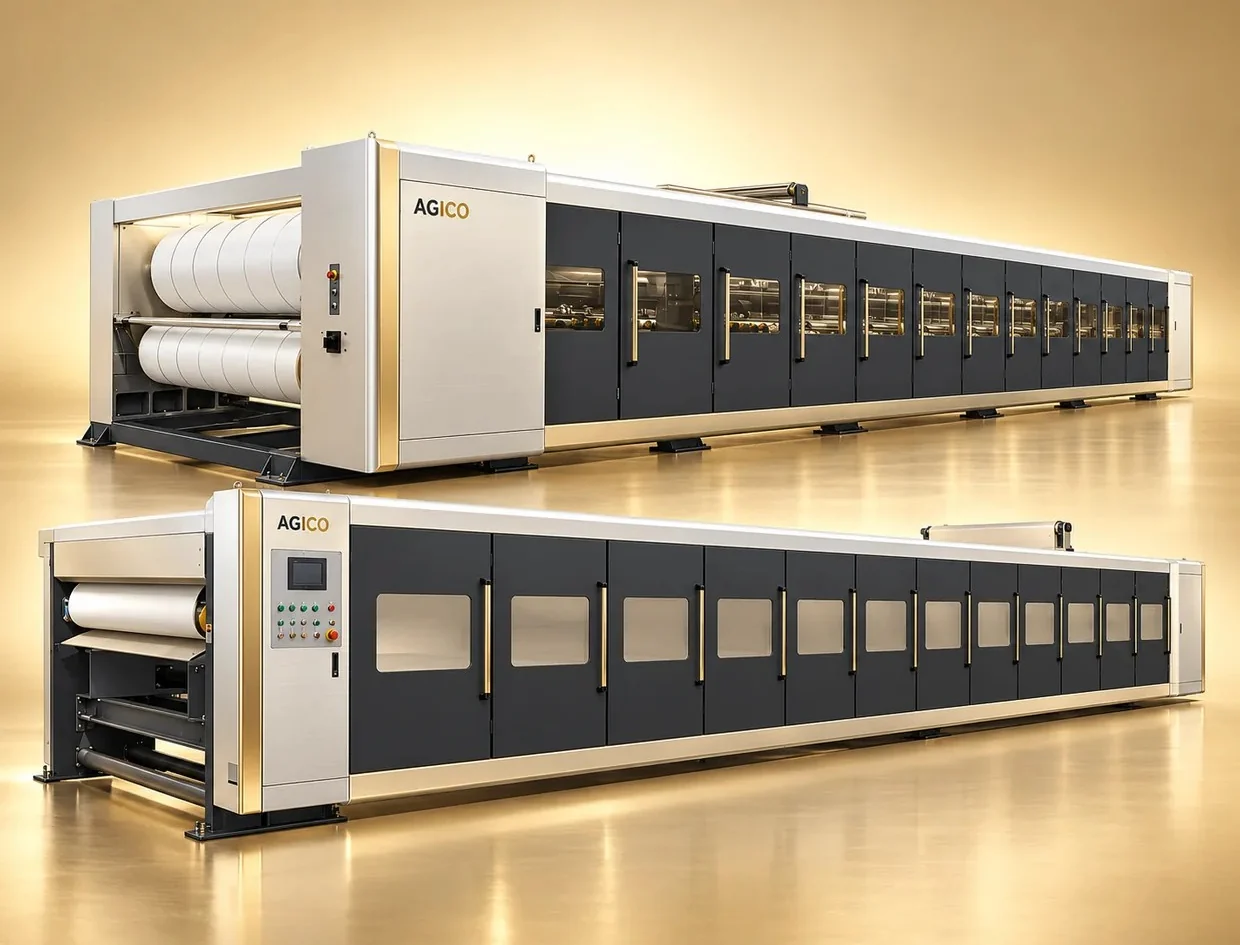
Economy standard model for regular 3-ply and 5-ply board in medium and small carton plants.
Enhanced model with an extended heating zone and long cooling section, for 7-ply heavy board and high-speed lines.
Specified per project; the retrofit version adapts to the base frame of an existing corrugator.
AG-C covers 3- and 5-ply with low-speed 7-ply; AG-E runs stable 3-, 5- and 7-ply board.
The upstream single facer forms the flute; this unit completes bonding and stabilization within the corrugated cardboard machine system.
One unit, two models, and a single job: bond liner to single-face web under pressure and heat, then cool the board flat before the slitter.
The double facer is where separate paper layers become finished corrugated board.
It receives single-face board from the wet end, completes liner lamination and starch-glue gelatinisation under controlled pressure and heat, then cools the board before the slitter. Flute crushing, delamination, blistering and warping are all closely tied to how this section is specified and controlled.
AG-C serves regular 3- and 5-ply production at 100–150 m/min. AG-E extends the heating and cooling budget for 7-ply heavy board and 150–250 m/min lines.
Prepared liner and single-face web enter the segmented hot-plate zone so the adhesive can gelatinise consistently.
Sectional shoes or rollers apply controlled loading while the belt carries the board through the bonding zone.
The cooling section releases internal stress and stabilises flatness before slitting, scoring and cut-off.
Share your board ply, paper combination, working width and stable speed target. AGICO will match the thermal budget, loading form and cooling length.
Configure My Double Facer →Same bonding principle, different thermal budget. Pick by the board you sell and the speed you can actually sustain.
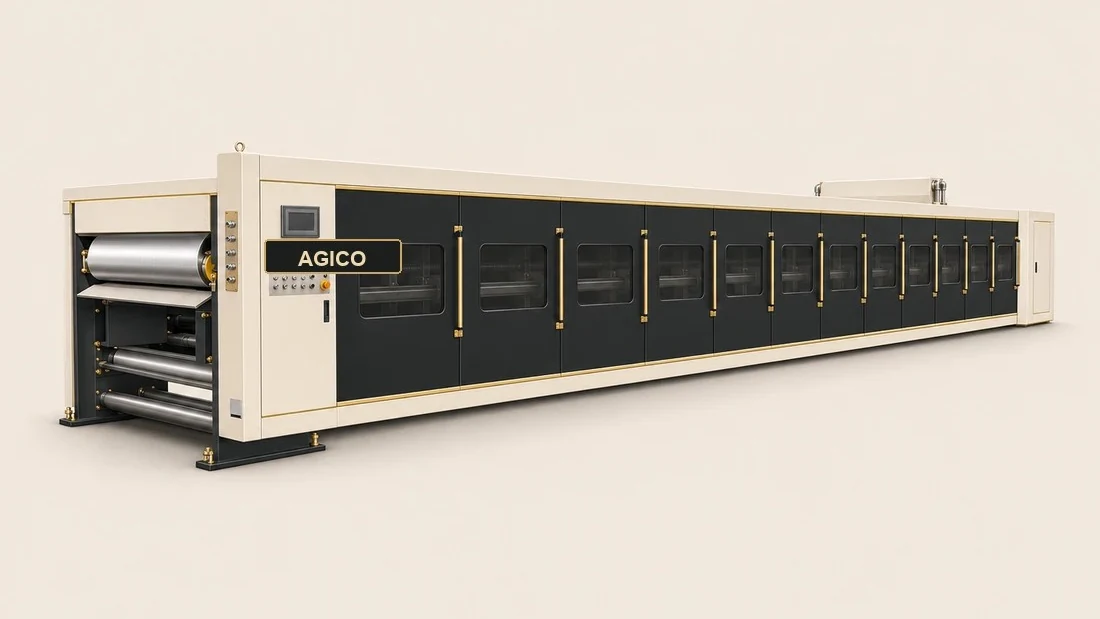 100–150 m/min
Cost-effective unit aimed at medium and small carton factories running regular 3-ply and 5-ply board on a normal-speed corrugator.
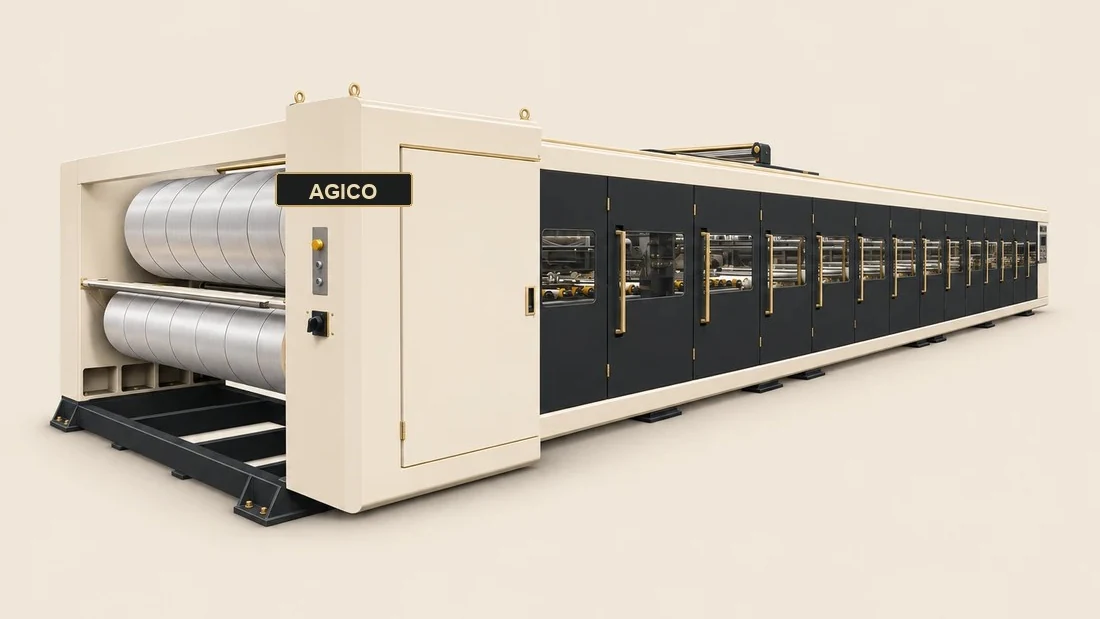 150–250 m/min
Extended heating zone and long cooling section for large plants, 7-ply heavy-duty board and high-speed corrugator lines that must hold flatness at speed.
Eight engineering decisions inside the double facer corrugated machine, each one visible in the unit you receive and checkable in the proposal.
The dry end is one thermal and mechanical process. Plate area, steam zoning, loading pressure, belt tension and cooling length act on the same sheet, and a weak setting at any of them surfaces downstream as warp, blister or a soft bond.
AGICO builds the two models on the same sub-assemblies and changes the thermal budget between them — so the difference you pay for is plate count, cooling length and speed, not a different class of machine.
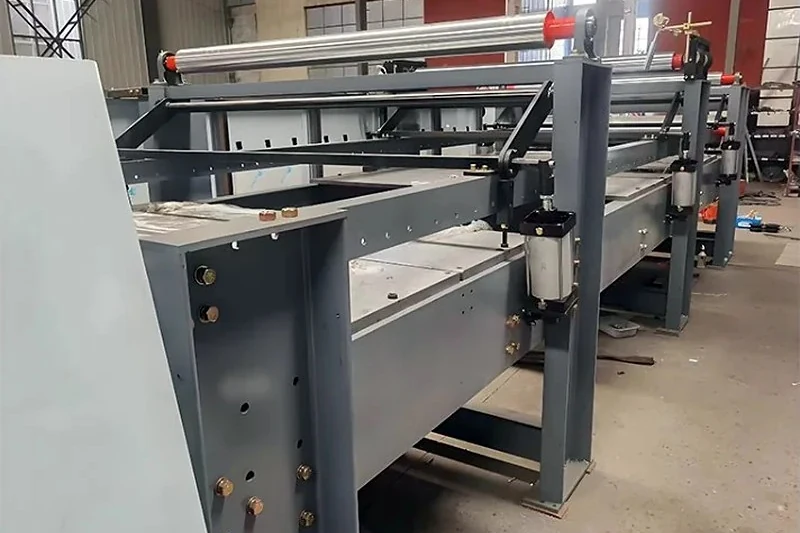
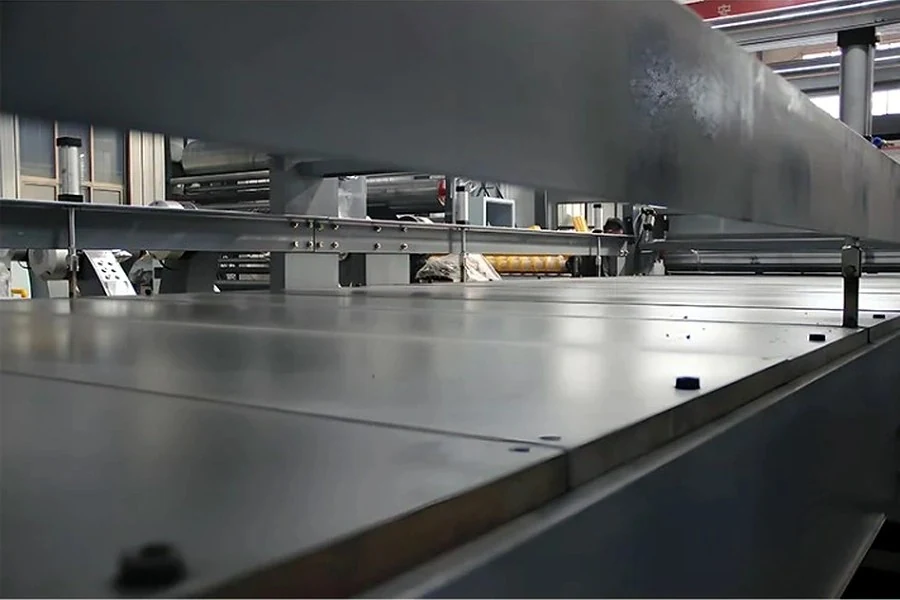
Plates are precision-ground and hard-chrome-plated. The internal S-shaped channel separates steam from water so utilisation stays high, and cross-segment supply lets the PLC switch plate groups in or out as grammage and flute profile (A/B/C/E/F) change.
Both solutions are available. Sectional adjustment delivers even force across the full width, cutting flute crush and glue-opening risk; operators set pressure by ply and paper weight instead of by habit.
The upper belt runs on a dual-cylinder S-type tensioning mechanism, with automatic and manual correction on both belts. Belts stop wandering, last longer, and unplanned maintenance downtime falls with them.
The HMI stores multiple production recipes. A new order is recalled and the system matches plate quantity and pressure value itself, which lowers the operating skill a plant has to hold on every shift.
A long cooling and forming section releases the internal stress left by heating. Flatness improves, and slitting, scoring and die-cutting stop inheriting a board that is still moving.
The welded main frame is stress-relief annealed. An independent oil-immersed gearbox with ZG-500 cast-steel gears carries long high-speed running, and herringbone wear-resistant rubber drive rollers with crown deliver the board flat.
Width is optional across 1400–2500 mm, and the unit can adapt to an existing old corrugator base frame for a partial upgrade instead of a full-unit replacement.
All hot-plate assemblies use pressure-vessel grade steel plate with official inspection certification, so long-term production is documented rather than assumed.
Every one of these is a configuration line you can read in the offer: plate count, loading form, cooling length, belt system, control scope, width and certification.
Request a Detailed Configuration →Six sub-assemblies, one continuous path: a prepared single-face web enters, flat finished board leaves for the slitter.
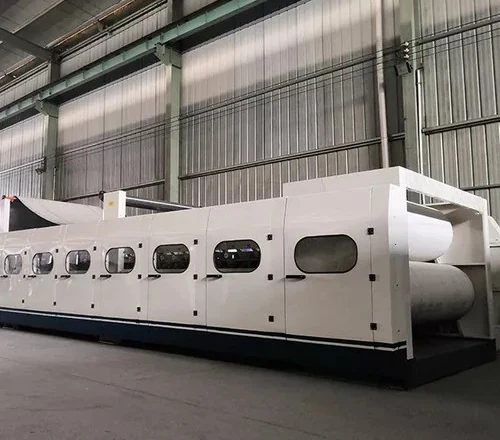
Note: temperature, steam pressure, loading pressure and conveyor-belt speed have to be matched to each other. One setting changed in isolation is what turns a good board into a warped one.
Ten values decide the unit. Read the two columns against the board you sell, not against the headline speed.
| Item | AG-C double facer | AG-E double facer |
|---|---|---|
| Design speed | 100–150 m/min | 150–250 m/min |
| Effective working width | 1400–2200 mm | 1800–2500 mm |
| Applicable board ply | 3 / 5-ply, low-speed 7-ply compatible | 3 / 5 / 7-ply |
| Hot-plate specification | 600 mm width, 8–14 pcs, segmented steam supply | 600 mm width, 10–22 pcs, segmented steam supply |
| Cooling section length | 4–5 m | 5–8 m extended cooling section |
| Heating source | Steam heating | Steam heating |
| Working steam pressure | 0.8–1.3 MPa | 0.8–1.3 MPa |
| Air source pressure | 0.6–0.9 MPa | 0.6–0.9 MPa |
| Loading form | Pressure shoe or pressure roller, sectional pneumatic adjustment | Pressure shoe or pressure roller, sectional pneumatic adjustment |
| Control mode | PLC + touch-screen, recipe memory | PLC + touch-screen, recipe memory |
The table shows standard configuration. AGICO modifies plate count, cooling length, loading form and control scope against the actual project — the proposal states which values are standard and which are project-specific.
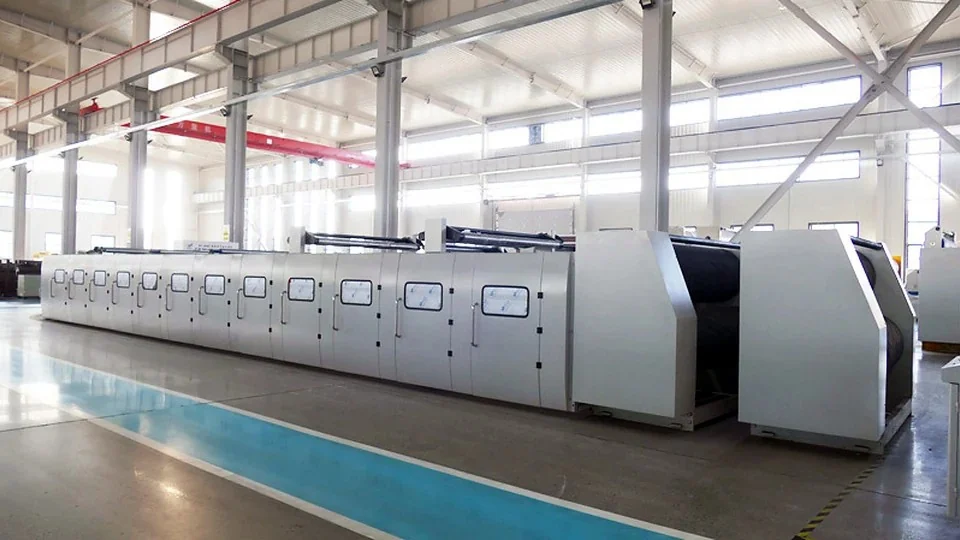
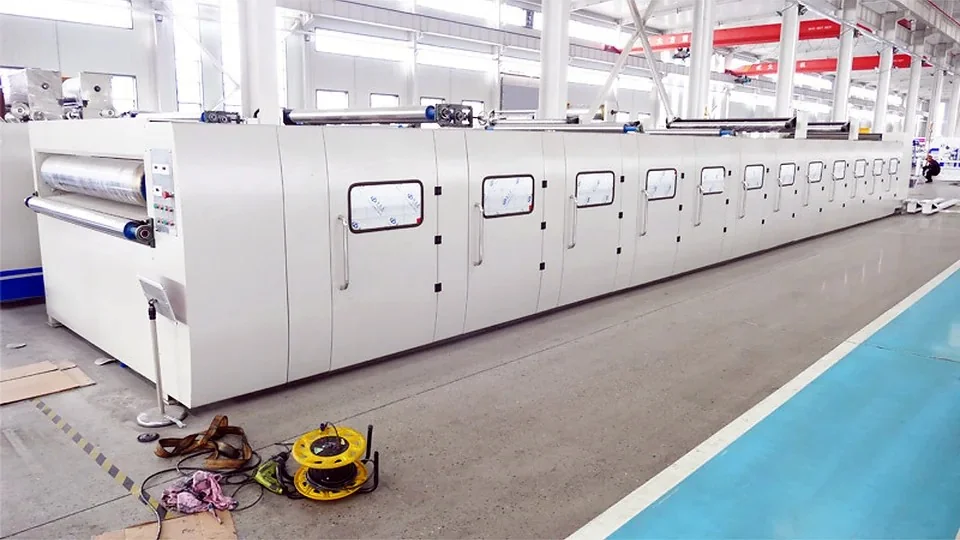
For multi-wall production, compare the complete 5 ply line and 7 ply line scopes.
Built in one workshop, shipped as a unit or as retrofit modules, and supported after installation rather than handed over at the port.
AGICO manufactures corrugated cardboard production machinery: the single facer, the double facer and the complete dry end. The frame is welded, stress-relief annealed and machined in house, and the hot plates are ground, chrome-plated and pressure-tested before assembly — so the unit is specified against what you sell, not assembled from bought-in sections.
That matters commercially. A double facer is bought once and run for a decade: the proposal has to define the scope, the unit has to fit the corrugator it joins, and the supplier has to be reachable after the container is unpacked.
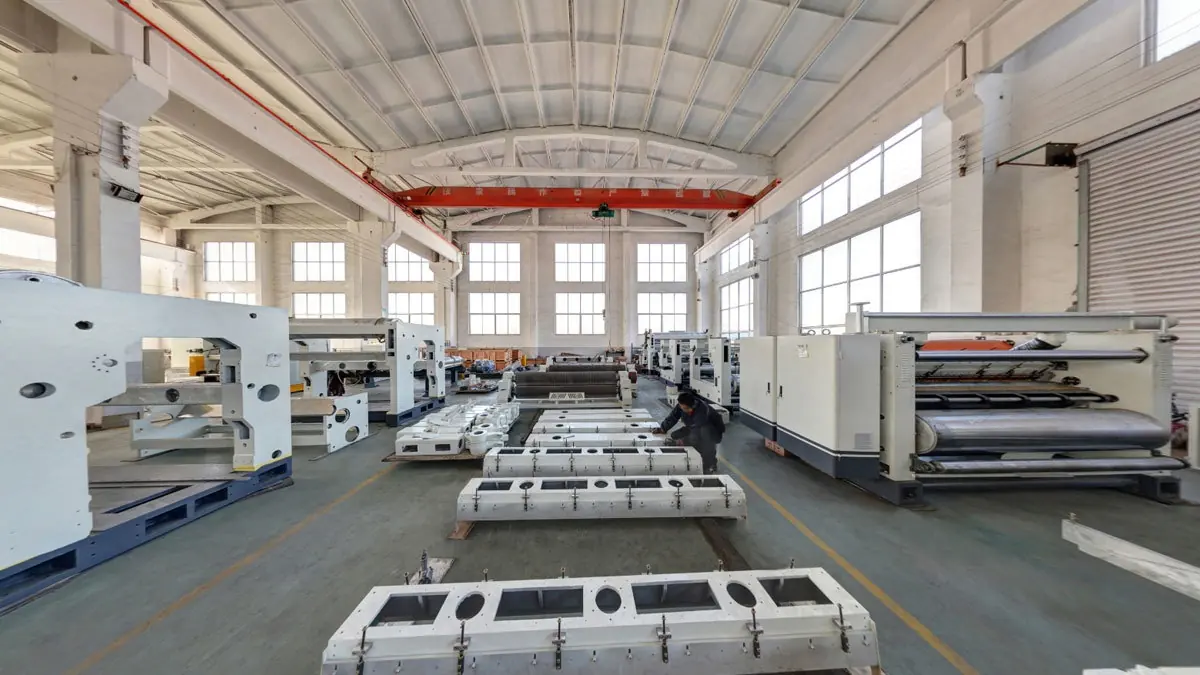
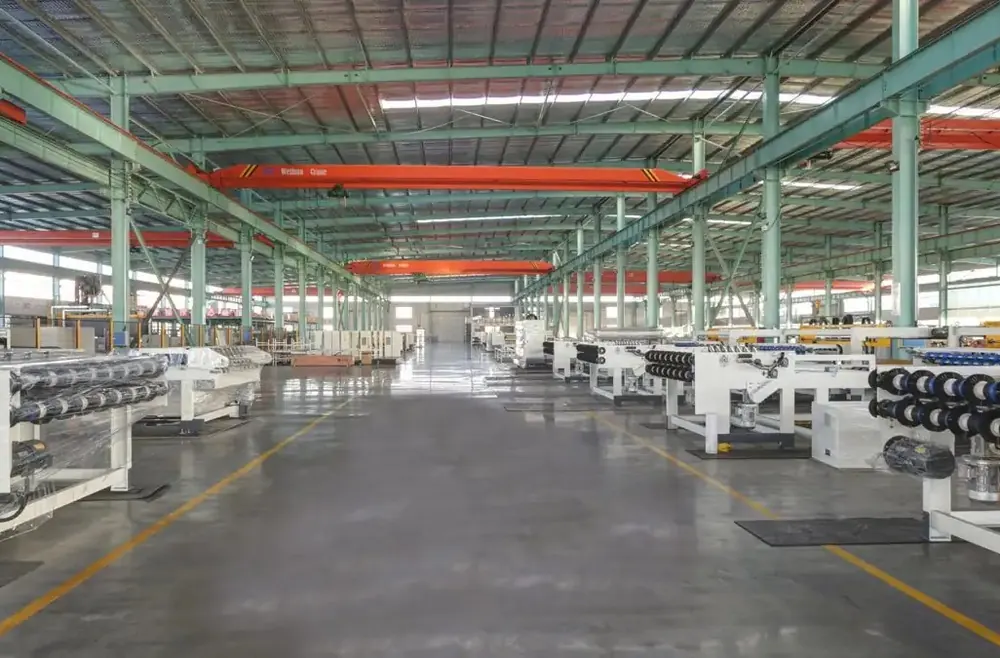
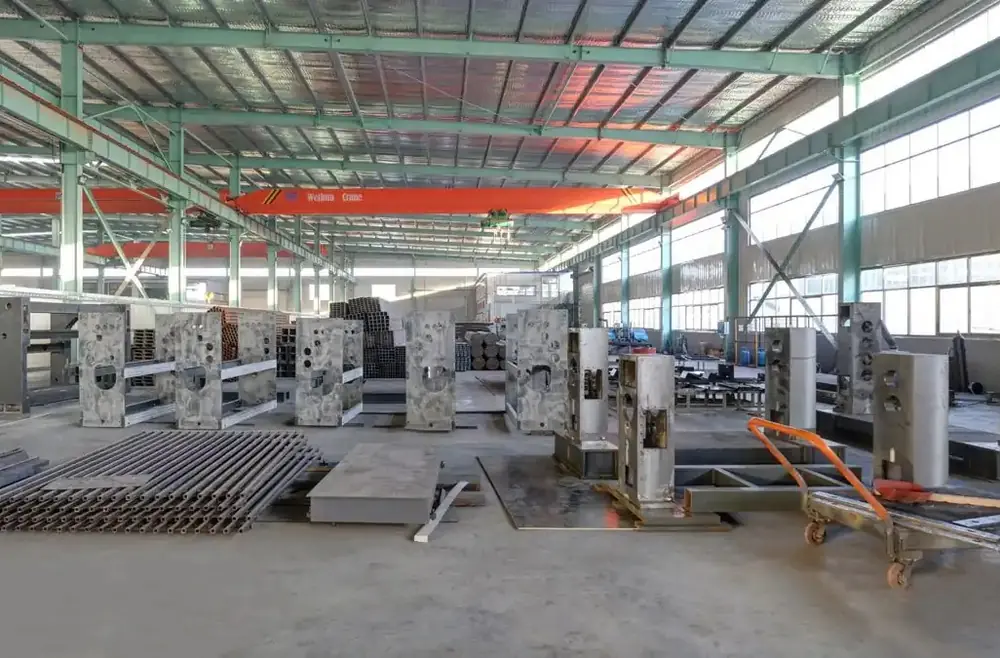
The first offer is built from your board programme, width and line speed, not from a catalogue page.
Layout, interfaces and utility boundaries are confirmed on a drawing before fabrication starts.
Online commissioning guidance and operator training are included with every unit.
Parts ship worldwide against the part number or the machine serial number, years after delivery.
Serving transit carton plants, e-commerce packaging factories, food and home-appliance outer-package producers, and colour-print corrugated board makers.
Many mills choose a partial upgrade instead of a brand-new double facer corrugated machine, and change only the systems that limit board quality.
Four options · 01 – 04Install or replace the pressure-shoe assembly so pressure is regulated section by section across the width.
Retrofit the PLC touch-screen cabinet and add production-recipe memory, so an order change is a recall rather than a manual reset.
Add cotton-belt auto-correction and the dual-cylinder tension assembly to stop belt wandering.
Add cooling-section length where warping is the complaint and the heating section itself is sound.
Low investment, visible improvement in flatness and changeover time, and the existing foundations, utilities and line interfaces stay untouched.
When breakdowns are frequent and the frame itself has lost geometry, module upgrades only move the failure downstream. Replace the unit and re-specify it against the board you now sell.
Quality here is procedural rather than claimed: every stage below leaves a record that travels with the machine.
Five checkpoints stand between a welded frame and a unit that runs at your line speed. Each one produces a document, not just a machine.
The main frame is welded, then stress-relief annealed to remove deformation risk before any plate or bearing surface is machined.
Plates are surface ground and hardness inspected; pressure-vessel parts carry official inspection certificates.
The assembled unit runs continuously without material to check pressure performance, temperature control, belt correction and the drive system together.
Where the project calls for it, board is run through before shipment, so the first production shift in your plant is not the first test.
Delivery includes the full inspection report and the factory test-run video, so the acceptance standard is written down.
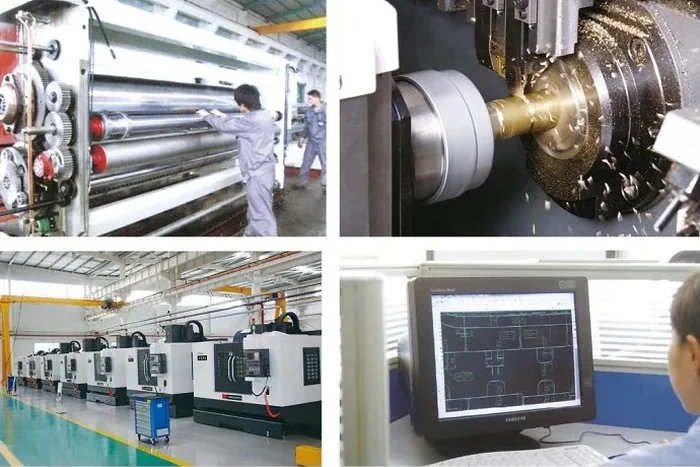
Key components travel in solid wooden cases; large parts ship with anti-rust bare packing.
Operation manual, electric circuit drawing, spare-parts list and the factory test-run video.
Remote commissioning guidance and operator training are included; on-site engineer service is quoted separately.
Warranty covers main mechanical components, with global fast spare-parts supply against part number or serial number.
Sixteen questions, grouped the way they arrive: general, technical, then order and after-sales.
Yes. Our double facer corrugated machine is available for individual procurement, and that is how most retrofit projects start.
Standard configuration is steam heating. An electric-heating solution can be evaluated for special conditions — send the utility situation and our sales team will confirm feasibility.
Yes. We provide partial-module upgrades as well as full-unit replacement, decided by your machine status rather than by our catalogue.
Our corrugator machinery has been shipped to Africa, Southeast Asia, the Middle East, Latin America and other regions.
AG-C is the economy grade for 100–150 m/min normal-speed production. AG-E adds a longer heating and cooling section, supports up to 250 m/min and holds stable 7-ply heavy board.
The pressure shoe delivers more uniform full-width pressure and suits high-speed, multi-ply heavy board. The pressure roller is the cost-effective choice for medium-speed board of regular weight.
AG-C mainly 3-ply and 5-ply, compatible with low-speed 7-ply production. AG-E supports stable 3-ply, 5-ply and 7-ply board.
Working width covers 1400–2500 mm, customised per request and confirmed against your line layout.
The main factors are steam temperature, pressure distribution, cooling-section length and paper moisture balance. An extended cooling section plus segmented pressure adjustment reduces the warping rate most directly.
Most often uneven hot-plate temperature, insufficient pressure, a mismatched glue formula, or abnormal cotton-belt tension — in that order of frequency on the units we commission.
It depends on frame dimensions and mechanical condition. Send the machine's basic parameters and we will return a technical evaluation before any quotation.
Higher running speed needs more plate area. The exact count follows from your board build, paper grammage and sustained speed, and our engineer will state it in the configuration.
Lead time depends on model and configuration; the schedule is confirmed once the order details and drawing approval are fixed.
The warranty covers manufacturing defects of the main mechanical components. Wearing consumables such as cotton belts and seals are excluded.
Yes, on-site engineer service is available at extra cost. Remote online guidance is free of charge.
Send the part number or the machine serial number. AGICO ships spare parts worldwide.