Board making through finished carton converting.
Corrugated Cardboard Production Line & Carton Box Production Line & Corrugated Plant Turnkey Solution
Board making through finished carton converting.
Layout, manufacturing, installation and commissioning.
Stable geometry for continuous industrial production.
Where Are You Starting From?
Most buyers arrive at one of these three points. Tell us which one you are at, and we size the line to match.
01
You already convert board into boxes, and want your own board supply — for cost control and a shorter lead time.
One less supplier to wait on. One more margin point per box.
02
You already buy or make corrugated board.
You need converting capacity: printing, die-cutting, gluing and stitching.
03
Starting from an empty building — board line, converting line and layout from one supplier.
One contract, one commissioning date, one number to call.
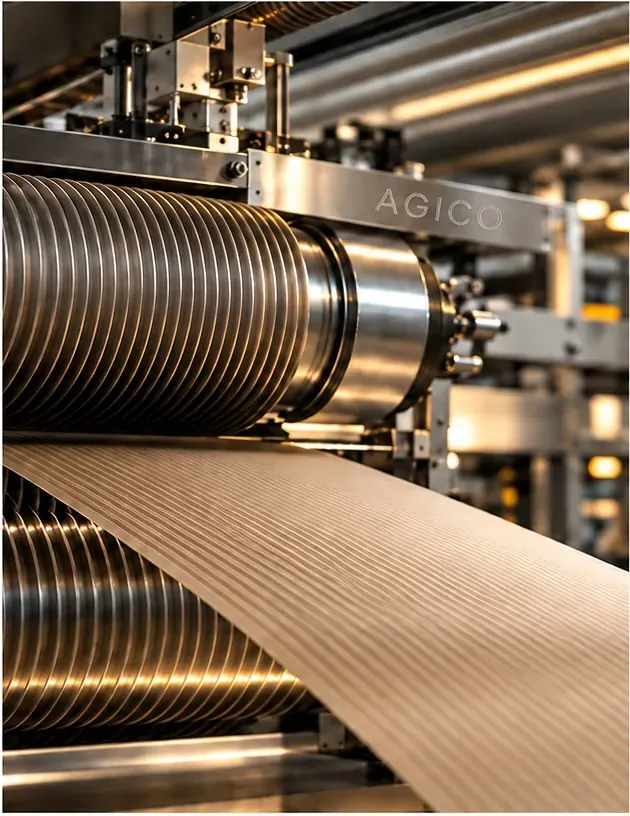
Board begins here. Paper reels in one end, flat and dimensionally stable sheet out the other — the raw material every box you sell is cut from.
Main components: mill roll stands, preheater, single facer, bridge / tension control, glue machine, double facer, slitter scorer, cut-off and stacker.
FLEXIBLE CONFIGURATIONS. SCALABLE FOR YOUR GROWTH.
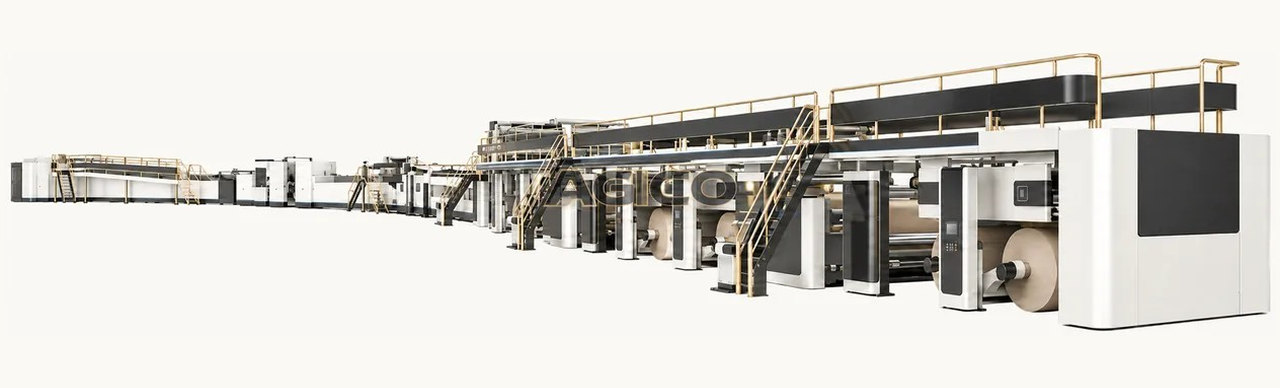
A compact 3-ply line for shipping cartons and light retail packaging: short changeover, low running cost, and room to add stations as volume grows.
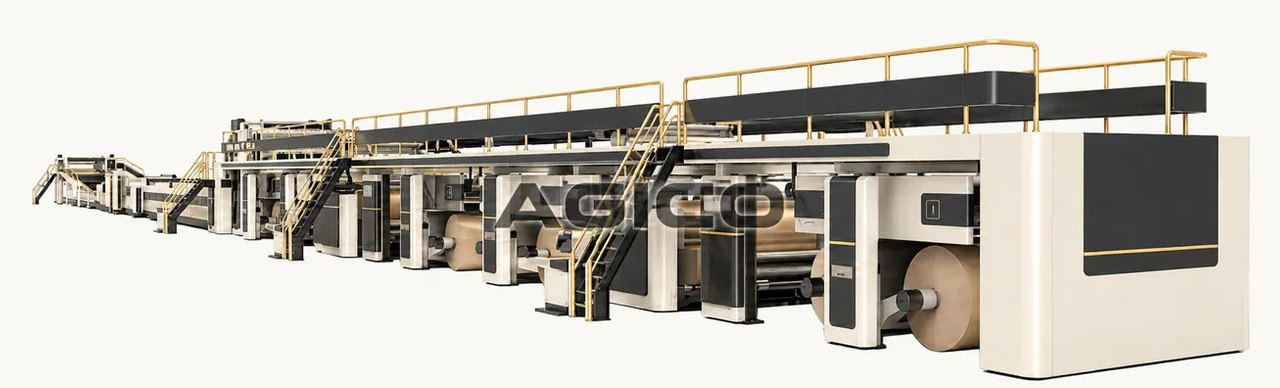
Five plies, two flutes, one pass: the workhorse for export cartons that have to survive a container and still stack square in the warehouse.
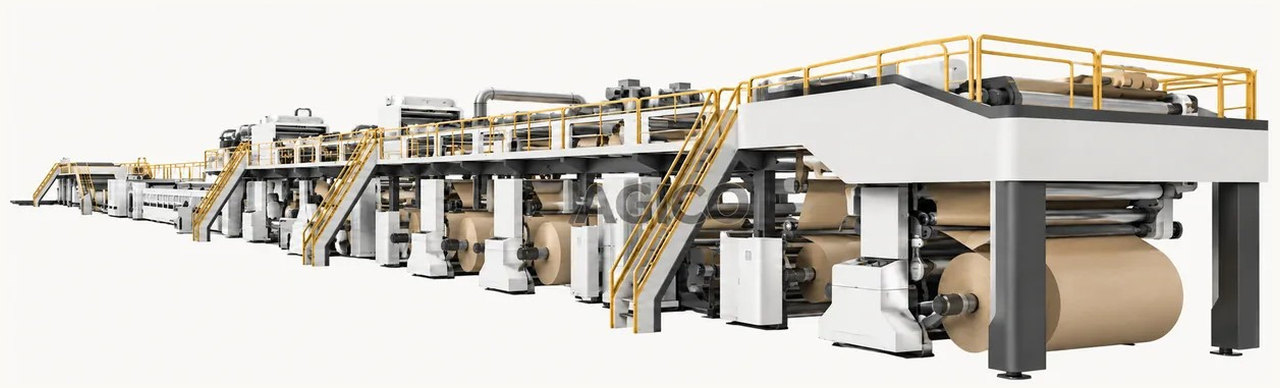
Seven plies for industrial packaging that carries load: heavy reels, three flutes, and a frame built to hold tolerance shift after shift.
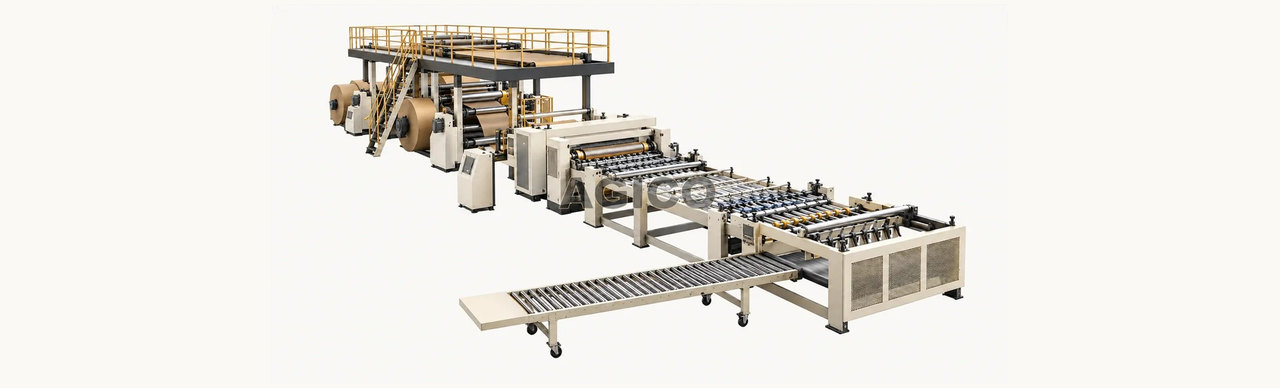
Single-face board in one continuous pass — mill roll stand through stacker, no double backer. The shortest line we build, for protective packaging and inner packing at a fixed board grade.
Five connected stages turn paper reels into dimensionally stable corrugated board, ready for printing, converting and box forming.
Shaftless stands clamp the reel and hold web tension to the core.
A heated roll flutes the medium against the first liner, holding flute height constant.
Starch on the flute tips only, with its own gap setting per glue roll.
The second liner is cured under controlled pressure, so board leaves flat.
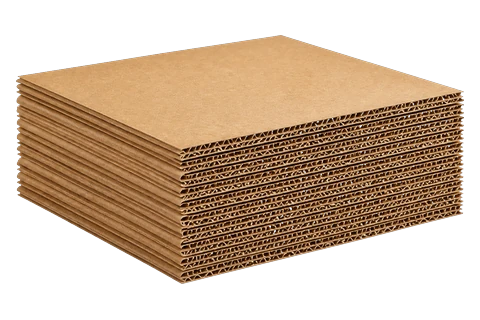
Slit, score and cut to length at line speed, then counted into stacks.
Compare the single facer corrugation machine and double facer corrugated machine within a complete board-making process.
RELIABLE MACHINES, STABLE BOARD, EFFICIENT PRODUCTION.
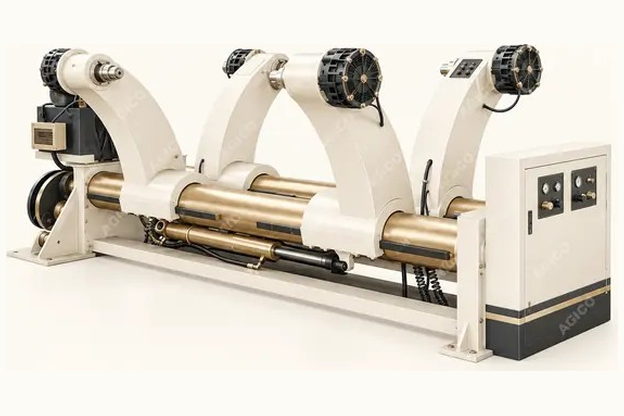
Shaftless hydraulic roll loading with dual brakes, built for heavy liner and fluting reels.
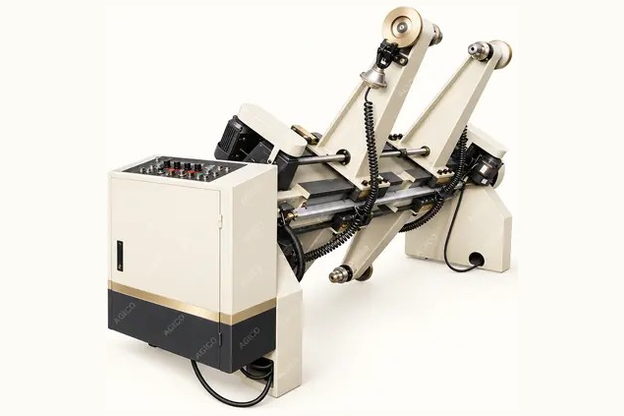
Motorised arm travel and automatic web alignment; roll changes without shafts or manual lifting.
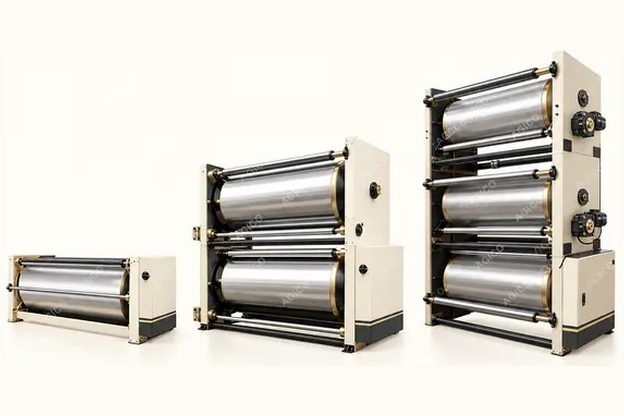
Preconditions liner and medium on heated cylinders so the glue gels evenly at line speed.
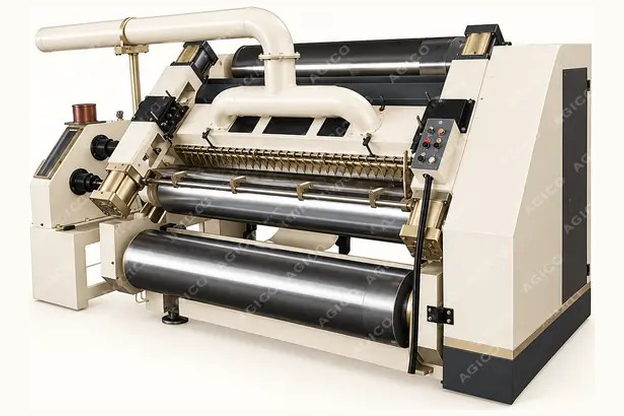
Suction holds the medium tight to the corrugating roll, keeping flute height uniform at speed.
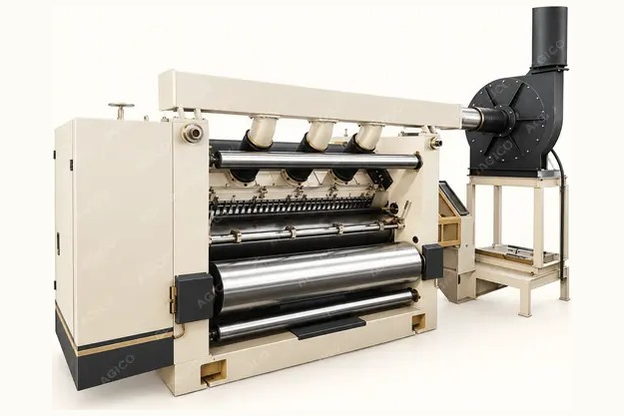
No finger marks on the flute tips; positive pressure keeps the medium seated through the nip.
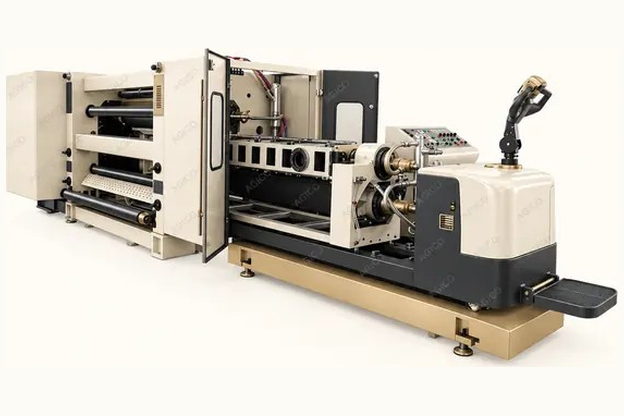
Swap the corrugating roll cassette in minutes instead of rebuilding the machine for a new flute.
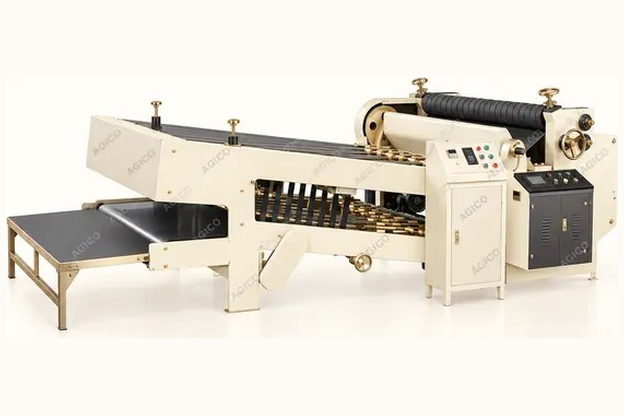
Single-face board in one unit: mill roll stand, preheater, single facer and take-off conveyor.
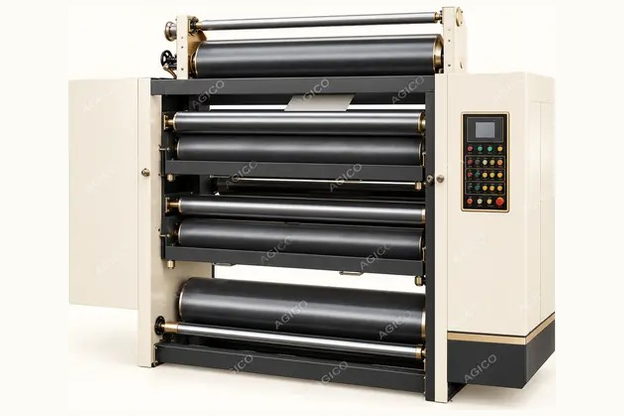
Applies starch to both flute tips in one pass, with independent gap control on each glue roll.
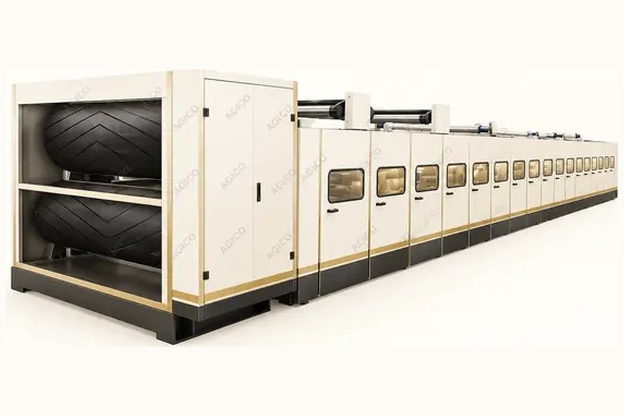
Heated plates and driven belts bond the second liner under controlled pressure and temperature.
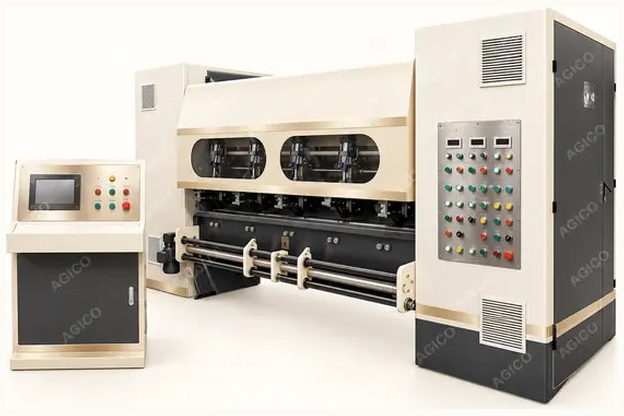
Thin-blade slitting with electric scoring-gap setting: cleaner edges and less dust on the line.
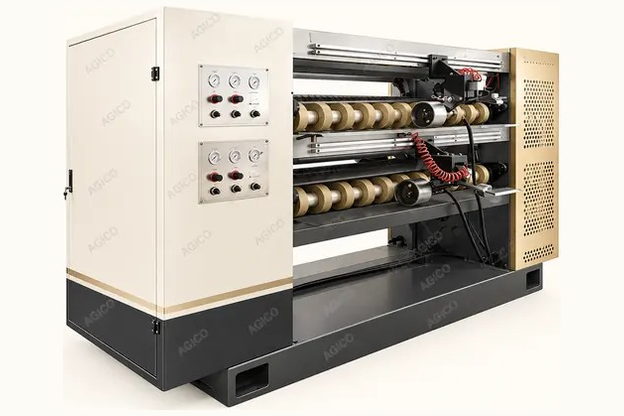
Two-knife duplex shear cuts at line speed and holds sheet length without slowing the corrugator.
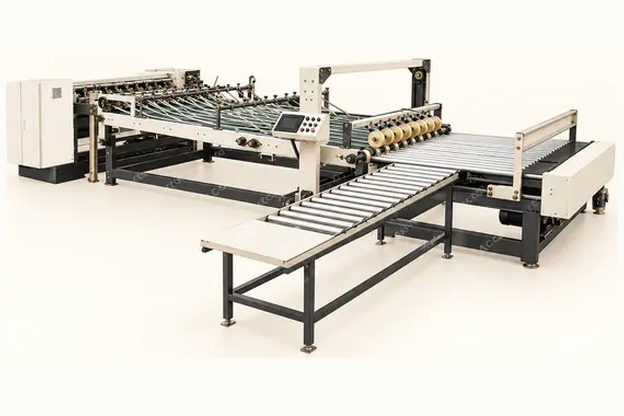
Angled knife path cuts square at high speed, spreading blade load and limiting sheet distortion.
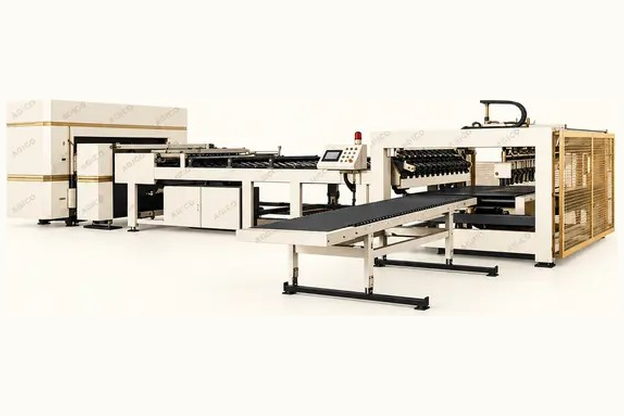
Computer-set cut length synced to the single facer line; order changes without stopping the web.
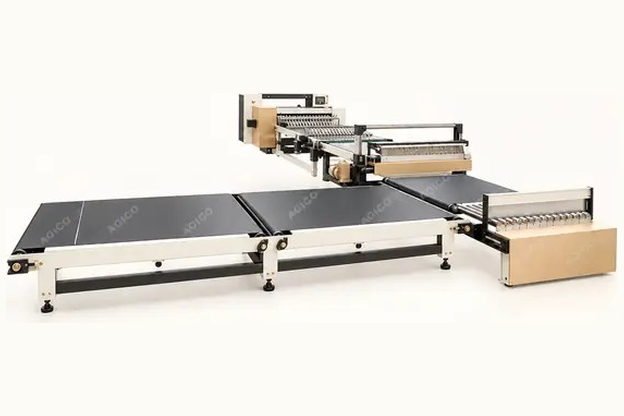
Gantry delivery lays sheets onto the stack without scuffing, adjustable for short and long sheets.
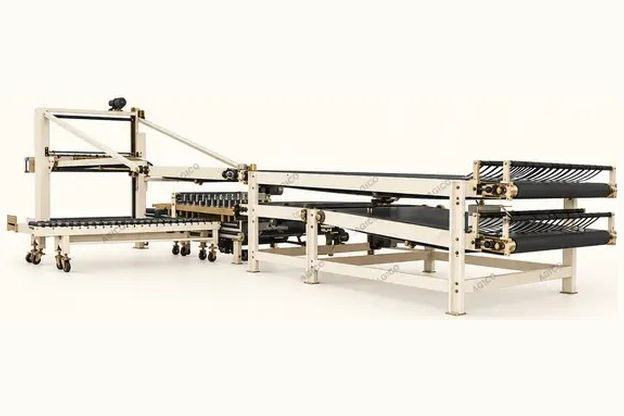
Computer-controlled delivery counts, squares and stacks by order for direct palletising.
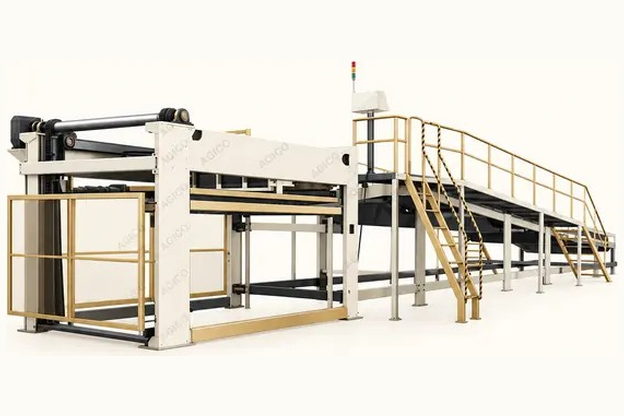
Basket stacking turns sheets 90 degrees into neat bundles, ready for strapping without manual handling.
Share your paper grade, working width and target output. Our engineers will match the core machines into one production route.
BOX MAKING
Board in, printed and glued boxes out: flexo printing, rotary die-cutting, folding, gluing and stitching.
A cardboard box making machine is a set of stations, not one unit — so we supply the converting line as a matched set, and a blank cut on the die-cutter still folds square on the gluer.
Ink, dies and glue — supplied as one matched set.
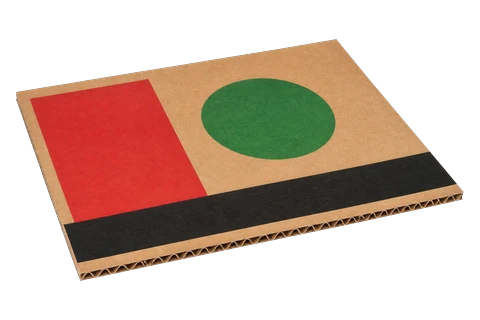
Flexo units print in register, and the same pass can rotary-die-cut.
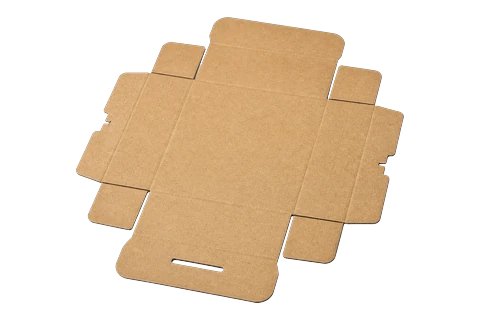
One revolution cuts and creases — the crease decides how square it folds.
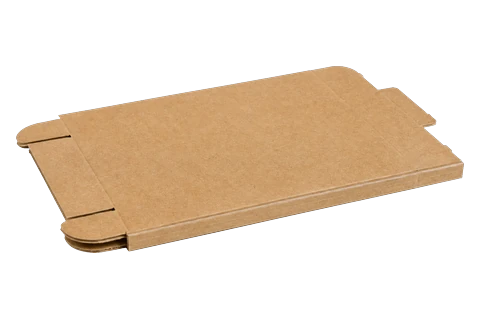
The folder-gluer folds the blank and glues the seam, shipping flat.
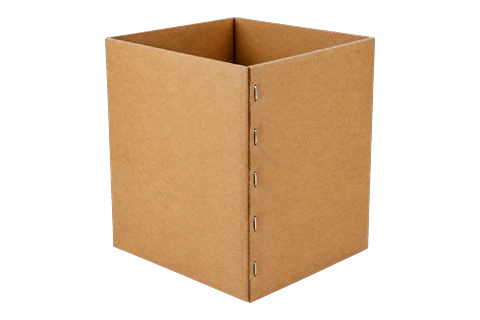
Heavy board or large boxes get a wire-stitched seam instead of glue.
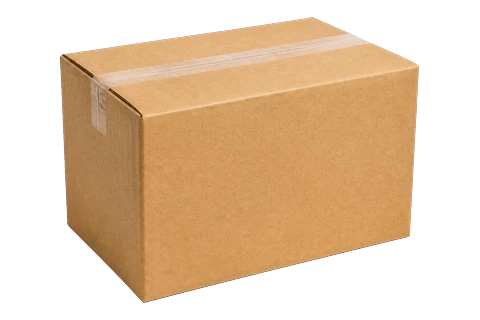
Counted, bundled and strapped by order, ready for the port.
Review a complete corrugated box production line, or start with a flexible corrugated box maker configuration.
FROM PRINTED SHEET TO FINISHED BOX.
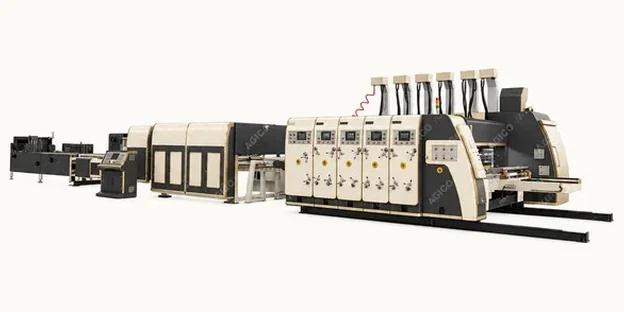
Print, slot, die-cut, fold and glue in one line: board in at the feed, a finished box out at the counter-ejector.
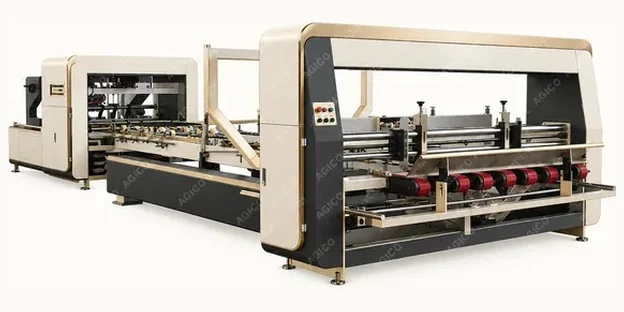
Folds and glues the blank without a printer in the line, for converters who print on a separate machine.
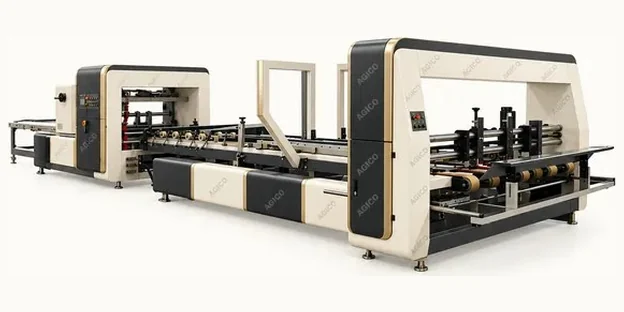
The same fold-and-glue sequence built for sustained output, with tighter belt control on small boxes.
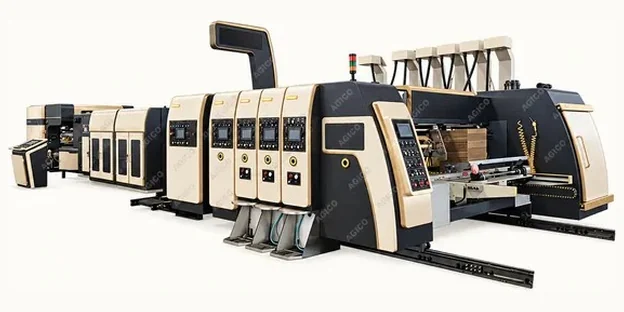
Set up for the small, deep, self-locking boxes that ship in their own carton with no void fill.
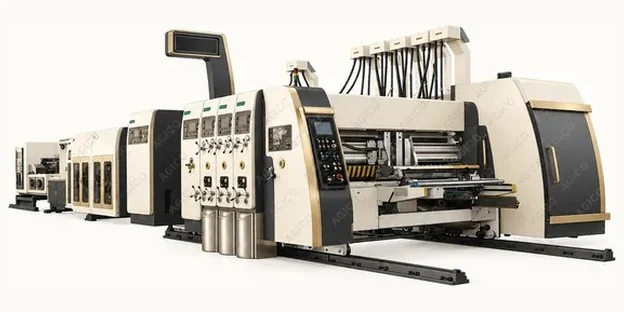
Ends in a bundler, not a stacker: boxes are counted, squared and strapped before they reach the pallet.
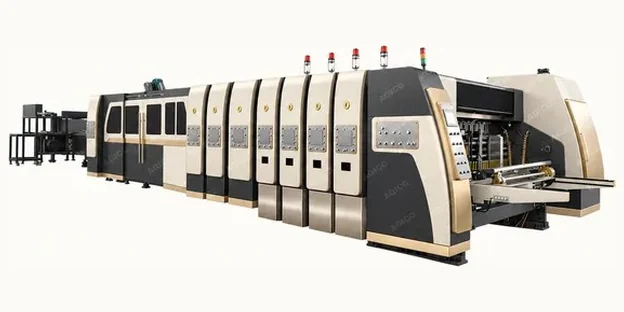
Adds a rotary die-cut station inline, so handles, vents and custom shapes are cut in the line, not offline.
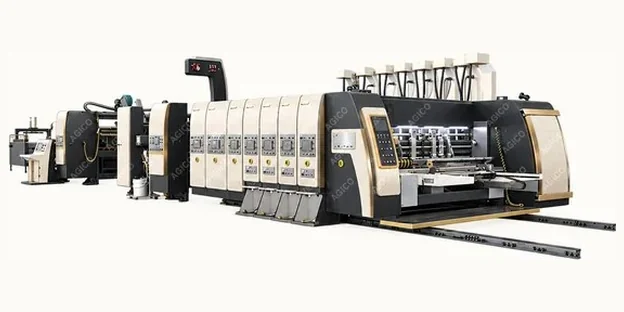
Print units, slotter and folder-gluer on one frame — the standard configuration for RSC work.
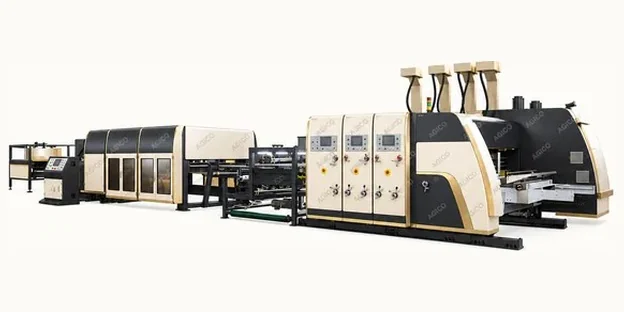
Two print units inline with the folder-gluer, for two-colour work that a four-colour line would over-spec.
Send the box style, board grade and output you need. We come back with the line configuration and one floor layout drawing for your building.
Send Your Specs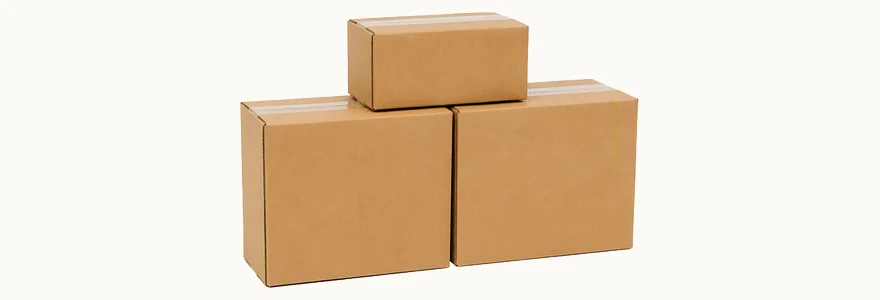
RSC boxes at volume, glued or stitched.
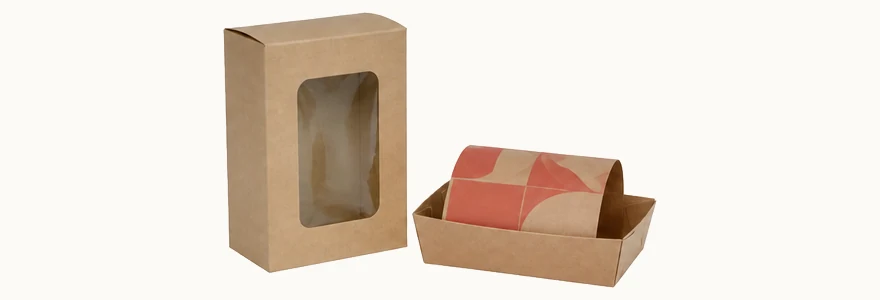
Precise creasing and brand print.

5/7-ply board and stitching strength.
Complete Carton Factory
Board line, converting line, warehouse flow and utilities — planned as one corrugated box manufacturing plant, not four separate purchases. Sized to your building, your board grades and the boxes your market actually buys.
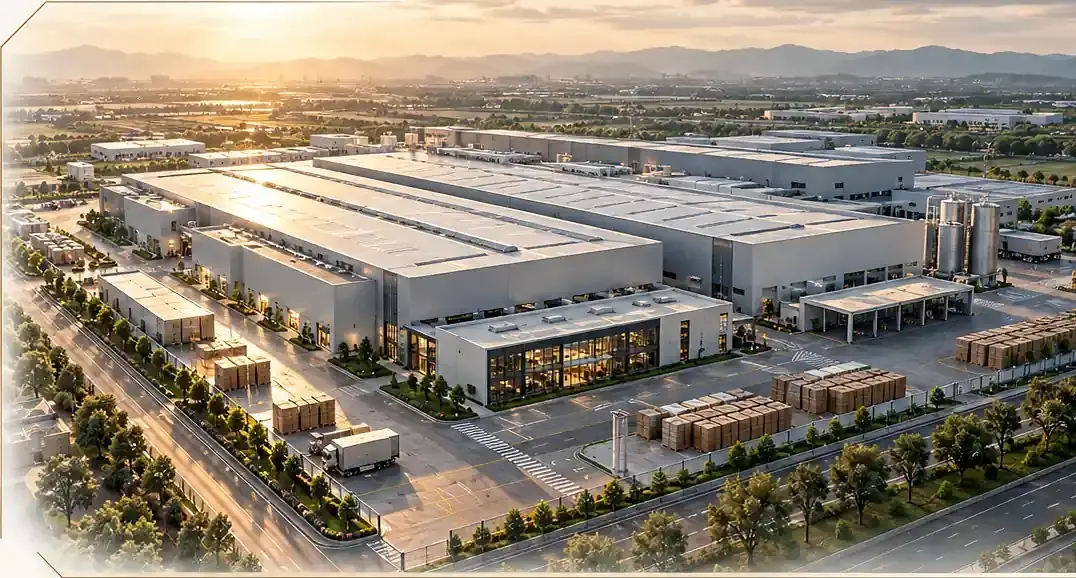
One drawing set from layout to commissioning: footings, utilities, machine placement, then a signed handover.
Process, mechanical, electrical and automation engineers in one project team — one contact from quotation to handover.
Commissioning engineers travel with the machines; local support takes over after handover.
02
03
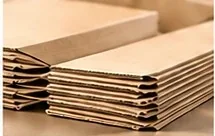
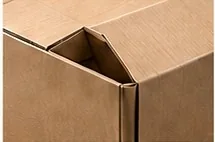
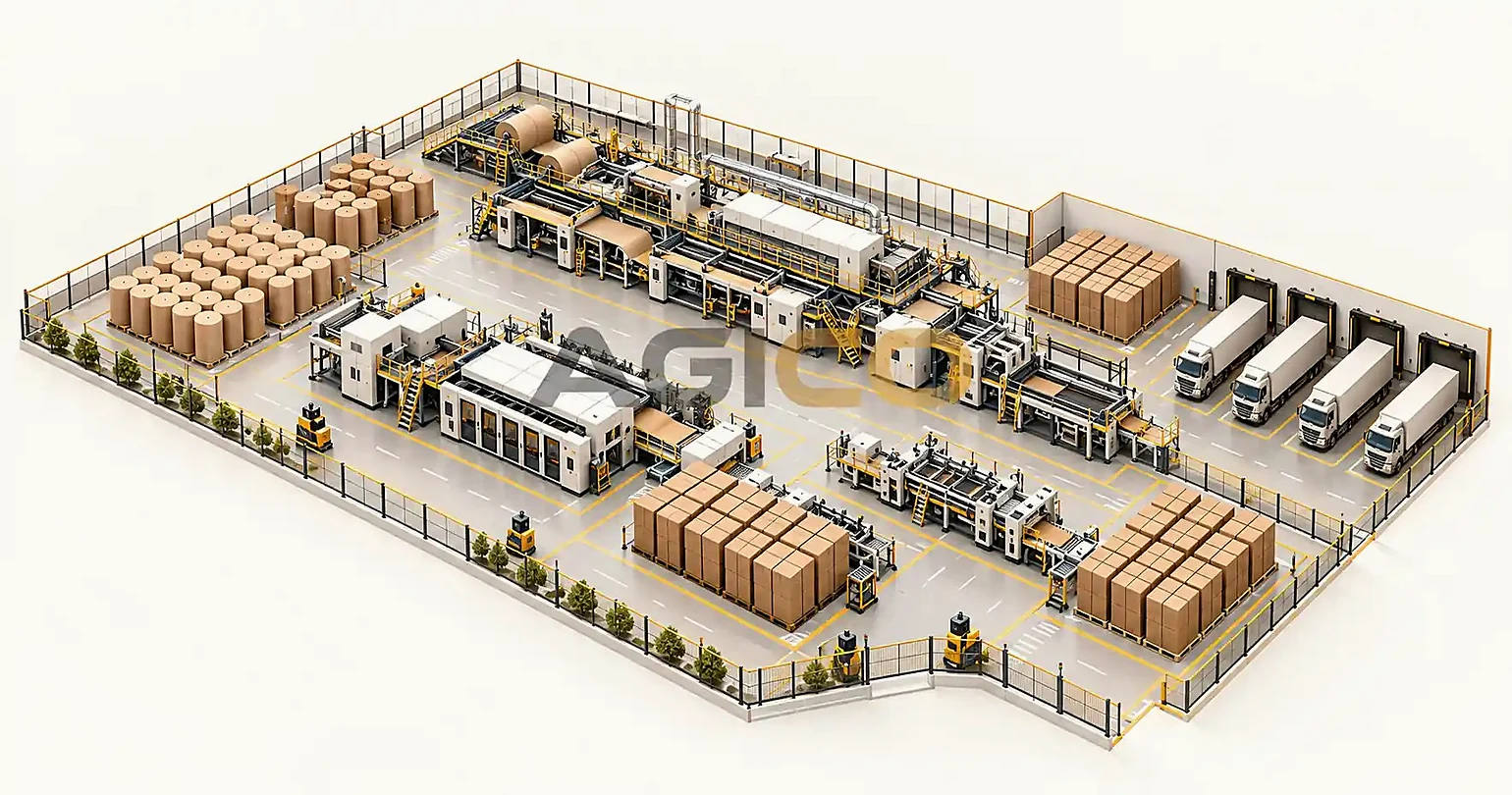
For projects that begin with raw paper, compare the available corrugated carton production line configurations.
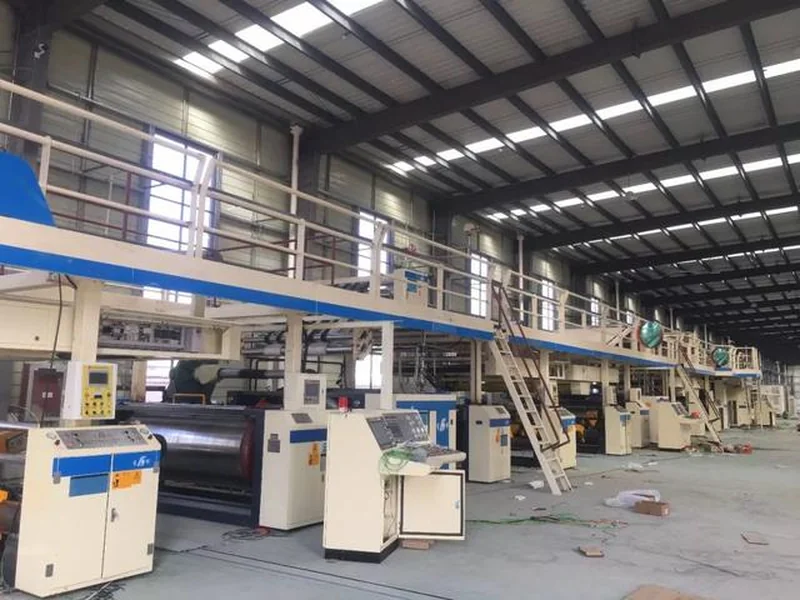
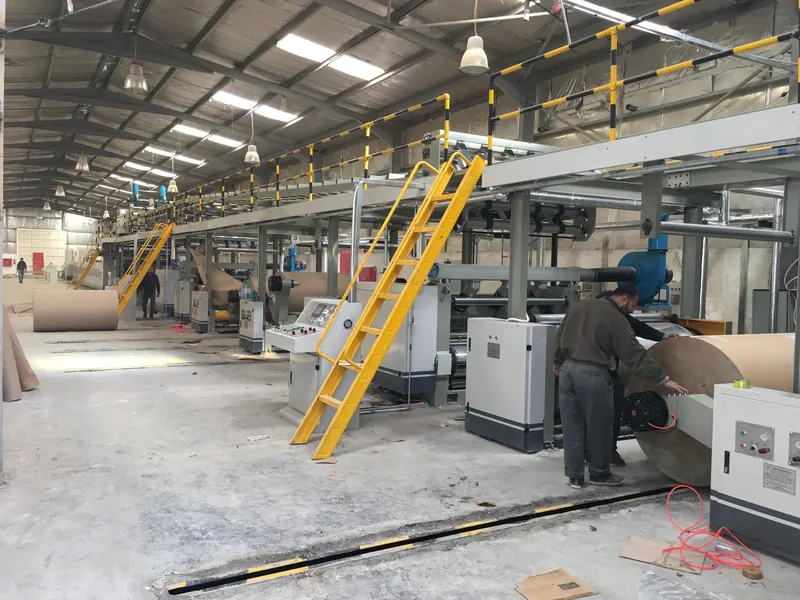
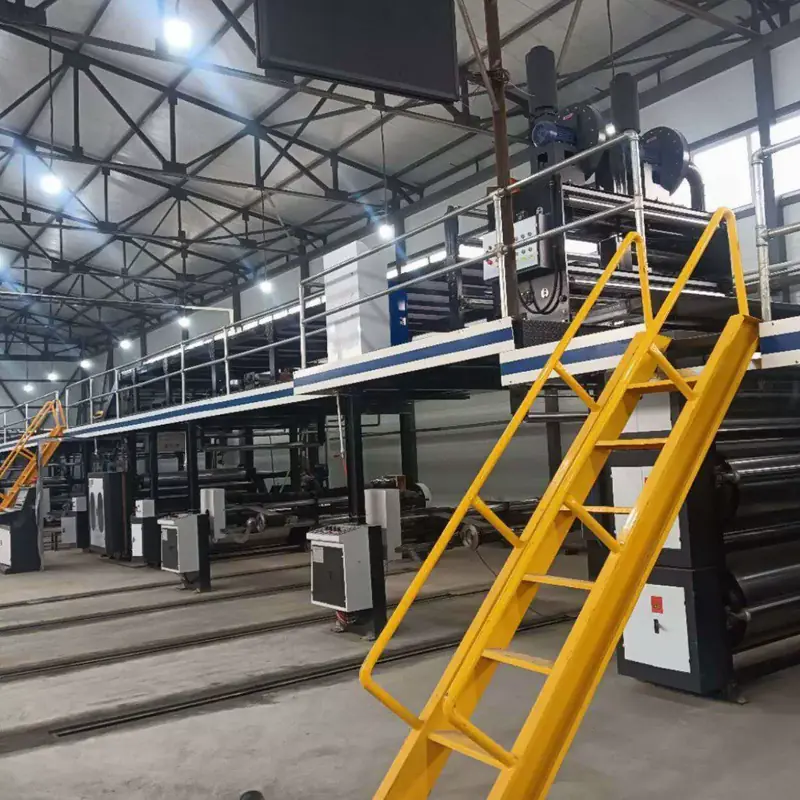
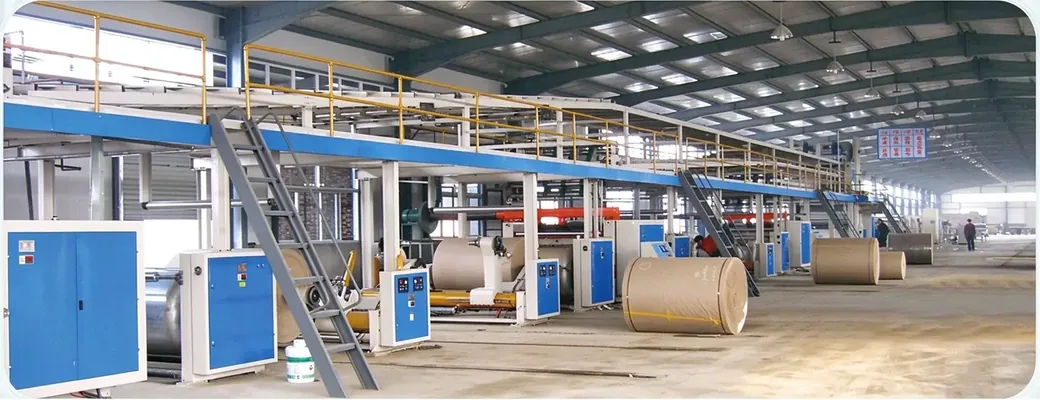
Send your building size, product mix and capacity target. We will recommend a practical line configuration for your plant.
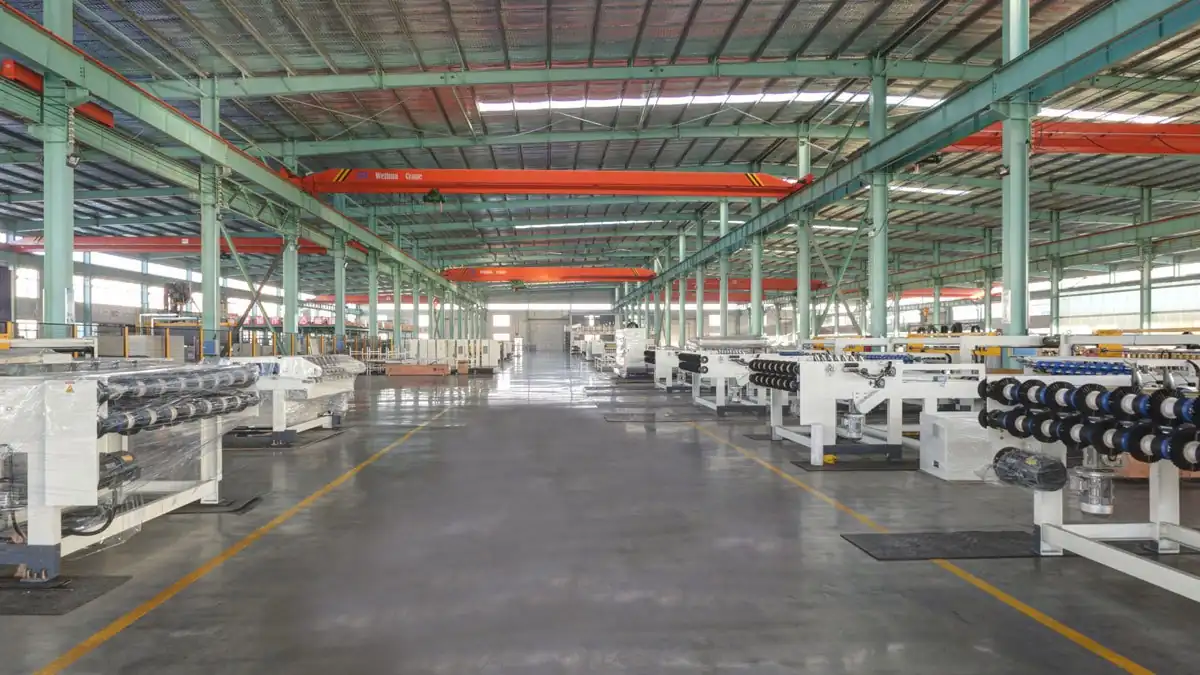
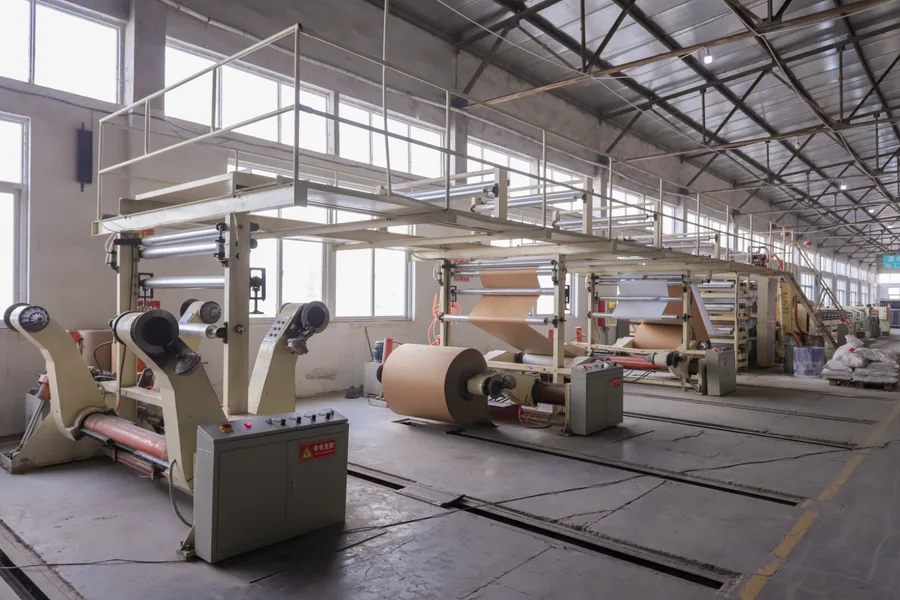
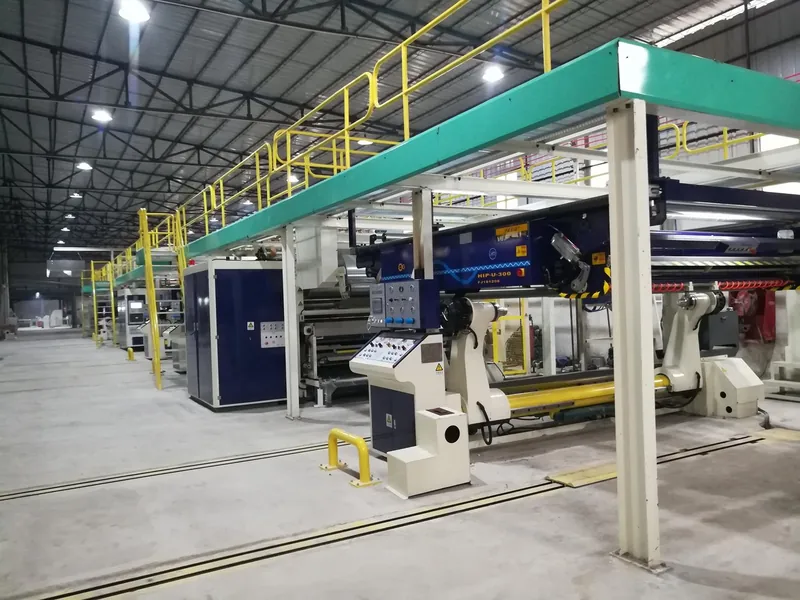
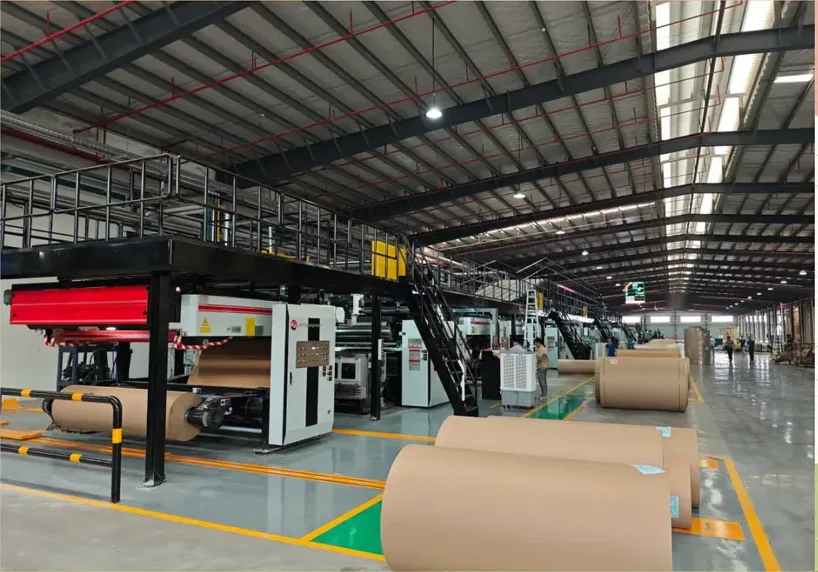
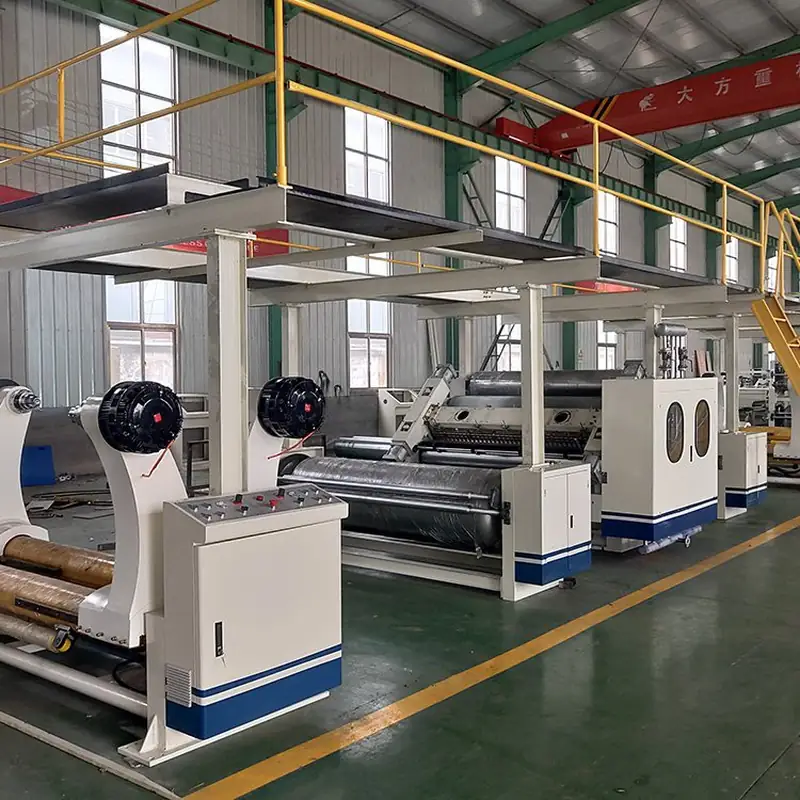
Four visible parts of the same manufacturing system: the factory, precision processing, complete-machine assembly and organized spare-parts support.
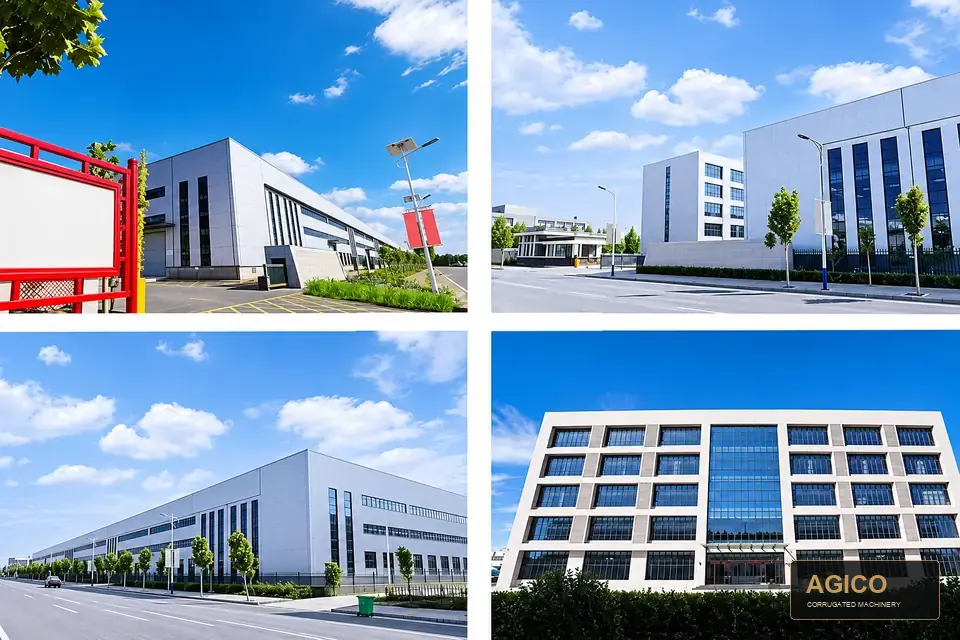
Production areas are organized around the equipment we supply, giving buyers a clear view of where their project is built.
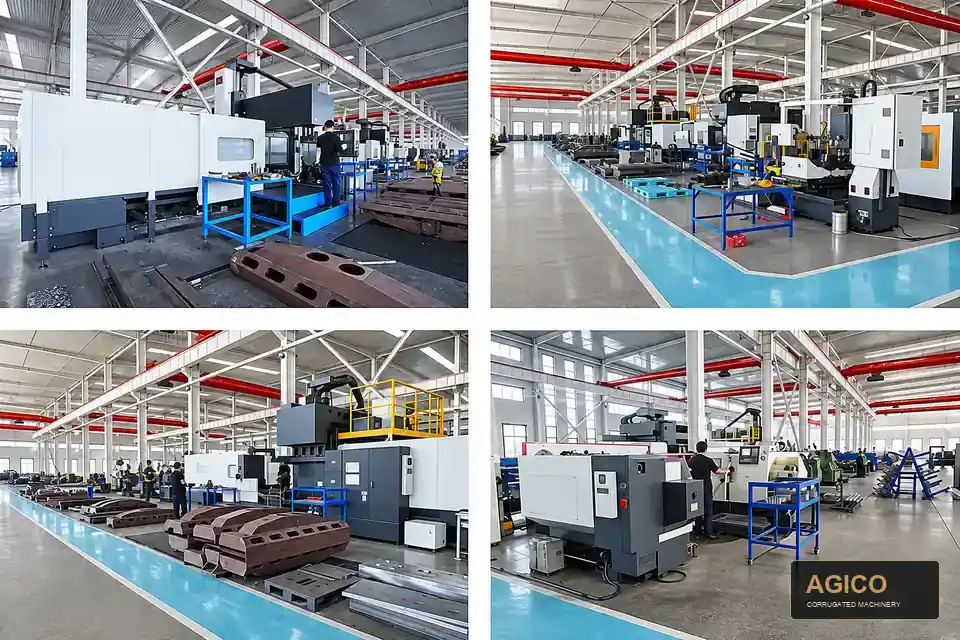
Dedicated machining areas keep critical frames and components close to the engineering and assembly teams.
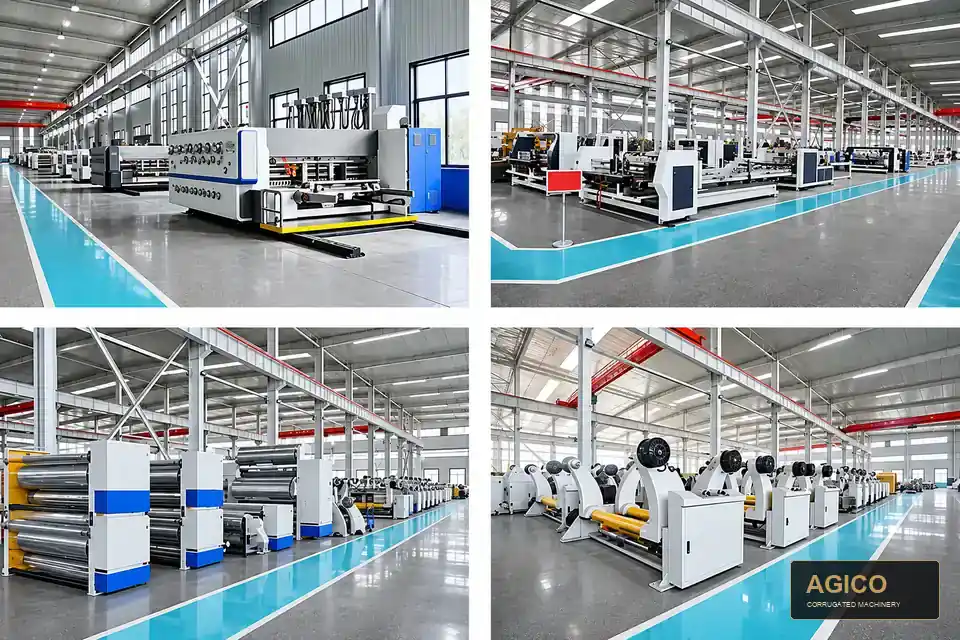
Machines are assembled in complete production areas where configuration, alignment and pre-shipment checks can be coordinated.
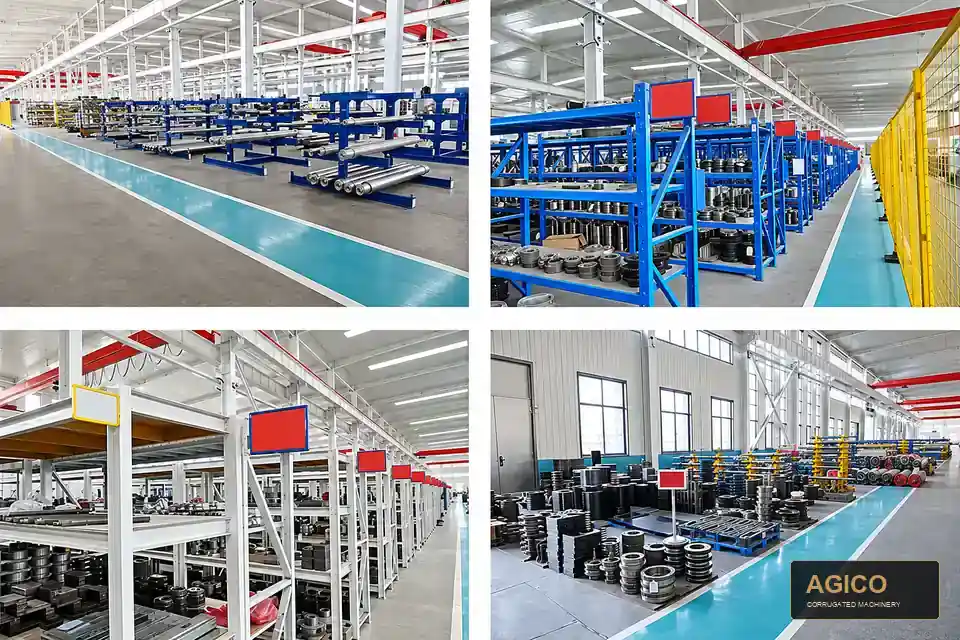
A dedicated parts area supports identification, preparation and follow-up for wear parts and maintenance needs.
Tell us which line you are evaluating and request the relevant workshop, assembly and project references.
Corrugated box making machine manufacturer
AGICO manufactures the line and then stays on it. Commissioning, training, spare parts and shipping are handled by the company that built the machine — not handed to a local trader.
Engineers on site for commissioning, plus operator training until your team can run the line and change orders on their own.
Installation and training →Wear-part lists and maintenance intervals ship with every machine, with a named contact for reorders.
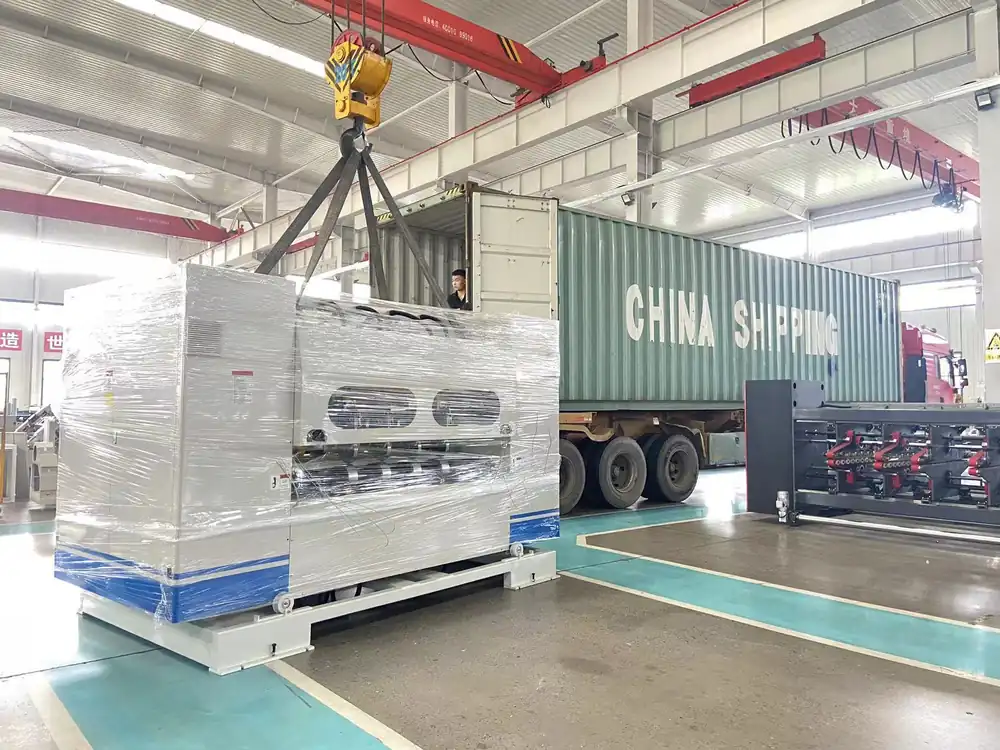
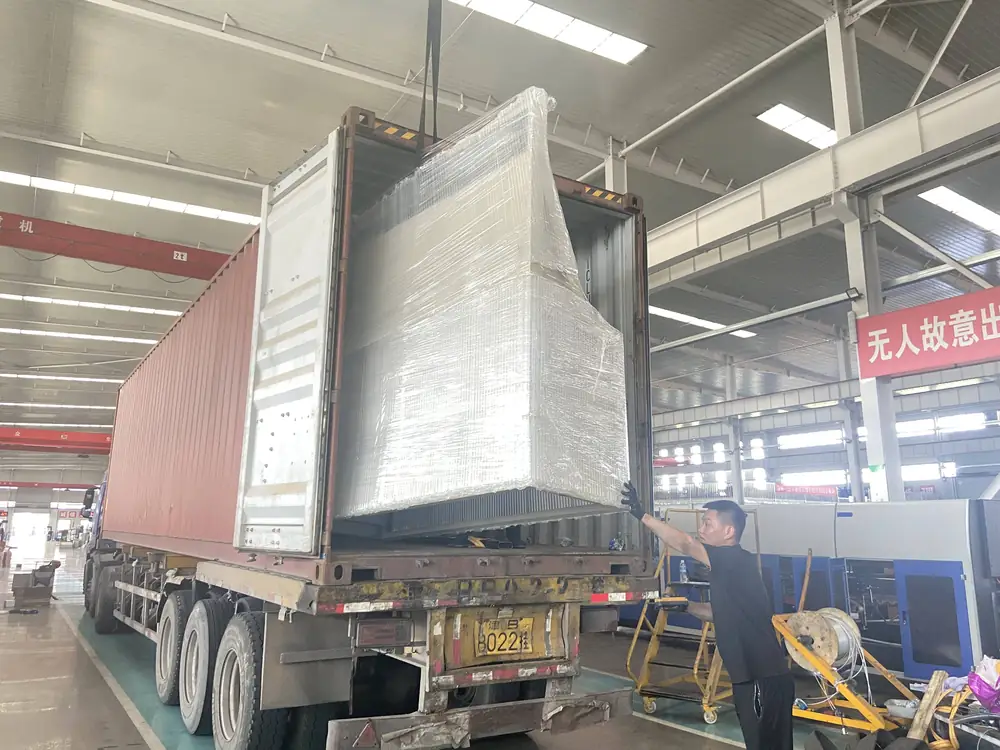
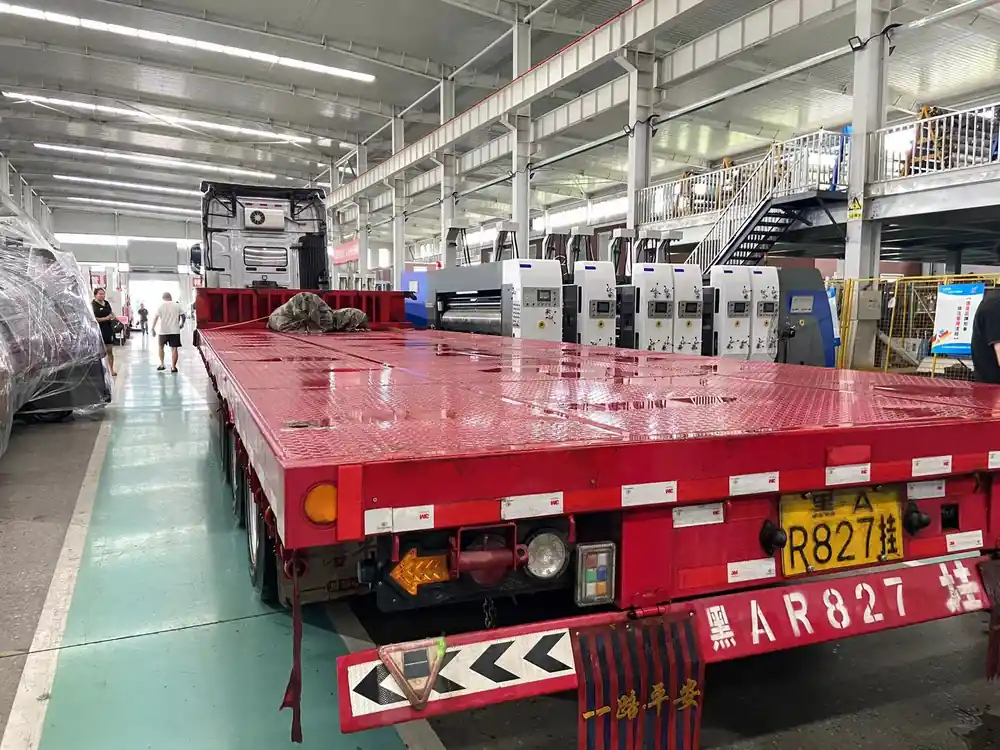
Spare parts and maintenance →Export packing, documentation and shipping coordination, arranged from our own workshop floor.
Shipping and delivery →One engineer per project, replying directly — no ticket queue.